

Salvia gregii
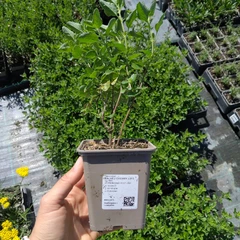
Salvia Cherry Lips
Large seedling
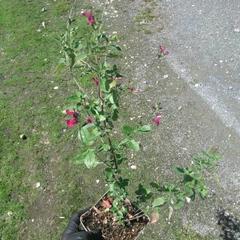
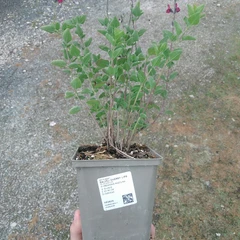
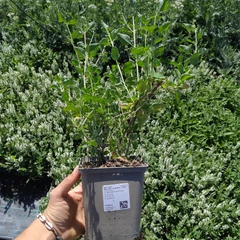
Seedling

Attracts pollinators 🐝
Difficulty
Diseases
Edible
Flower color
Flower color: Shade
Foliage color
Fragrant (aromatic) 👃
Frost resistance
Hardiness zone
Height
Moisture
Pests
Position
Soil
Spacing
Spacing: Plants per m²
Species
Suitable for cutting
Suitable for drying
Recommended products

Salvia nemorosa
Woodland Sage Ostfriesland

Lavandula angustifolia
Lavender Rosea

Echinacea purpurea
Coneflower Rubinstern

Anemone hybrida
Japanese Anemone Königin Charlotte

Gypsophila paniculata
Baby's Breath Snowflake

Achillea millefolium
Yarrow Lachsschönheit

Echinacea hybrida
Coneflower Aloha

Calamintha nepeta ssp. nepeta
Calamint

Achillea millefolium
Yarrow Summer Pastels

Coreopsis verticillata
Coreopsis Moonbeam

Anemone hupehensis
Anemone Praecox

Brunnera macrophylla
Brunnera macrophylla

Anemone hybrida
Japanese Anemone Andrea Atkinson

Agastache hybrida
Agastache Danish Delight

Achillea millefolium
Yarrow Cassis

Potentilla nepalensis
Nepal Cinquefoil Ron McBeath

Caryopteris clandonensis
Bluebeard Heavenly Blue

Cosmos atrosanguineus
Chocolate Cosmos

Anemone hybrida
Japanese Anemone Whirlwind

Anemone hybrida
Japanese Anemone Serenade

Calamintha nepeta
Calamint Blue Cloud

Salvia nemorosa
Woodland sage Schwellenburg

Catananche caerulea
Shoofly plant Blue

Achillea millefolium
Yarrow Appleblossom

Lavandula angustifolia
Lavender Hidcote

Achillea millefolium
Yarrow Lilac Beauty

Aquilegia vulgaris
Columbine Kristall

Thalictrum aquilegiifolium
Columbine meadow-rue

Nepeta faassenii
Catmint Six Hills Giant

Hydrangea paniculata
Panicle Hydrangea Pink Diamond
Cultivation
This enchanting sage will arrive to you as an established seedling that you can plant immediately. Due to its origin and lower frost hardiness (down to -12 °C), growing in containers is safest for it in our conditions. For planting, choose a pot with drainage holes, at the bottom of which you pour a layer of small stones or expanded clay as drainage. The substrate itself must be light and excellently drained – it is ideal to mix ordinary garden soil with sand or fine gravel in a 1:1 ratio. Heavy and clayey soils would cause root rot. Place the container in full sun, even in scorching southern heat, where the plant will thrive best and bloom until late autumn.
Watering should be rather modest. Cherry Lips sage is used to drier conditions and does not tolerate waterlogging, so water only when the surface of the substrate dries out. During a hot summer in a container, of course, it needs water, but "feet in water" is fatal for it. Regarding nutrition, the plant is not demanding, but to support rich flowering, you can apply a fertilizer for herbs or flowering plants once every 14 days during the season. A great advantage is that this species practically does not suffer from diseases or pests; its aromatic leaves actually repel most insects, while the flowers, conversely, attract bees and butterflies.
With the arrival of winter, you need to think about protecting the plant. Although it can withstand a drop in temperature to -12 °C, in a pot the roots would freeze much faster. We therefore recommend moving the plant before the first stronger frosts to a bright and cool room where the temperature ranges between 5 and 10 °C (for example, a winter garden, hallway, or garage with a window). During the winter, limit watering to a minimum, just so the root ball does not completely dry out. In the spring, as soon as the frosts have passed, perform a hard pruning to about 10–15 cm in height, which will encourage dense growth and the setting of new flowers. Don't forget that both the flowers and leaves are edible and will brilliantly garnish summer salads or desserts.
The information given is based on our experience, please use it as a guide only. Times may vary depending on the season, climate, location, sowing and transplanting dates and possibly also the conditions in the greenhouse/greenhouse. We always recommend testing how the plant performs in your conditions. Please do not take this as a guarantee.
Frequently
asked
questions
Growing
What is the best way to overwinter sage in a pot?
Does the plant need fertilization?
How many seedlings should I plant per square meter?
When and how should I prune the sage?
How often and how much should I water the sage?
Diseases & pests
Is this sage prone to any pests or diseases?
Planting site
What kind of soil does sage require?
Is this sage suitable for growing in a pot on a balcony?
Characteristics
Is this sage safe for pets?
How long does Salvia 'Cherry Lips' bloom?
Why does the flower color change during the season (more white or more red)?
Does this plant attract bees and butterflies?
Basic information
Will the Cherry Lips sage survive a Czech winter outdoors in the flower bed?
Should I repot the sage after purchase?
Harvest
Is this plant edible and how can I use it in the kitchen?
Propagation
How can I propagate this plant?
Photos
in time
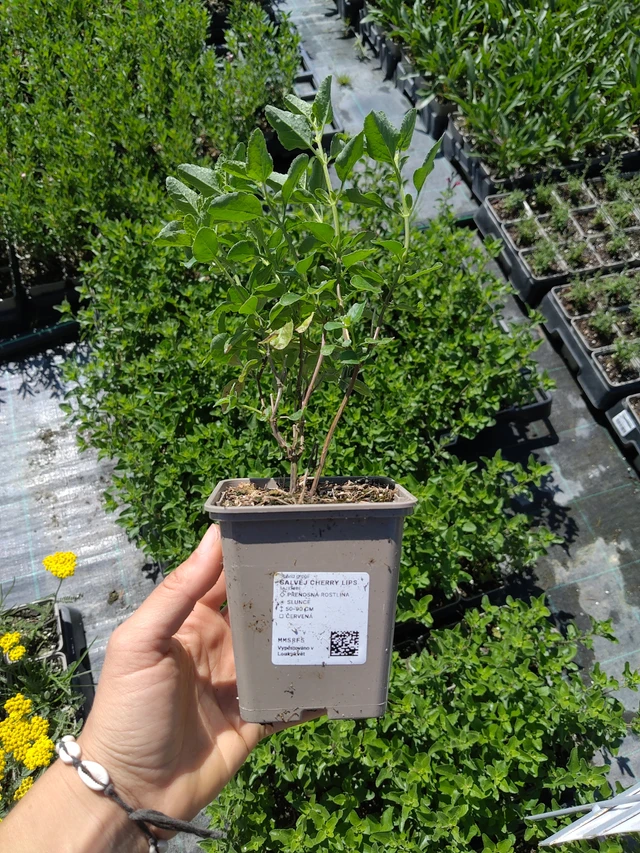
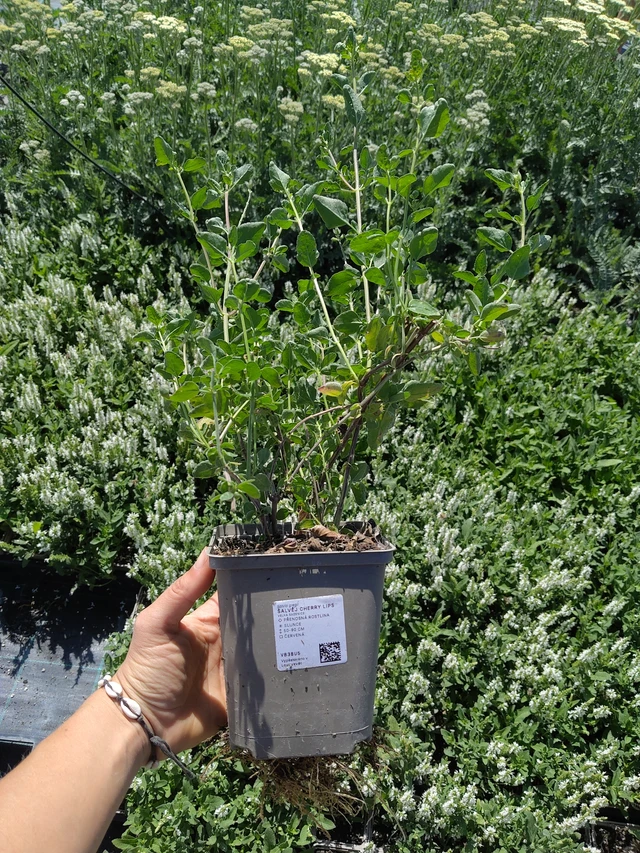
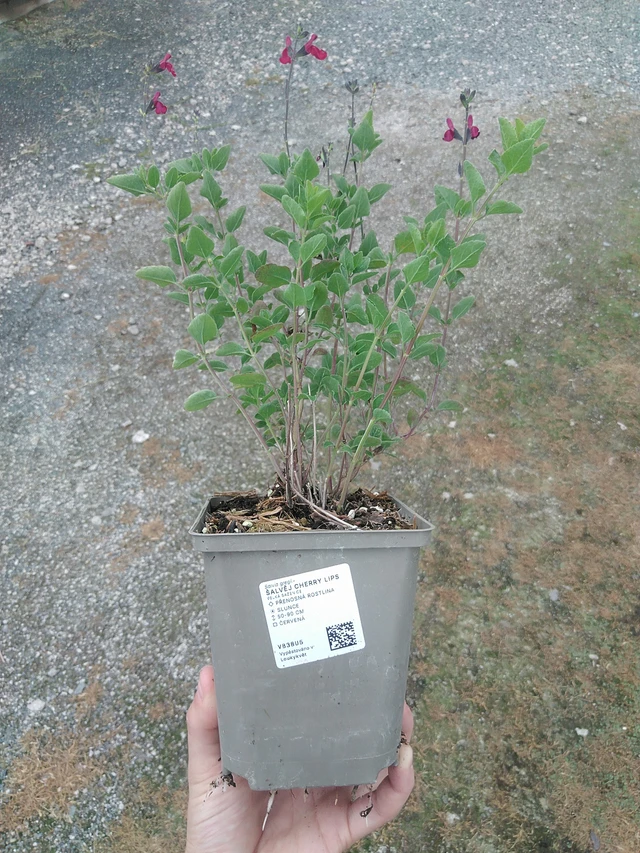
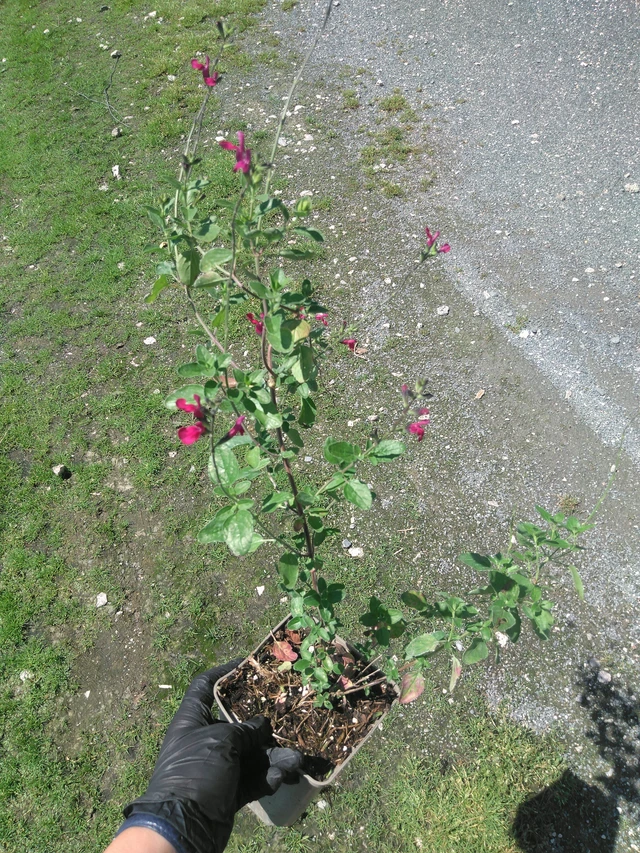
See how the seedling looks over the course of a year.

More products in category Sage

Salvia nemorosa
Woodland Sage Caradonna
Salvia nemorosa
Woodland Sage Ostfriesland

Salvia nemorosa
Woodland Sage Amethyst

Salvia nemorosa
Woodland Sage Schneehügel

Salvia nemorosa
Woodland Sage Adrian

Salvia nemorosa
Salvia Blauhügel

Salvia pratensis
Meadow Sage Rose Rhapsody

Salvia nemorosa
Salvia Mainacht

Salvia pratensis
Meadow Sage Swan Lake
Salvia nemorosa
Woodland sage Schwellenburg

Salvia verticilata
Whorled Sage Purple Rain

Salvia hybrida
Salvia Feathers Flamingo

Salvia gregii
Salvia Nachtvlinder

Salvia gregii
Salvia Dancing Dolls

Salvia pratensis
Meadow Sage Sweet Esmeralda

Salvia pratensis
Meadow Sage Twilight Serenade

Salvia gregii
Salvia Blue Note

Salvia gregii
Salvia Joy

Salvia pratensis
Meadow sage

Salvia pratensis
Meadow Sage Sky Dance
More products in category Perennials

Alchemilla mollis
Lady's mantle Irish Silk
Achillea millefolium
Yarrow Summer Pastels
Salvia nemorosa
Woodland Sage Caradonna

Verbena bonariensis
Verbena

Perovskia atriplicifolia
Russian Sage

Gaura lindheimeri
Gaura Siskiyou Pink
Echinacea purpurea
Coneflower Rubinstern

Echinacea pallida
Echinacea pallida

Eryngium planum
Sea Holly

Echinacea purpurea
Coneflower Magnus
Salvia nemorosa
Woodland Sage Ostfriesland
Calamintha nepeta
Calamint Blue Cloud

Rudbeckia fulgida
Rudbeckia Goldsturm

Gaura lindheimeri
Gaura Summer Breeze
Salvia nemorosa
Woodland Sage Amethyst
Calamintha nepeta ssp. nepeta
Calamint

Leucanthemum vulgare
Daisy Maikönigin

Perovskia atriplicifolia
Russian sage Little Spire

Achillea millefolium
Yarrow Terracotta
Salvia nemorosa


