
Salvia gregii
Salvia Flower Child
Large seedling
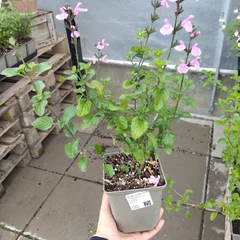
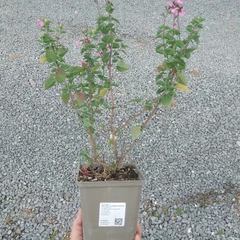
Seedling

Attracts pollinators 🐝
Difficulty
Diseases
Edible
Flower color
Flower color: Shade
Foliage color
Fragrant (aromatic) 👃
Frost resistance
Hardiness zone
Height
Moisture
Pests
Position
Soil
Spacing
Spacing: Plants per m²
Species
Suitable for cutting
Suitable for drying
Recommended products

Salvia gregii
Salvia Joy

Lavandula angustifolia
Lavender Rosea

Nepeta faassenii
Catmint Six Hills Giant

Salvia pratensis
Meadow Sage Rose Rhapsody

Delphinium hybrida
Larkspur Benary’s Pacific Astolat

Achillea millefolium
Yarrow Summer Pastels

Verbena hastata
Blue Vervain Pink Spires

Aster novi-belgii
Aster novi-belgii Fellowship

Gypsophila paniculata
Baby's Breath Snowflake

Malva moschata
Musk mallow

Delphinium hybrida
Larkspur Benary’s Pacific Galahad

Geum chiloense
Avens Totally Tangerine

Salvia nemorosa
Woodland Sage Schneehügel

Nepeta racemosa
Catmint Walker’s Low

Potentilla nepalensis
Nepal Cinquefoil Miss Willmott

Phlox amplifolia
Phlox Minnehaha

Thymus vulgaris
Thyme Compactus

Phlomis russeliana
Phlomis Russeliana

Hydrangea paniculata
Panicle Hydrangea Pink Diamond

Origanum laevigatum
Oregano Herrenhausen

Calamintha nepeta ssp. nepeta
Calamint

Achillea millefolium
Yarrow Lilac Beauty

Eucalyptus citriodora
Lemon Eucalyptus

Lavatera hybrida
Lavatera Blushing Bride

Thalictrum aquilegiifolium
Columbine meadow-rue

Verbascum chaixii
Mullein Sixteen Candles

Dicentra spectabilis
Bleeding Heart

Achillea millefolium
Yarrow Lachsschönheit

Silene uniflora
Catchfly Weißkehlchen

Eucalyptus pulverulenta
Eucalyptus Baby Blue
Cultivation
For the successful cultivation of Flower Child sage, choosing the right spot is absolutely crucial, because this plant cannot deny its origin from the parched regions of Texas. It requires full sun and as much heat as possible; shade does not suit it and it will bloom only very little in it. Preparation of the soil, which must be perfectly drained, is fundamental. Heavy, clayey, and wet soils are unsuitable for it, so if you have such soil in your garden, it is necessary to lighten it with a large amount of sand or fine gravel. Plant the seedling so that the neck of the plant is not buried under the soil, and keep a spacing of approximately 50 cm so air can flow around the plant. Given its compact growth, it is also ideal for rock gardens or dry walls where water drains away quickly.
Care during the season is surprisingly easy and suitable even for complete beginners. After planting, water the seedling regularly until it roots, but an adult plant can then handle even longer periods of drought. Watering should be rather intermittent – let the substrate dry out and only then water. Do not overdo it with fertilizing; too many nutrients would lead to lush leaf growth at the expense of beautiful fuchsia flowers. A great advantage of this variety is its vitality – it does not suffer from pests or diseases, so you don't have to worry about aphids or powdery mildew. To encourage continuous blooming from May right up to November, we recommend continuously removing the faded inflorescences. The plant will not exhaust itself by forming seeds and will have energy for new buds.
Overwintering is a chapter in itself. Although the plant can tolerate frost down to -12 °C, in our conditions it is often threatened more by winter dampness than by frost. If you live in a warmer area and decide to leave it in the bed, it is necessary to ensure a dry winter regime for it (for example, by covering it with evergreen branches so that water doesn't get to it, but it gets ventilation). A much more reliable and frequently recommended option is growing in containers. The pot must have drainage holes and a drainage layer. For the winter, simply move the plant to a bright, cool room (garage, winter garden) with a temperature between 5 and 10 °C and limit watering to a minimum. Then in the spring, perform a deeper hard pruning, which will thicken the plant and start it off for the new season.
The information given is based on our experience, please use it as a guide only. Times may vary depending on the season, climate, location, sowing and transplanting dates and possibly also the conditions in the greenhouse/greenhouse. We always recommend testing how the plant performs in your conditions. Please do not take this as a guarantee.
When and how should I prune the sage?
How should I overwinter this sage and is it frost-hardy?
Does the plant need fertilization?
How often should I water the sage?
What spacing should I choose when planting multiple plants?
Frequently asked questions
Planting site
What kind of location does Salvia 'Flower Child' require?
Is this plant suitable for growing in a pot?
What kind of soil should I use for planting?
Characteristics
Is this sage edible and how can I use it in the kitchen?
Does sage attract bees and butterflies?
How long does the sage bloom?
Is the plant toxic to pets?
Diseases & pests
Is this sage prone to any pests or diseases?
Propagation
Is sage easy to propagate?
Troubleshooting
Why are the leaves on my plant turning yellow and falling off?
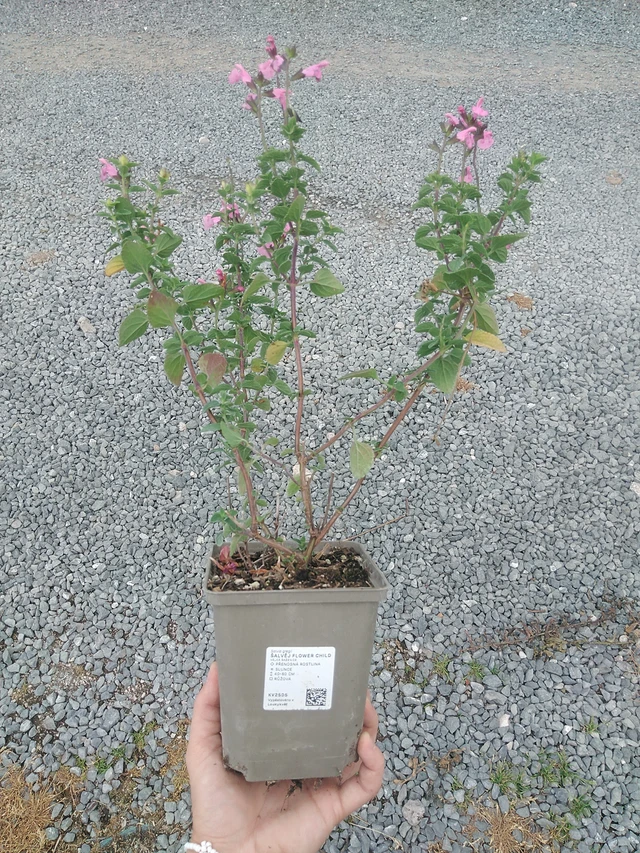
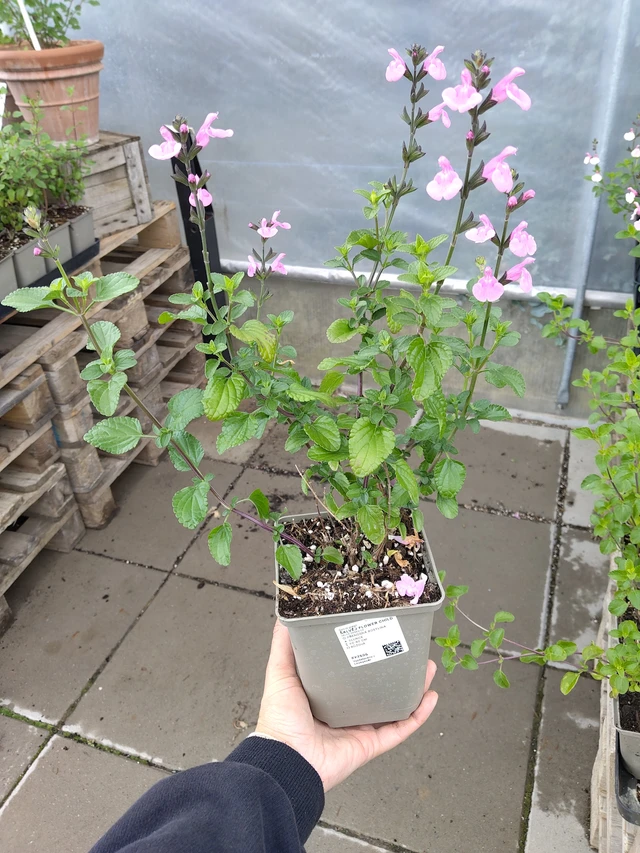
Photos in time
See how the seedling looks over the course of a year.

More products in category Sage

Salvia nemorosa
Woodland Sage Caradonna

Salvia nemorosa
Woodland Sage Ostfriesland

Salvia nemorosa
Woodland Sage Amethyst
Salvia nemorosa
Woodland Sage Schneehügel

Salvia nemorosa
Woodland Sage Adrian

Salvia nemorosa
Salvia Mainacht
Salvia pratensis
Meadow Sage Rose Rhapsody

Salvia nemorosa
Salvia Blauhügel

Salvia pratensis
Meadow Sage Swan Lake

Salvia nemorosa
Woodland sage Schwellenburg

Salvia verticilata
Whorled Sage Purple Rain

Salvia hybrida
Salvia Feathers Flamingo

Salvia gregii
Salvia Dancing Dolls

Salvia gregii
Salvia Nachtvlinder

Salvia pratensis
Meadow Sage Sweet Esmeralda

Salvia gregii
Salvia Blue Note

Salvia pratensis
Meadow Sage Twilight Serenade

Salvia pratensis
Meadow sage
Salvia gregii
Salvia Joy

Salvia gregii
Salvia Cherry Lips
More products in category Perennials

Alchemilla mollis
Lady's mantle Irish Silk
Achillea millefolium
Yarrow Summer Pastels

Verbena bonariensis
Verbena
Salvia nemorosa
Woodland Sage Caradonna

Perovskia atriplicifolia
Russian Sage

Gaura lindheimeri
Gaura Siskiyou Pink

Echinacea purpurea
Coneflower Rubinstern

Echinacea pallida
Echinacea pallida

Eryngium planum
Sea Holly

Echinacea purpurea
Coneflower Magnus
Salvia nemorosa
Woodland Sage Ostfriesland

Calamintha nepeta
Calamint Blue Cloud

Rudbeckia fulgida
Rudbeckia Goldsturm
Calamintha nepeta ssp. nepeta
Calamint

Gaura lindheimeri
Gaura Summer Breeze
Salvia nemorosa
Woodland Sage Amethyst

Leucanthemum vulgare
Daisy Maikönigin

Achillea millefolium
Yarrow Terracotta

Perovskia atriplicifolia
Russian sage Little Spire
Salvia nemorosa


