
Eucalyptus pulverulenta
Eucalyptus Baby Blue
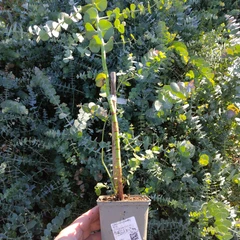
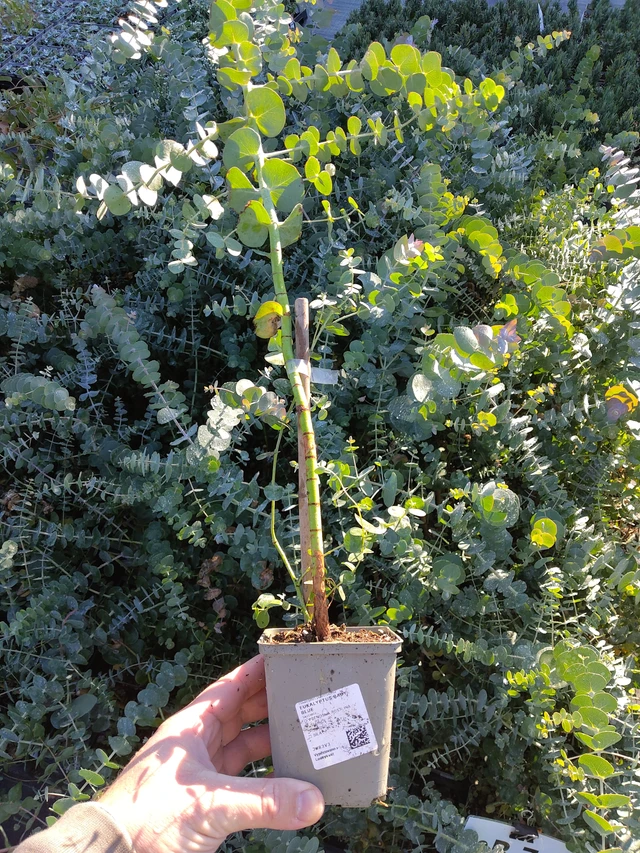
Seedling


Attracts pollinators 🐝
Difficulty
Diseases
Edible
Flower color
Flower color: Shade
Foliage color
Fragrant (aromatic) 👃
Frost resistance
Hardiness zone
Height
Moisture
Pests
Position
Soil
Spacing
Spacing: Plants per m²
Species
Suitable for cutting
Suitable for drying
Recommended products

Achillea millefolium
Yarrow Summer Pastels

Verbena bonariensis
Verbena

Eucalyptus citriodora
Lemon Eucalyptus

Salvia nemorosa
Woodland Sage Ostfriesland

Hydrangea arborescens
Smooth Hydrangea Annabelle

Salvia nemorosa
Woodland Sage Schneehügel

Hydrangea paniculata
Panicle Hydrangea Silver Dollar

Gypsophila paniculata
Baby's Breath Snowflake

Knautia macedonica
Knautia Red Knight

Rosmarinus officinalis
Rosemary Blue Rain

Achillea millefolium
Yarrow Lilac Beauty

Calamintha nepeta ssp. nepeta
Calamint

Agastache hybrida
Agastache Danish Delight

Erigeron karvinskianus
Fleabane Blütenmeer

Hydrangea paniculata
Panicle Hydrangea Candlelight

Melinis nerviglumis
Melinis Karoo Queen

Achillea millefolium
Yarrow Lachsschönheit

Rudbeckia fulgida
Rudbeckia Goldsturm

Achillea millefolium
Yarrow Cassis

Origanum laevigatum
Oregano Herrenhausen

Helleborus orientalis
Hellebore Double Ellen Yellow Spotted

Nepeta faassenii
Catmint Six Hills Giant

Achillea millefolium
Yarrow Cerise Queen

Sedum telephium
Sedum Herbstfreude

Stokesia laevis
Stokes' aster Peachie's Pick

Lythrum salicaria
Loosestrife Pink Tails

Calamintha nepeta
Calamint Lila Riese

Coreopsis
Coreopsis Full Moon

Anemone hupehensis
Anemone Praecox

Achillea millefolium
Yarrow Terracotta
Cultivation
The 'Baby Blue' eucalyptus seedling is ideal for growing as a portable plant in a larger pot or container. It requires full sun for successful growth, so choose the sunniest and warmest spot on your terrace or balcony. The soil should be primarily well-draining to prevent water from accumulating at the roots. When repotting the seedling, we recommend mixing standard potting soil with a generous amount of sand or small gravel. If you decide to plant them together, keep in mind that they reach a height of 150 to 200 centimeters in containers, so the ideal spacing is a maximum of one to two plants per square meter to ensure they have enough space and air.
During the season, proper watering is key and requires a bit of intuition, making this plant more suitable for intermediate gardeners. To ensure the plant thrives, follow these basic care rules:
Watering: Water the eucalyptus evenly; it does not tolerate overwatering or permanently wet roots, but it also dislikes having the substrate dry out for too long.
Fertilizing: From April to August, it is advisable to fertilize older plants with a liquid fertilizer with a higher potassium content, about once every two weeks.
Protection: A huge advantage is its natural resilience – it does not suffer from any diseases and pests tend to avoid it.
To maintain a beautifully dense and even shape for your eucalyptus, regular pinching and pruning are recommended. You can also use the cut branches with their beautifully aromatic, silvery-blue-green leaves in vases and floral arrangements. In June, you can look forward to tiny creamy-white flowers. Regarding frost resistance, the plant can handle temperatures down to -6 °C, but it will not survive a Central European winter outdoors. Before the first hard frosts, it is therefore absolutely necessary to move the container to a frost-free, cool, and bright space, where it will safely wait until spring.
The information given is based on our experience, please use it as a guide only. Times may vary depending on the season, climate, location, sowing and transplanting dates and possibly also the conditions in the greenhouse/greenhouse. We always recommend testing how the plant performs in your conditions. Please do not take this as a guarantee.
How can I make the bush nice and bushy?
How do I overwinter eucalyptus? Can it stay outside?
Does the plant need to be fertilized?
What kind of potting soil does eucalyptus need?
How do I properly water eucalyptus?
Frequently asked questions
Basic information
Is eucalyptus toxic to pets?
What kind of eucalyptus seedling will I receive, and how big will the plant grow?
Planting site
Where is the best place to put eucalyptus?
Which plants can I combine it with in a container?
Propagation
How can I propagate the eucalyptus?
Troubleshooting
The eucalyptus leaves have started to dry out and become brittle, what am I doing wrong?
Characteristics
Will my eucalyptus bloom?
Does the plant really have a scent?
Diseases & pests
Does eucalyptus suffer from any diseases or pests?
Harvest
Can I cut eucalyptus branches for a vase?
Interesting facts
Where does eucalyptus originate from and what are its uses?
Photos in time
See how the seedling looks over the course of a year.


More products in category Eucalyptus

Eucalyptus cinerea
Eucalyptus Silver Dollar

Eucalyptus websteriana
Eucalyptus Heart
Eucalyptus citriodora
Lemon Eucalyptus
More products in category Perennials

Alchemilla mollis
Lady's mantle Irish Silk
Achillea millefolium
Yarrow Summer Pastels
Verbena bonariensis
Verbena

Salvia nemorosa
Woodland Sage Caradonna

Perovskia atriplicifolia
Russian Sage

Gaura lindheimeri
Gaura Siskiyou Pink

Echinacea purpurea
Coneflower Rubinstern

Echinacea pallida
Echinacea pallida
Salvia nemorosa
Woodland Sage Ostfriesland

Eryngium planum
Sea Holly

Echinacea purpurea
Coneflower Magnus

Calamintha nepeta
Calamint Blue Cloud
Rudbeckia fulgida
Rudbeckia Goldsturm
Calamintha nepeta ssp. nepeta
Calamint

Gaura lindheimeri
Gaura Summer Breeze

Salvia nemorosa
Woodland Sage Amethyst

Leucanthemum vulgare
Daisy Maikönigin
Achillea millefolium
Yarrow Terracotta

Perovskia atriplicifolia
Russian sage Little Spire
Salvia nemorosa


