Ireland
🟢 The e-shop for seedlings is open again. 🌱 I also have dahlia seedlings and eucalyptus. 🟢
Ireland
🟢 The e-shop for seedlings is open again. 🌱 I also have dahlia seedlings and eucalyptus. 🟢
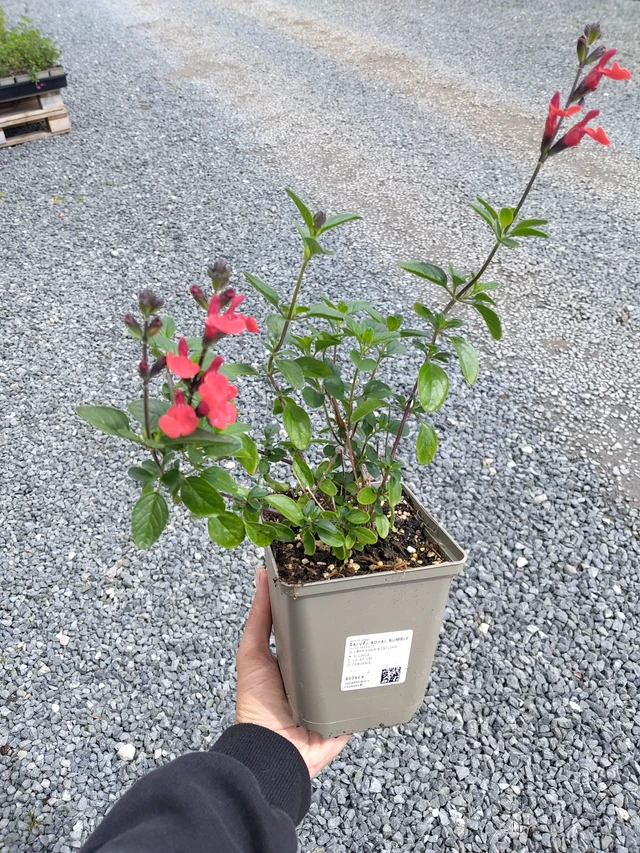
Salvia Royal Bumble, Loukykvět

Salvia gregii

Salvia Royal Bumble

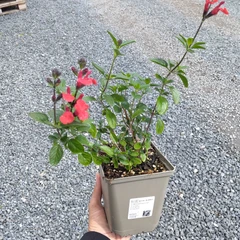
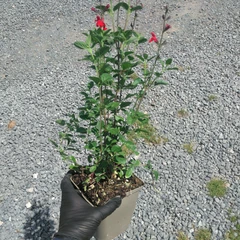
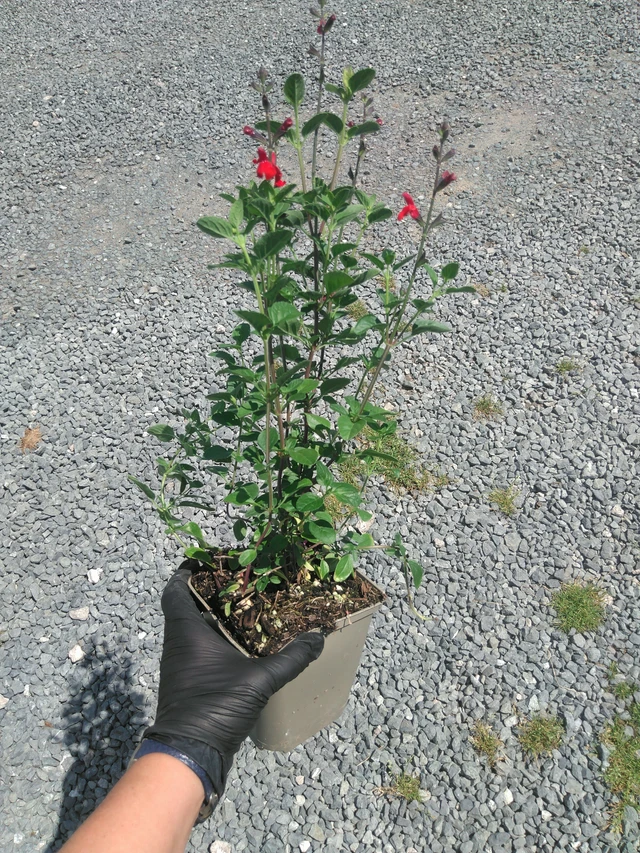
The 'Royal Bumble' Sage is a true jewel among sages that will captivate you with its untiring flowering energy. The original species Salvia greggii comes from the dry and rocky hillsides of Texas and Mexico, where it has grown accustomed to the scorching sun and well-drained soil. As a result, it is an exceptionally drought-tolerant plant that literally loves a sunny location. It forms compact, semi-woody bushes that are strongly aromatic and release a pleasant spicy fragrance when touched. It is an ideal choice for those looking for a plant that is attractive not only to the human eye but also to bees and bumblebees, drawing them in magnetically with its flowers. The 'Royal Bumble' cultivar stands out with the deep carmine color of its flowers, which shine in contrast with its dark calyxes and stems. What is absolutely fascinating about this sage is its flowering period. If it gets enough sun and warmth, it can bloom from May until the first frosts in November. In our climatic conditions, however, its origin must be taken into account. It is frost-resistant down to approximately -12 °C, which is why it is mostly grown here as a portable plant in containers that you can move to a cool, bright room for the winter, or it can be planted in very protected warm locations with quality winter covering.  Show full description

Large seedling

Květináč K11 (11×11×12 cm)
Large seedling
Large seedling
Large seedling
1-2 kusy
5,89/ks
3-8 kusů
5,39/ks
9-14 kusů
4,79/ks
15+ kusů
4,49/ks
Watch availability
Skladem 0 ks

Seedling

Květináč K9 (9×9×9,5 cm)
Seedling
1-2 kusy
4,29/ks
3-8 kusů
3,89/ks
9-17 kusů
3,39/ks
18+ kusů
3,19/ks
Watch availability
Skladem 0 ks

Attracts pollinators 🐝

Ano

Difficulty

Beginner

Diseases

Disease-free 🙂

Edible

Ano
?
Information on whether the plant is edible.

Flower color

Red

Flower color: Shade

Crimson

Foliage color

Green

Fragrant (aromatic) 👃

Ano

Frost resistance

-12
?
The temperature down to which the plant is frost hardy.

Hardiness zone

8a (-12.2 °C to -9.4 °C)

Height

40-60 cm

Moisture

💧

Pests

Pest-free 🙂

Position

Sun

Soil

Well-drained

Spacing

50-50 cm
?
Recommended planting spacing.

Spacing: Plants per m²

5-7

Species

Container plant

Suitable for cutting

Ne

Suitable for drying

Ne
1
2
3
4
5
6
7
8
9
10
11
12
Flowering
May
½ November

Recommended products

Salvia Hot Lips, Loukykvět

Salvia microphylla

The 'Hot Lips' Sage is a true chameleon among garden perennials and immediately attracts attention with its changing flowers. This shrubby sage, Latin name Salvia microphylla, comes from the mountainous regions of Mexico and the southern USA, where it grows on sunny and dry slopes. Its greatest advantage is its two-tone flowers combining pure white and a striking carmine red color. An interesting feature of this cultivar is the dependence of its coloring on the air temperature, when in hot summer days the flowers can turn red, while in cooler periods more white appears. The whole plant smells intensely and pleasantly when the leaves are rubbed, the aroma often resembling blackcurrant with a hint of mint. In the garden, it is mainly used as a portable plant in containers on terraces or balconies, as its frost resistance reaches only -12 °C. If you live in the warmest regions of the country, you can try planting it in the open ground in a protected location with well-drained soil and winter covering, but overwintering it in a frost-free room is a safer bet. It blooms tirelessly from June until the first frosts and is literally a magnet for bees, bumblebees, and other pollinators. The flowers are also edible, so you can use them to garnish summer salads or desserts, giving them not only color but also a delicately spicy taste.
5,89
More from 4,49
In Stock
Salvia Flower Child, Loukykvět

Salvia gregii

The 'Flower Child' Sage is a charming subshrub that will bring a breath of Texan sun and wildness to your garden. The original species Salvia greggii originates from the dry and rocky areas of Texas and Mexico, which predetermines its growing requirements. It loves full sun and very well-drained, even sandy soil, where it is not at risk of waterlogging. At first glance, this cultivar attracts attention with a flood of tiny but striking flowers in a fuchsia-pink shade. Unlike regular sages, it blooms tirelessly from May until the first frosts in November, ensuring a colorful effect throughout the season. The leaves are tiny, fresh green, and when rubbed, they emit a pleasant spicy fragrance typical of this species. In our conditions, it behaves more like a short-lived perennial or a portable plant. Its frost resistance reaches approximately -12 °C, making it ideal for growing in containers on terraces or balconies. For the winter, you can move it to a cool, bright room. The flowers are a magnet for bees, bumblebees, and other pollinators, and they are also edible, so you can use them to garnish summer salads or desserts. Thanks to its compact growth of around 50 cm, it is also perfectly suited for smaller spaces.
4,29
More from 4,49
Unavailable
Pro rok 2026 nedostupné
Salvia Cherry Lips, Loukykvět

Salvia gregii

An ideal choice for brightening up a sunny terrace or balcony, where it will bring you joy with an untiring flood of flowers from late spring to November. The 'Cherry Lips' Sage forms compact, partially woody bushes that are literally dotted with bi-colored flowers in a playful combination of cherry red and white. Because the original botanical species Salvia greggii comes from semi-desert and steppe regions, this cultivar also requires full sun and excellently drained, sandy soil, where it is not at risk of waterlogging. Due to its lower frost resistance, we recommend growing it primarily in a pot and moving it to a cool, bright, frost-free room for the winter. If you decide to plant it in the open ground, choose the south-facing side by the house wall and carefully cover the plant with conifer branches for the winter. In addition to the visual experience, this sage also offers an olfactory and gustatory one. The leaves have a specific fruity-spicy aroma, and you can boldly use the sweet flowers in the kitchen as an edible decoration for dishes.
4,29
More from 4,49
In Stock s doručením od 24. 8. 2026
Salvia Dancing Dolls, Loukykvět

Salvia gregii

*Salvia greggii*, often called autumn sage, is, in the case of the 'Dancing Dolls' cultivar, a tireless bloomer that will adorn your garden containers with flowers from late spring until freezing. Its homeland is the semi-desert regions of North America, so it loves sun, heat, and a drier, well-drained substrate. It grows as a low, densely branched subshrub that is easy to shape and maintain. Although cultivation is undemanding and suitable even for beginners, it is necessary to keep its limited frost hardiness in mind. In Czech conditions, this sage is best used as a dominant feature in pots on terraces, which you can easily move to a frost-free space for the winter, or it can be planted in very sheltered, sunny flower beds with high-quality drainage and a winter cover. The 'Dancing Dolls' variety brings playfulness and softness to plantings thanks to the unique coloration of its flowers, which alternate tones of pastel pink with creamy white. The tiny lipped flowers grow in abundance at the ends of upright stems and create a very airy impression. In addition to its aesthetic value, this plant is also useful – its strongly aromatic leaves and sweet flowers are edible and can be used in the kitchen as an original garnish for dishes. At the same time, it is a valuable honey-bearing plant that will reliably attract beneficial insects to your garden. The plant does not suffer from diseases or pests, so you can enjoy its beauty without the need for complex protection.
4,29
More from 4,49
In Stock
Salvia Viola's Darling, Loukykvět

Salvia gregii

The 'Viola's Darling' Sage is a charming subshrub that will bring a breath of the hot south to your terrace or balcony. The original species comes from the arid regions of Texas and Mexico, so this plant literally loves the sun and well-drained, sandy soil. Its biggest advantage is its record-breakingly long flowering period. From May until the first November frosts, it will delight you with a flood of tiny blossoms in a delicate lilac shade. The leaves are strongly aromatic and, just like the flowers, edible, so you can also use them in the kitchen to spice up summer salads or desserts. In our conditions, Salvia greggii is considered more of a portable plant, as it can only withstand frost down to -12 °C. It is therefore an ideal choice for growing in containers that you can move to a cool, bright room for the winter, or you can plant it in a protected, warm location in the warmest regions of the country with good winter covering.
4,29
More from 4,49
Unavailable
Pro rok 2026 nedostupné
Salvia Nachtvlinder, Loukykvět

Salvia gregii

Sage 'Nachtvlinder' is a true jewel among portable container plants, which will win you over with its unusual color and endurance. The original species *Salvia greggii* comes from the sunny and dry semi-desert regions of Texas and Mexico, where it grows on rocky and poor soils. Thanks to this, it is very undemanding regarding watering here as well and loves full sun. In our conditions, we most often grow it as a portable plant in pots on terraces or balconies, because its frost resistance reaches only -12 °C. For the winter, we therefore recommend hiding it in a frost-free bright place, or carefully covering it in the warmest regions of the country. The 'Nachtvlinder' variety, whose name translates as night moth, will enchant you with velvety flowers in a deep shade of plum purple. Its huge advantage is the incredibly long flowering period, which starts in May and often ends only with the arrival of stronger frosts in November. The entire plant is strongly aromatic and releases a pleasant spicy scent when touched. Furthermore, the flowers are edible and sweet, so they are perfectly suited as an unconventional garnish for summer salads or desserts. It will also attract a large number of bees and other beneficial insects to your garden.
4,29
More from 4,49
In Stock s doručením od 24. 8. 2026
Baby's Breath Snowflake, Loukykvět
For drying

Gypsophila paniculata

Baby's breath Snowflake is an absolute classic that should not be missing in any traditional or modern garden. This perennial plant originally comes from the sandy steppes and sunny slopes of southern Europe and Central Asia, which predestines it to love full sun and well-drained, even sandy soil. It has been grown in botanical gardens since the eighteenth century, and thanks to its low maintenance, it quickly found its way into private gardens as well. It forms rich, airy clumps that look like white clouds when in bloom and bring a unique lightness to flower beds. The Snowflake variety stands out with a flood of pure white, mostly double flowers that appear from June to August. It is an ideal plant for modern steppe plantings, where it perfectly complements ornamental grasses and drought-tolerant perennials, but it is also traditionally planted as a delicate companion to roses. For florists, baby's breath is indispensable. It is excellent for cutting into fresh bouquets, where it adds volume and softens the overall impression, and it can just as well be dried for winter decorations. The plant is frost-hardy and long-lived, so it will bring you joy in the garden for many years.
3,09
More from 2,19
In Stock posledních 72 kusů
Gaura Siskiyou Pink, Loukykvět

Gaura lindheimeri

Gaura Siskiyou Pink is a charming perennial that brings lightness and airiness to the garden. Its original native area is in the warm regions of Texas and Louisiana, which is why it thrives in full sun and well-drained sandy soil. It grows in clumps and from June until the autumn frosts produces tiny raspberry-pink flowers that resemble fluttering butterflies. An interesting detail of this variety is the green leaves with a bronze tint and red spots. It is an absolutely undemanding plant, does not suffer from diseases or pests, and even beginners can handle its care. You will receive a grown seedling in a pot from us, which you simply need to transplant directly into the flowerbed. Here it complements ornamental grasses perfectly and acts as an attraction for bees and bumblebees. Although it grows more as a short-lived perennial in our climate, in a suitable place it reliably self-seeds. Occasional pinching will encourage richer branching. Gaura is excellent for summer bouquets. We cut the stems for a vase as soon as the first two to three little flowers open.
2,99
More from 2,09
In Stock
Verbena Bampton, Loukykvět

Verbena officinalis

A tirelessly blooming variety related to the well-known medicinal vervain, it is ideal for perennial plantings as a softening accent. It creates airy, transparent clumps with intensely purple-colored stems and tiny leaves. Soft pink flowers bloom throughout the summer until autumn. They look stunning in beds and containers. In England, where this variety was discovered near the town of Bampton, it overwinters well. Here, it needs the best possible site conditions. Also popular with bees and butterflies.
2,99
More from 2,09
In Stock posledních 78 kusů
Woodland Sage Caradonna, Loukykvět

Salvia nemorosa

This species of sage originally comes from the steppe regions of Central and Eastern Europe. It forms profusely flowering small clumps with straight upright stems. In flower beds, it looks best in groups. Traditionally, due to the identical flowering time, it is planted as a companion to roses. However, it will look just as good in mixed drought-loving steppe plantings with grasses. It lasts 7 days in a vase. The cultivar Caradonna stands out with a long flowering period and dark, almost black-purple stems with tiny purple flowers and dark purple bracts. If we cut it back after flowering, it will bloom again in late August and September.
2,99
More from 2,09
In Stock posledních 35 kusů
Catmint Washfield, Loukykvět

Nepeta subsessilis

This catmint grows upright and in clumps. Its leaves and blue-violet flowers are larger than those of most better-known catmints. It fits well into mixed perennial beds. It handles drought well, but full scorching sun is not suitable for it.
3,49
More from 2,39
Unavailable
Pro rok 2026 nedostupné
Cosmos Cherry Chocolate, Loukykvět
New

Cosmos atrosanguineus

Cosmos 'Cherry Chocolate' will win you over with its distinct cherry red color and unique chocolate fragrance. Its original wild ancestors come from sunny Mexico, which is why even here it prefers full sun and well-drained sandy or loamy soil. The fresh green bushes of the 'Cherry Chocolate' cultivar stand out among all chocolate cosmos with the largest flowers, which grow up to seven centimeters in diameter. You will receive a well-rooted seedling from us. You can place it on the terrace or sink it along with the pot directly into the flower bed at a spacing of about fifty centimeters, where it will beautifully complement ornamental grasses. Botanically, it is a short-lived perennial suitable for more advanced growers, as it is grown as a portable container plant. For the winter, we recommend removing it and moving it to a frost-free room; it only tolerates temperatures down to minus twelve degrees. The flowers appear from July to October and act as a magnet for pollinators. The plant does not suffer from diseases or pests and requires medium watering. The radiant cherry flowers are excellent for bouquets; cut them fully open for the vase.
2,99
More from 2,09
In Stock posledních 15 kusů
Salvia Joy, Loukykvět

Salvia gregii

The 'Joy' Sage brings to plantings exactly what its name suggests – the joy of untiring blooming that lasts from late spring to autumn. This subshrub species differs from classic herbaceous sages by its woody base and requires specific conditions mimicking its homeland in the southwestern part of North America. Excellent drainage is crucial for successful cultivation, as the plant cannot tolerate winter waterlogging, and therefore it thrives in gravel beds or in containers with good water drainage. The 'Joy' variety will enchant you with its delicate shade of light pink flowers, which look very tender and airy. The leaves are tiny, stiff, and emit an intense fragrance when rubbed, making any sitting area nearby more pleasant. The plant grows to a height of around 40 to 60 centimeters and forms compact bushes, which should be pruned in the spring to maintain a dense shape. Although it is not intended for cutting into a vase, its value lies in its long-lasting visual effect and ability to attract beneficial insects to the garden.
4,29
More from 4,49
In Stock s doručením od 17. 8. 2026
Meadow Sage Rose Rhapsody, Loukykvět

Salvia pratensis

Meadow sage occurs here primarily in warmer regions, especially in southern Moravia and northern and central Bohemia. It grows on sunny meadows and hillsides and along paths. Fragrant leaves form a basal rosette, from which several less leafy branched stems grow. The inflorescences are composed of striking bilabiate flowers, which are a great attraction for bees and bumblebees. Rose Rhapsody has light pink flowers.
2,79
More from 1,99
Coming Soon
Rosemary Hishtil Perigord, Loukykvět
New
Fragrant

Rosmarinus officinalis

The Hishtil Perigord rosemary cultivar is an excellent choice for anyone who wants to enrich their patio with a useful herb with blue flowers. Its roots reach back to the dry places of the Mediterranean, thanks to which it loves the sun and thrives best in well-drained, nutrient-poor soil. We will deliver a strong seedling, which you can simply transplant into a larger container or a sheltered spot in a garden bed. It is most often grown here in pots because it handles frosts down to about minus ten degrees Celsius and is easily moved to a bright, cool room for the winter. It is a fast-growing variety that creates dense bushes full of aromatic green leaves and attracts bees in the spring. Even beginners can handle growing it; it just needs plenty of sun and to avoid overwatering, which can promote the occurrence of whiteflies. In addition to cooking, you will also appreciate rosemary for crafting. The firm and fragrant stems are great for fresh bouquets, where they stay fresh for a long time as greenery and add a spicy aroma. You can easily dry the sprigs and leaves for dried arrangements and homemade wreaths.
1,49
Coming Soon
Gaura Summer Breeze, Loukykvět

Gaura lindheimeri

The charming gaura comes from the sun-drenched plains of Texas and Louisiana and represents exactly the plant that can liven up any drought-tolerant planting. It is a naturally profusely blooming perennial that delights in full sun and well-drained, sandy, and nutrient-poor soil. You will receive from us an already grown seedling in a pot, which will quickly form a vigorous clump after being transplanted into the garden. From early summer until late autumn, it will delight you with a flood of tiny flowers in pure white and delicate pink tones. The flowers gently sway in the breeze and with their appearance resemble a flock of tiny butterflies, which also really like to land on the plant, as do bees and bumblebees. Although gaura is known as a short-lived perennial, thanks to its willing self-seeding, it will last for many years in your garden. Caring for it is completely undemanding, it is avoided by most diseases and pests, and it can handle frosts down to eighteen degrees below zero without any problems. It is often used in mixed borders, where it beautifully softens the overall impression, and perfectly matches various types of ornamental grasses. The Summer Breeze variety is popular for its strong and healthy growth as well as its exceptionally generous set of flowers, which grow to about one meter. If you like to create your own bouquets, do not hesitate to cut gaura for a vase. Harvesting is best done the moment the first small flowers on the stem begin to open. These delicate flowers are not suitable for drying into dried arrangements, but they will beautifully lighten up fresh bouquets.
2,99
More from 2,09
In Stock s doručením od 17. 8. 2026
Verbena, Loukykvět

Verbena bonariensis

A verbena species originally from South America. In our country, it is often used as an annual, but in mild winters it can overwinter and reproduce by self-seeding. The firm, airy stems beautifully soften perennial beds and make them special with their purple color. It beautifully complements steppe plantings with grasses and rose beds.
3,29
More from 2,29
In Stock
Catmint Six Hills Giant, Loukykvět

Nepeta faassenii

Catmints are ideal companions for roses, suitable for naturalistic gardens, and lower species also for boxes and pots. Some of them are an irresistible attraction for cats, caused by the hallucinogen nepetalactone. This should be present in the highest amount in the species Nepeta cataria. Conversely, lemon-scented catmints reportedly do not attract cats. The botanical name Nepeta likely comes from the name of the ancient Etruscan city Nepet - Nepi in the territory of today's Italian province of Viterbo, where the plant was once cultivated. The faassenii group is characterized by vigorous upright growth, fine foliage, and long stems suitable for cutting. Six Hills Giant has a slightly lighter flower color than Walker's Low. It grows in airy clumps and blooms very profusely. Long stems suitable for cutting.
2,99
More from 2,09
Coming Soon
Salvia Gletsjer, Loukykvět

Salvia microphylla

The 'Gletsjer' Sage is a charming, pure white blooming variety of baby sage, which originally comes from the mountainous regions of Mexico and the southern United States. Thanks to its origin, it loves the sun and well-drained soil, but in our conditions, it requires a little more care during the winter. Although it can withstand frost down to -12 °C, we recommend growing it primarily as a portable plant in containers that you can hide in a frost-free room for the winter, or plant it in a very protected, warm location with quality winter covering. The reward for this care will be an incredibly long flowering period, which starts in May and often ends only with the arrival of the first stronger frosts in November. This compact plant grows to a height of about half a meter and forms dense bushes with tiny, deep green leaves. These are strongly aromatic and release a pleasant fragrance when rubbed. The flowers attract a large number of bees and other beneficial insects, bringing every corner of the terrace or balcony to life. Because it is a sage, its flowers and leaves are edible and will serve perfectly as an unconventional garnish for summer salads or desserts. The 'Gletsjer' cultivar stands out with its elegance and the purity of its white color, which literally glows even at dusk.
5,89
More from 4,49
In Stock
Meadow Sage Sky Dance, Loukykvět

Salvia pratensis

Meadow Sage occurs in our country primarily in warmer regions, especially in southern Moravia and northern and central Bohemia. It grows on sunny meadows, slopes, and along roadsides. The fragrant leaves form a basal rosette, from which several sparsely leafy, branched stems grow. The inflorescences consist of striking lipped flowers, which are a huge attraction for bees and bumblebees. Sky Dance has light blue flowers.
2,79
More from 1,79
In Stock
Euphorbia Wulfenii, Loukykvět

Euphorbia characias wulfenii

It is a typical Mediterranean species that tolerates drought and heat well here, but not winter waterlogging. The wulfenii cultivar should be less sensitive to cold, but intolerance to winter waterlogging remains. Plant in protected places, e.g., in front of a warm house wall in Mediterranean-style beds. Floristically, it is valuable for its greenery and early flowering. Lasts 7–10 days in a vase. Beware of the milky sap in the stems, which can irritate the skin.
4,29
More from 3,19
In Stock
Salvia Amethyst Lips, Loukykvět

Salvia gregii

The 'Amethyst Lips' Sage is a true perennial that adorns the garden or terrace for an incredibly long time, from May until the first frosts. The original species Salvia greggii originates from the semi-desert regions of Texas and Mexico, which endows it with a love for the sun and good drought tolerance. This cultivar will enchant you with its bi-colored flowers that combine dark purple and pure white. Interestingly, the color ratio can change depending on the air temperature and day length, so in the hot summer, the flowers can be almost entirely purple, while white increases as it cools down. The aromatic leaves smell of blackcurrant when rubbed, which also makes it a great sensory experience. In our conditions, it is primarily grown as a portable plant in containers, as its frost resistance only reaches down to -12 °C. It is an ideal choice for sunny terraces and balconies, where it will form a rich, compact bush in a pot, growing to a height of about half a meter. The flowers are a magnet for bees and bumblebees, they are edible, and thanks to their sturdy stems, they are also suitable for cutting into smaller bouquets.
4,29
More from 4,49
In Stock s doručením od 24. 8. 2026
Feather grass Pony Tails, Loukykvět

Stipa tenuissima

Feather grass flowers capture attention in beds and bouquets with their lightness and delicacy. All feather grasses love full sun and dry, stony, well-drained soil. To look most natural in beds, it is good to plant them in loose groups of several pieces together with other drought-loving perennials and bulbs. Only then do their stems and inflorescences, set in motion by the slightest breath of wind, truly stand out. Stipa 'Ponny Tails' is a species native to the steppes of Mexico, Texas, and Patagonia. Airy, dense clumps of hair-like delicate leaves resemble horsehair. The leaves are green, turning up to straw-colored towards the flowers. In a suitable location, it also self-seeds.
3,79
More from 2,69
In Stock posledních 90 kusů
Clematis Mrs R. Brydon, Loukykvět

Clematis heracleifolia

Clematis 'Mrs R. Brydon' is an unusual and very resilient perennial that brings softness and color to the garden just as summer transitions into autumn. The original species comes from the shrubby and forest edges of East Asia, which is why a location in the sun or partial shade suits it well here too. It will thrive in loamy and humus-rich soil with regular watering. An interesting feature of this clematis is its variable growth. If you provide it with support in the form of a fence or trellis, it will willingly climb up to a height of two and a half meters. However, if you leave it to grow freely without support, it grows like a carpet and forms a dense shrub. You will receive a grown seedling in a pot from us, which you can simply transplant straight into the garden. Care is easy, it doesn't suffer from diseases or pests, and even beginners can easily manage it. During August and September, it gets covered in an abundance of flowers in a gorgeous lavender-blue shade, which react to the ambient temperature and can interestingly fade or darken. The flowers reliably attract bees and are suitable for cutting into bouquets. When handling, remember that the plant is poisonous.
3,89
More from 2,89
In Stock posledních 69 kusů
Blue Vervain Pink Spires, Loukykvět

Verbena hastata

A perennial species of Verbena native to North America. In natural habitats, it grows in wet meadows, pastures, and along water bodies. It is a great attractant for bees and butterflies. Although not very long-lived, it can maintain itself by self-seeding in good conditions. It blooms gradually over a long period with many tiny flowers. The spent flower heads are also effective, both in beds and bouquets. The cultivar Pink Spires stands out with a sturdy upright habit and flowers in a soft pink color.
3,09
More from 2,19
In Stock posledních 39 kusů
Checkerbloom Brilliant, Loukykvět

Sidalcea

The 'Brilliant' prairie mallow is a charming short-lived perennial that resembles miniature hollyhocks with its flowers and brings a romantic touch to the summer garden. Its homeland is the sunny plains and meadows of North America, so it will also grow best in full sun in your garden. We send customers mature potted seedlings, which simply need to be transplanted into well-drained, loamy, and sufficiently humous soil. Caring for it is very easy and can be effortlessly managed even by beginners. During the summer, it needs regular watering, and the only things you need to watch out for are slugs and the possible appearance of rust on the leaves. However, the plant is highly frost-resistant and will survive the winter without problems down to minus twenty-eight degrees. From June to September, it forms tall, straight stems heavily laden with tiny flowers. These reliably act as a magnet for bees, bumblebees, and butterflies, providing them with a rich pasture. An interesting fact is that these flowers are completely safe and even edible, so you can use them to liven up summer salads or desserts. In flowerbeds, the prairie mallow perfectly complements classic combinations with roses, but it also fits perfectly into wilder plantings in the company of ornamental grasses. It grows to a height of around one meter and does not need any support. If you like to decorate your home with fresh flowers, prairie mallow stems are great for cutting and look beautiful in summer bouquets. The 'Brilliant' cultivar stands out especially for its vibrant, richly colored flowers in shades of crimson, which you truly will not miss against the green background of the leaves.
3,49
More from 2,39
In Stock s doručením od 24. 8. 2026
Perennial flax, Loukykvět

Linum perenne

Perennial flax is a beautiful, delicate addition to any drought-tolerant flower bed, bringing lightness and movement to the garden. It naturally grows on sunny and warm grassy slopes, so even at your home, it will most appreciate full sun and well-drained, rather sandy soil. We send customers an already grown seedling in a pot, which simply needs to be transplanted straight into the flower bed. As a short-lived perennial, it can reliably maintain itself in the right spot. It requires almost no care, perfectly handles harsh frosts falling below minus thirty degrees, and all diseases and pests steer clear of it. In the garden, it will look excellent in a rockery, in a gravel bed, or next to drought-tolerant herbs. From June to August, the basic species will delight you with a flood of sky-blue flowers that attract bees and other pollinators. Its fine green stems and leaves, which respond sensitively to the slightest tremor of the wind, also have ornamental value. You can confidently use the sturdy stems, thirty to fifty centimeters long, for cutting into summer bouquets or dry them for later floral crafting.
2,79
More from 1,99
Coming Soon
Brunnera macrophylla, Loukykvět

Brunnera macrophylla

The largeleaf brunnera comes from the moist mountain forests of the Caucasus, where it forms dense undergrowth. It is an ideal perennial for shady and semi-shady corners of your garden, where it will thrive in humus-rich, moist soil. It resembles classic forget-me-nots in appearance, but don't be fooled, its leaves are much larger, heart-shaped, and rough to the touch. Thanks to them, it acts as a great groundcover plant that sprouts early in the spring and reliably covers bare soil with its leaves until late autumn. It thus forms a natural contrasting background for the delicate, tiny flowers. Tiny sky-blue flowers appear in April, May, and June, creating a beautiful delicate veil over the green carpet of leaves. The flower clusters are also suitable for cutting into spring hand-tied bouquets, where they look very tender. Just watch out for snails and slugs, who like to feast on the juicy leaves of the brunnera, so it's a good idea to check the plants regularly. It is a long-lived and hardy perennial that handles severe frosts without problems and will bring you joy in one place for many years.
3,89
More from 3,59
In Stock

Cultivation

Jelikož se jedná o teplomilnou rostlinu původem z Mexika a Texasu, je pro šalvěj Salvia greggii naprosto zásadní teplo a slunce. Sazenici, kterou jste si zakoupili, můžete vysadit buď na velmi chráněné místo v zahradě, nebo ji pěstovat jako atraktivní přenosnou rostlinu v nádobě, což je v našich podmínkách často praktičtější volba. Pro pěstování v květináči zvolte dostatečně velkou nádobu s odtokovými otvory, aby kořeny nestály ve vodě. Substrát by měl být lehký a strukturní – doporučujeme smíchat kvalitní zahradnický substrát s pískem nebo perlitem v poměru 2:1. Tato propustnost je klíčová, protože kořeny šalvěje jsou citlivé na uhnívání ve vlhkém prostředí. Pokud sázíte více rostlin vedle sebe, ať už do truhlíku nebo na záhon, dodržujte rozestupy alespoň 40–50 cm, rostlina se časem rozroste do šířky a vytvoří krásný polodřevnatý keřík.
Během vegetační sezóny vám bude šalvěj Royal Bumble dělat radost svými sytě karmínovými květy a aromatickými listy, které při promnutí nádherně voní a lákají včely i čmeláky. Rostlina je v podstatě bezúdržbová, netrpí na běžné škůdce ani choroby. Zálivku vyžaduje mírnou – v nádobách zalévejte až tehdy, kdy je povrch substrátu suchý, na záhoně si po zakořenění často vystačí s dešťovými srážkami, pokud nepanuje extrémní sucho. Hnojení není nutné přehánět, nadbytek dusíku by vedl k bujnému růstu listů na úkor květů. Bohatě postačí jarní dávka hnojiva s postupným uvolňováním. Aby si keřík zachoval kompaktní tvar a bohatě kvetl až do prvních mrazů, nebojte se v létě provést mírný sestřih příliš dlouhých výhonů – rostlina velmi rychle obrazí a znovu nakvete.
S příchodem podzimu je třeba myslet na ochranu před mrazem. Tato šalvěj je mrazuvzdorná pouze do cca -12 °C (zóna 8a). Pokud ji pěstujete v nádobě, jednoduše ji před příchodem silnějších mrazů přeneste do světlé bezmrazé místnosti, chodby nebo zimní zahrady. Přes zimu zalévejte jen velmi opatrně, aby kořenový bal zcela nevyschl, ale nebyl mokrý. U rostlin vysazených volně v zemi je nutná důkladná zimní přikrývka ze suchého listí, chvojí nebo bílé netkané textilie, a to zejména v chladnějších oblastech republiky. Na jaře, jakmile pominou mrazy, odstraňte suché a poškozené části a proveďte radikálnější řez, kterým keř zmladíte a nastartujete jeho vitální růst do nové sezóny.

The information given is based on our experience, please use it as a guide only. Times may vary depending on the season, climate, location, sowing and transplanting dates and possibly also the conditions in the greenhouse/greenhouse. We always recommend testing how the plant performs in your conditions. Please do not take this as a guarantee.

Show all

Click to view the full growing instructions.

Frequently
asked
questions

Pěstování

Stanoviště

Vlastnosti

Nemoci & škudci

Množení

Photos
in time

See how the seedling looks over the course of a year.
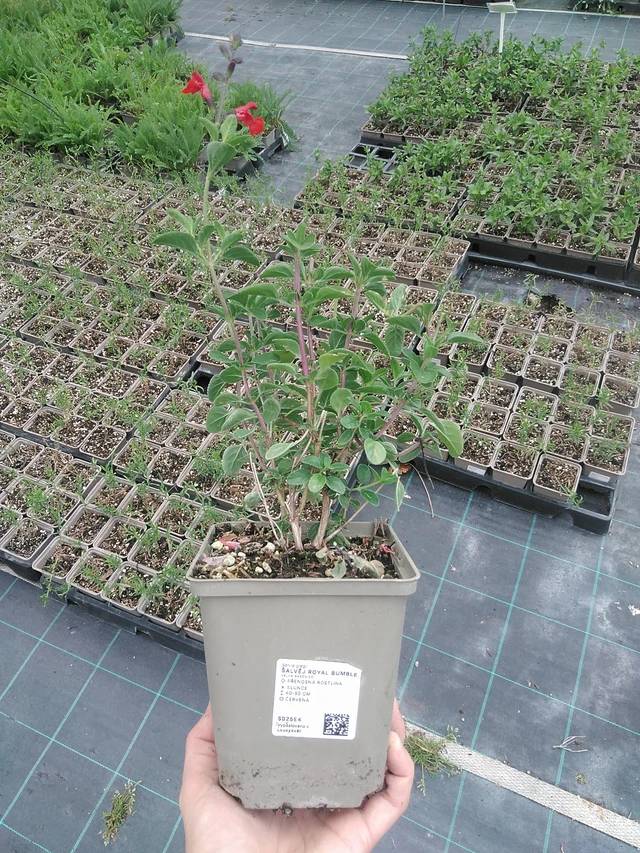
Salvia Royal Bumble - 21. 7. 2026
21. 7. 2026
Salvia Royal Bumble - 2. 7. 2026
2. 7. 2026
Salvia Royal Bumble - 11. 6. 2026
11. 6. 2026
Salvia Royal Bumble - 30. 6. 2025
30. 6. 2025

More products in category Sage

Woodland Sage Caradonna, Loukykvět

Salvia nemorosa

This species of sage originally comes from the steppe regions of Central and Eastern Europe. It forms profusely flowering small clumps with straight upright stems. In flower beds, it looks best in groups. Traditionally, due to the identical flowering time, it is planted as a companion to roses. However, it will look just as good in mixed drought-loving steppe plantings with grasses. It lasts 7 days in a vase. The cultivar Caradonna stands out with a long flowering period and dark, almost black-purple stems with tiny purple flowers and dark purple bracts. If we cut it back after flowering, it will bloom again in late August and September.
2,99
More from 2,09
In Stock posledních 35 kusů
Woodland Sage Ostfriesland, Loukykvět

Salvia nemorosa

This species of sage originates from the steppe regions of Central and Eastern Europe. It forms abundantly flowering small clumps with straight upright stems. In beds, it looks best in groups. Traditionally, it is planted as a companion to roses due to the matching flowering time. However, it will look equally good in mixed drought-loving steppe plantings with grasses. It is an excellent food source for bees. It lasts 7 days in a vase. The cultivar Ostfriesland blooms with a strikingly dark violet-blue color.
2,99
More from 2,09
In Stock
Woodland Sage Amethyst, Loukykvět

Salvia nemorosa

This species of sage originates from the steppe regions of Central and Eastern Europe. It forms profusely flowering small clumps with straight, upright stems. In flower beds, it looks best in groups. It is traditionally planted as a companion to roses due to the matching flowering time. However, it looks equally good in mixed drought-tolerant steppe plantings with grasses. It is an excellent food source for bees. Lasts 7 days in a vase. Amethyst is an elegant variety with long stems and a pink flower color that is unusual for sages.
2,99
More from 2,09
In Stock s doručením od 3. 8. 2026
Woodland Sage Schneehügel, Loukykvět

Salvia nemorosa

This species of sage originates from the steppe regions of Central and Eastern Europe. It forms abundantly flowering small clumps with straight upright stems. In beds, it looks best in groups. Traditionally, it is planted as a companion to roses due to the matching flowering time. However, it will look equally good in mixed drought-loving steppe plantings with grasses. It is an excellent food source for bees. It lasts 7 days in a vase. Schneehügel blooms white.
2,99
More from 2,09
In Stock
Meadow Sage Rose Rhapsody, Loukykvět

Salvia pratensis

Meadow sage occurs here primarily in warmer regions, especially in southern Moravia and northern and central Bohemia. It grows on sunny meadows and hillsides and along paths. Fragrant leaves form a basal rosette, from which several less leafy branched stems grow. The inflorescences are composed of striking bilabiate flowers, which are a great attraction for bees and bumblebees. Rose Rhapsody has light pink flowers.
2,79
More from 1,99
Coming Soon
Salvia Mainacht, Loukykvět

Salvia nemorosa

Woodland sage 'Mainacht' is an aromatic perennial originating from the sunny steppes and dry meadows of Central and Eastern Europe. It is a very resilient and undemanding plant that thrives best here in full sun in well-drained and poorer soil. From the supplied grown seedling, a sturdy clump reaching a height of about half a meter will quickly grow. In flower beds, it stands out best when planted in larger groups, for example as a traditional companion to roses or in mixed drought-tolerant plantings with ornamental grasses. The 'Mainacht' cultivar is popular for its striking dark violet-blue flowers, which appear as early as May and June. If you cut it back after the first bloom, it will willingly bloom again at the end of August. During flowering, the sage is literally a magnet for bees and butterflies. It is an ideal choice for beginners, needs no support, and does not suffer from diseases. It is perfectly suited for cutting into fresh bouquets, where its stems stay fresh for approximately seven days. A surprising bonus is that the fragrant flowers are edible.
2,99
More from 3,29
In Stock
Salvia Blauhügel, Loukykvět

Salvia nemorosa

This species of Salvia originally comes from the steppe regions of Central and Eastern Europe. It forms richly flowering small clumps with straight upright stems. In beds, it looks best in groups. Traditionally, it is planted as a companion to roses due to the same flowering time. However, it will look equally good in mixed drought-loving steppe plantings with grasses. It lasts 7 days in a vase. 'Blauhügel' blooms blue.
4,29
More from 3,89
In Stock s doručením od 3. 8. 2026
Meadow Sage Swan Lake, Loukykvět

Salvia pratensis

Meadow Sage occurs in our country primarily in warmer regions, especially in southern Moravia and northern and central Bohemia. It grows on sunny meadows, slopes, and along roadsides. The fragrant leaves form a basal rosette, from which several sparsely leafy, branched stems grow. The inflorescences consist of striking lipped flowers, which are a huge attraction for bees and bumblebees. Swan Lake blooms white.
2,79
More from 1,99
In Stock
Woodland Sage Adrian, Loukykvět

Salvia nemorosa

This species of sage originates from the steppe regions of Central and Eastern Europe. It forms profusely flowering small clumps with straight, upright stems. In flower beds, it looks best in groups. It is traditionally planted as a companion to roses due to the matching flowering time. However, it looks equally good in mixed drought-tolerant steppe plantings with grasses. It is an excellent food source for bees. Lasts 7 days in a vase. Adrian is a white-flowering cultivar.
2,99
More from 2,09
In Stock
Woodland sage Schwellenburg, Loukykvět

Salvia nemorosa

This species of sage originates from the steppe regions of Central and Eastern Europe. It forms profusely flowering small clumps with straight, upright stems. In flower beds, it looks best in groups. Traditionally, it is planted as a companion to roses due to the matching flowering time. However, it will look equally good in mixed drought-loving steppe plantings with grasses. It is excellent pasture for bees. It lasts 7 days in a vase. 'Schwellenburg' is a very special variety with a richly branched inflorescence. The little flowers have purple bracts and a wine-colored calyx.
3,49
More from 2,39
In Stock
Salvia Feathers Flamingo, Loukykvět

Salvia hybrida

The Feathers series, which includes the Flamingo cultivar, represents a small breakthrough in sage breeding, primarily thanks to its unique, deeply cut leaves. Thus, this sage acts decoratively with its structure in flower beds even before the first buds appear. As the name Flamingo suggests, the flowers have a beautiful pink shade and bloom on the plant in large numbers throughout the summer. The original botanical species of sage come from dry and sunny steppe regions, and this garden beauty also retains a love for the sun and well-drained soils. It cannot stand waterlogging, but it handles summer droughts and poorer habitats excellently. In a garden composition, it stands out in group plantings on the front edge of perennial borders or in modern gravel beds. Its aromatic leaves and nectar-filled flowers attract beneficial insects, so the garden literally comes alive with it. If you cut back the spent inflorescences, you will promote the density of the clump, and the plant often reblooms, flowering again at the end of summer. Thanks to its resilience and frost hardiness down to -28 °C, it is a reliable component of Czech gardens. The flowers can also be used in a vase, where they form a delicate, romantic element.
3,49
More from 2,39
Unavailable
Pro rok 2026 nedostupné
Meadow Sage Sweet Esmeralda, Loukykvět

Salvia pratensis

Meadow Sage occurs in our country primarily in warmer regions, especially in southern Moravia and northern and central Bohemia. It grows on sunny meadows, slopes, and along roadsides. The fragrant leaves form a basal rosette, from which several sparsely leafy, branched stems grow. The inflorescences consist of striking lipped flowers, which are a huge attraction for bees and bumblebees. Sweet Esmeralda has deep pink flowers.
2,79
More from 1,99
Unavailable
Pro rok 2026 nedostupné
Salvia Dancing Dolls, Loukykvět

Salvia gregii

*Salvia greggii*, often called autumn sage, is, in the case of the 'Dancing Dolls' cultivar, a tireless bloomer that will adorn your garden containers with flowers from late spring until freezing. Its homeland is the semi-desert regions of North America, so it loves sun, heat, and a drier, well-drained substrate. It grows as a low, densely branched subshrub that is easy to shape and maintain. Although cultivation is undemanding and suitable even for beginners, it is necessary to keep its limited frost hardiness in mind. In Czech conditions, this sage is best used as a dominant feature in pots on terraces, which you can easily move to a frost-free space for the winter, or it can be planted in very sheltered, sunny flower beds with high-quality drainage and a winter cover. The 'Dancing Dolls' variety brings playfulness and softness to plantings thanks to the unique coloration of its flowers, which alternate tones of pastel pink with creamy white. The tiny lipped flowers grow in abundance at the ends of upright stems and create a very airy impression. In addition to its aesthetic value, this plant is also useful – its strongly aromatic leaves and sweet flowers are edible and can be used in the kitchen as an original garnish for dishes. At the same time, it is a valuable honey-bearing plant that will reliably attract beneficial insects to your garden. The plant does not suffer from diseases or pests, so you can enjoy its beauty without the need for complex protection.
4,29
More from 4,49
In Stock
Meadow Sage Twilight Serenade, Loukykvět

Salvia pratensis

Meadow Sage occurs in our country primarily in warmer regions, especially in southern Moravia and northern and central Bohemia. It grows on sunny meadows, slopes, and along roadsides. The fragrant leaves form a basal rosette, from which several sparsely leafy, branched stems grow. The inflorescences consist of striking lipped flowers, which are a huge attraction for bees and bumblebees. Twilight Serenade blooms violet-blue.
2,79
More from 1,99
In Stock poslední 3 kusy
Meadow sage, Loukykvět

Salvia pratensis

The meadow sage occurs here primarily in warmer regions, especially in southern Moravia and northern and central Bohemia. It grows on sunny meadows and slopes and along paths. Fragrant leaves form a ground rosette, from which several less leafy branched stems grow. The inflorescences are composed of striking bilabiate flowers, which are a great attraction for bees and bumblebees.
2,79
More from 1,99
Coming Soon
Salvia Nachtvlinder, Loukykvět

Salvia gregii

Sage 'Nachtvlinder' is a true jewel among portable container plants, which will win you over with its unusual color and endurance. The original species *Salvia greggii* comes from the sunny and dry semi-desert regions of Texas and Mexico, where it grows on rocky and poor soils. Thanks to this, it is very undemanding regarding watering here as well and loves full sun. In our conditions, we most often grow it as a portable plant in pots on terraces or balconies, because its frost resistance reaches only -12 °C. For the winter, we therefore recommend hiding it in a frost-free bright place, or carefully covering it in the warmest regions of the country. The 'Nachtvlinder' variety, whose name translates as night moth, will enchant you with velvety flowers in a deep shade of plum purple. Its huge advantage is the incredibly long flowering period, which starts in May and often ends only with the arrival of stronger frosts in November. The entire plant is strongly aromatic and releases a pleasant spicy scent when touched. Furthermore, the flowers are edible and sweet, so they are perfectly suited as an unconventional garnish for summer salads or desserts. It will also attract a large number of bees and other beneficial insects to your garden.
4,29
More from 4,49
In Stock s doručením od 24. 8. 2026
Whorled Sage Purple Rain, Loukykvět

Salvia verticilata

Salvia verticillata, also known as whorled sage, looks interesting due to its bright purple flower color. The flowers are arranged on the stem in whorls, protruding from the green foliage, and appear as delicate colorful sprays in plantings. Purple Rain has a color even slightly more saturated than the basic species.
2,99
More from 2,09
In Stock s doručením od 10. 8. 2026
Clary sage, Loukykvět

Salvia sclarea

Clary sage is the true queen among herbs, dominating every sunny flower bed with its impressive height and intoxicating fragrance. It originally comes from the Mediterranean and Central Asia regions, where it inhabits dry hillsides and rocky places; therefore, it will thrive best in your garden in well-drained, poorer soil in full sun. It forms massive basal rosettes of large, felt-like leaves, from which thick and upright stems grow up to a height of 120 cm. The inflorescence is composed of tiny florets, but the main ornament is the striking, purple to pinkish colored bracts that decorate the plant for long weeks from June to August. The whole plant is highly aromatic, and its spicy scent reminiscent of muscat wine attracts a large number of bees and bumblebees to the garden. It fits perfectly into country gardens, gravel beds, and as a solitary plant. The flowers are great for cutting into fresh summer bouquets, but also for drying, as they retain their color and fragrance for a long time.
2,99
More from 2,09
Unavailable
Pro rok 2026 nedostupné
Meadow Sage Sky Dance, Loukykvět

Salvia pratensis

Meadow Sage occurs in our country primarily in warmer regions, especially in southern Moravia and northern and central Bohemia. It grows on sunny meadows, slopes, and along roadsides. The fragrant leaves form a basal rosette, from which several sparsely leafy, branched stems grow. The inflorescences consist of striking lipped flowers, which are a huge attraction for bees and bumblebees. Sky Dance has light blue flowers.
2,79
More from 1,79
In Stock
Spanish sage, Loukykvět

Salvia reptans

Narrow-leaved sage is a fascinating perennial native to the southwestern USA and Mexico, which deceives with its appearance at first glance. With its narrow, needle-like leaves, it resembles an ornamental grass rather than a classic sage, which earned it the English name grass sage. This unique texture brings lightness and movement to flower beds, as the plant ripples beautifully even in a gentle breeze. Its true moment comes in the second half of summer and in autumn, when the tops of the stems are covered with tiny but intensely colored flowers. It is a plant made for sunny and dry habitats that would cause problems for other species. It thrives perfectly in poor, gravelly, and well-drained soils, where it is not at risk of root rot. Thanks to its drought tolerance and frost hardiness, it is an ideal choice for gravel gardens, steppe plantings, or xerophytic flower beds. Furthermore, it does not suffer from diseases or pests, making it a great plant even for beginning growers. The flowers are a magnet for bees and other pollinators, who appreciate a late source of nectar at a time when most other perennials are finishing their bloom. The plant is also suitable for cutting into a vase, where it creates a very delicate and airy impression.
2,99
More from 2,09
Unavailable
Pro rok 2026 nedostupné

More products in category Perennials

Lady's mantle Irish Silk, Loukykvět

Alchemilla mollis

Alchemilla mollis, known as lady's mantle, is an indispensable perennial for anyone who wants to bring harmony and softness to the garden. Its home is the moister environments of mountain meadows and light forests, making it a very adaptable plant that will survive even severe frosts without problems in our climate. The 'Irish Silk' cultivar is prized for its vitality and abundant blooming, where clouds of tiny, yellow-green flowers float above clumps of gray-green leaves. It is precisely this neutral color that can work wonders in a flower bed – it softens overly sharp contrasts between other flowers and beautifully unifies the entire composition. Besides its ornamental function, lady's mantle also has practical uses. Thanks to its clumping growth and ability to quickly fill in, it is ideal for edging pathways or as an underplanting beneath taller shrubs and roses. Water droplets catch on its leaves, creating a magical spectacle in the garden. If you enjoy making bouquets, you will love lady's mantle as versatile filler greenery that matches almost anything. It will last beautiful for about ten days in a vase, and its inflorescences can also be easily dried without losing too much of their color or shape. Moreover, it is a magnet for pollinators, and its young leaves are even edible, so it also finds use in a natural kitchen.
2,99
More from 2,09
Coming Soon
Yarrow Summer Pastels, Loukykvět

Achillea millefolium

An original wild perennial with a large distribution area from Europe to Siberia. Suitable for natural and wild plantings. It grows in meadows and dry grassy places. A very adaptable and undemanding plant, it grows in clumps and spreads by runners. By cutting back after the first flowering, we encourage a set of new flowers. For bouquets, we harvest when the florets are fully open. It lasts 10 days in a vase. Summer Pastels is characterized by a changeable and soft range of colors from white and vanilla to salmon, brick red, and bronze.
3,09
More from 1,99
In Stock
Woodland Sage Caradonna, Loukykvět

Salvia nemorosa

This species of sage originally comes from the steppe regions of Central and Eastern Europe. It forms profusely flowering small clumps with straight upright stems. In flower beds, it looks best in groups. Traditionally, due to the identical flowering time, it is planted as a companion to roses. However, it will look just as good in mixed drought-loving steppe plantings with grasses. It lasts 7 days in a vase. The cultivar Caradonna stands out with a long flowering period and dark, almost black-purple stems with tiny purple flowers and dark purple bracts. If we cut it back after flowering, it will bloom again in late August and September.
2,99
More from 2,09
In Stock posledních 35 kusů
Verbena, Loukykvět

Verbena bonariensis

A verbena species originally from South America. In our country, it is often used as an annual, but in mild winters it can overwinter and reproduce by self-seeding. The firm, airy stems beautifully soften perennial beds and make them special with their purple color. It beautifully complements steppe plantings with grasses and rose beds.
3,29
More from 2,29
In Stock
Russian Sage, Loukykvět

Perovskia atriplicifolia

Russian sage reliably brings a touch of sunny steppes into the garden and places almost no demands on care. These sparsely branched subshrubs originally come from harsh, rocky areas from Afghanistan to Tibet, where they grow on open sun-drenched plains. Thanks to its origin, it delights in full sun and poor, well-drained sandy soil with minimal moisture. You will receive from us a well-rooted seedling in a pot, which just needs to be transplanted straight to the chosen spot in the flower bed. It does not need support, is avoided by common pests and diseases, and will survive frosts down to minus twenty-eight degrees. It grows up to one hundred and twenty centimeters and forms striking white felted shoots with silvery grey aromatic leaves. From July to October, it blooms with tiny blue-purple flowers that act as a lure for bees and butterflies and are even edible. Russian sage stands out next to drought-tolerant perennials. The flowers are suitable for cutting and drying for winter arrangements. Moreover, the silvery stems will ensure a beautiful winter effect in the flower bed.
2,99
More from 2,09
In Stock posledních 64 kusů
Gaura Siskiyou Pink, Loukykvět

Gaura lindheimeri

Gaura Siskiyou Pink is a charming perennial that brings lightness and airiness to the garden. Its original native area is in the warm regions of Texas and Louisiana, which is why it thrives in full sun and well-drained sandy soil. It grows in clumps and from June until the autumn frosts produces tiny raspberry-pink flowers that resemble fluttering butterflies. An interesting detail of this variety is the green leaves with a bronze tint and red spots. It is an absolutely undemanding plant, does not suffer from diseases or pests, and even beginners can handle its care. You will receive a grown seedling in a pot from us, which you simply need to transplant directly into the flowerbed. Here it complements ornamental grasses perfectly and acts as an attraction for bees and bumblebees. Although it grows more as a short-lived perennial in our climate, in a suitable place it reliably self-seeds. Occasional pinching will encourage richer branching. Gaura is excellent for summer bouquets. We cut the stems for a vase as soon as the first two to three little flowers open.
2,99
More from 2,09
In Stock
Coneflower Magnus, Loukykvět

Echinacea purpurea

A valuable garden and medicinal perennial, native to North America. It blooms in summer with dark purple-pink flowers. The spiky flower centers are an irresistible attraction for butterflies. They last 7–10 days in a vase. After removing the petals, the stems with the central disks can be dried or used in fresh bouquets as an interesting element. Magnus features distinctive deep pink flowers with an orange-brown center.
2,99
More from 2,09
In Stock poslední 2 kusy
Sea Holly, Loukykvět
For drying

Eryngium planum

Sea holly is an indispensable perennial for all lovers of naturally styled gardens. It earned its folk name - male fidelity - in times when it was used in herbal medicine as an aphrodisiac, and its roots were even candied as sweets in France and England. Today, however, you will appreciate it mainly for its low maintenance and unique appearance. Its home is on sunny hillsides and dry meadows, so even in our gardens, it will welcome well-drained, even poorer sandy soil and full sun. It produces upright, sturdy stems topped with blue-purple flowers with prickly bracts, which bring interesting structure and a silvery touch to the flowerbeds. It is literally a magnetic plant for bees, bumblebees, and butterflies, who find a rich food source on it. Floristically, it is extremely valuable, because its flowers are perfectly suited for cutting as well as drying for winter decorations. If you decide not to harvest it, feel free to leave it in the flowerbed all winter. Its silhouette covered in hoarfrost creates a wonderful winter effect. Although it is a short-lived perennial, in a suitable location it reliably self-seeds, so you will enjoy its beauty for many years.
2,79
More from 1,99
Coming Soon
Echinacea pallida, Loukykvět

Echinacea pallida

The pale coneflower is one of the exceptionally interesting prairie perennials of the North American continent. In its natural environment, it grows on open, sunny plains, which is why it thrives best in our gardens in full sun in drier, well-drained soil. You just need to transplant this grown seedling straight into the flower bed, where it will reliably take root. It does not need support, easily withstands severe frosts, and is avoided by common diseases and pests, making it ideal for beginner growers. During June and July, it will reward you with aromatic flowers with unusually narrow and drooping petals in light purple and pink tones. The prominent prickly centers are literally a magnet for bees and bumblebees, and the flowers themselves are surprisingly edible. The plant stands out especially in rustic plantings together with ornamental grasses. Gardeners and florists love it for its versatility. The fresh stems bring joy in a vase for about a week. Moreover, the distinctive central cones hold their shape perfectly, can be perfectly dried for winter decorations, or left in the flower bed, where they will create an eye-catching winter structure under a layer of snow.
2,99
More from 2,09
In Stock
Coneflower Rubinstern, Loukykvět

Echinacea purpurea

A valuable garden and medicinal perennial, originally from North America. It blooms in summer with dark purple-pink flowers. The spiky flower discs are an irresistible lure for butterflies. Lasts 7–10 days in a vase. After plucking the petals, the stems with the central discs can be dried or used in fresh bouquets as an interesting element. Rubinstern is very similar to the Magnus cultivar; the petals are darker and firmer. As they fade, they gradually pale and droop downwards.
2,99
More from 2,09
In Stock
Rudbeckia Goldsturm, Loukykvět

Rudbeckia fulgida

Rudbeckia Goldsturm is a reliable and long-lived perennial that will bring the warm tones of late summer and autumn into your garden. It originally comes from the open plains and prairies of North America, so it delights most in sunny locations with common garden soil, whether it is loamy, humus-rich, or clayey. You will receive from us an already grown seedling in a pot, which you just need to transplant to the chosen spot in the flower bed. It is a completely undemanding plant, does not suffer from diseases or pests, and easily survives severe frosts. The Goldsturm cultivar grows to a height of about seventy centimeters and does not need support. From August to October, it produces a flood of golden-yellow flowers with distinctly dark centers. These edible flowers attract pollinators and fit perfectly into both prairie and rustic plantings. Rudbeckia is also great for cutting, lasting around ten days in a vase. In addition, the distinctive dark centers can be easily dried. If you leave them in the flower bed over the winter, they will provide a wonderful spectacle.
2,79
More from 1,99
In Stock
Gaura Summer Breeze, Loukykvět

Gaura lindheimeri

The charming gaura comes from the sun-drenched plains of Texas and Louisiana and represents exactly the plant that can liven up any drought-tolerant planting. It is a naturally profusely blooming perennial that delights in full sun and well-drained, sandy, and nutrient-poor soil. You will receive from us an already grown seedling in a pot, which will quickly form a vigorous clump after being transplanted into the garden. From early summer until late autumn, it will delight you with a flood of tiny flowers in pure white and delicate pink tones. The flowers gently sway in the breeze and with their appearance resemble a flock of tiny butterflies, which also really like to land on the plant, as do bees and bumblebees. Although gaura is known as a short-lived perennial, thanks to its willing self-seeding, it will last for many years in your garden. Caring for it is completely undemanding, it is avoided by most diseases and pests, and it can handle frosts down to eighteen degrees below zero without any problems. It is often used in mixed borders, where it beautifully softens the overall impression, and perfectly matches various types of ornamental grasses. The Summer Breeze variety is popular for its strong and healthy growth as well as its exceptionally generous set of flowers, which grow to about one meter. If you like to create your own bouquets, do not hesitate to cut gaura for a vase. Harvesting is best done the moment the first small flowers on the stem begin to open. These delicate flowers are not suitable for drying into dried arrangements, but they will beautifully lighten up fresh bouquets.
2,99
More from 2,09
In Stock s doručením od 17. 8. 2026
Woodland Sage Ostfriesland, Loukykvět

Salvia nemorosa

This species of sage originates from the steppe regions of Central and Eastern Europe. It forms abundantly flowering small clumps with straight upright stems. In beds, it looks best in groups. Traditionally, it is planted as a companion to roses due to the matching flowering time. However, it will look equally good in mixed drought-loving steppe plantings with grasses. It is an excellent food source for bees. It lasts 7 days in a vase. The cultivar Ostfriesland blooms with a strikingly dark violet-blue color.
2,99
More from 2,09
In Stock
Woodland Sage Amethyst, Loukykvět

Salvia nemorosa

This species of sage originates from the steppe regions of Central and Eastern Europe. It forms profusely flowering small clumps with straight, upright stems. In flower beds, it looks best in groups. It is traditionally planted as a companion to roses due to the matching flowering time. However, it looks equally good in mixed drought-tolerant steppe plantings with grasses. It is an excellent food source for bees. Lasts 7 days in a vase. Amethyst is an elegant variety with long stems and a pink flower color that is unusual for sages.
2,99
More from 2,09
In Stock s doručením od 3. 8. 2026
Calamint Blue Cloud, Loukykvět

Calamintha nepeta

Lesser calamint Blue Cloud is an undemanding and modest perennial that reliably perfumes any sunny garden. Its original homeland is the sunny and dry slopes of Southern Europe, which is why it thrives best here in direct sun in well-drained, sandy, or poorer loamy soil. It handles winter without problems, tolerating frosts down to minus twenty-three degrees. You will receive a grown seedling in a pot from us, which you just need to transplant straight into the flowerbed, where it will very soon form a compact, airy small shrub reaching a height of up to forty centimeters. It does not suffer from any diseases or pests, so even complete beginners can easily handle caring for it. Throughout late summer and into autumn, it blooms with a record number of tiny blue flowers that are so typical of the Blue Cloud variety. The whole plant emits a pleasant minty-spicy scent, and its flowers, which resemble thyme, act as a literal magnet for bees, bumblebees, and butterflies. It will look great among roses or in naturally designed steppe flowerbeds, where it naturally complements lower ornamental grasses. Additionally, both the blue flowers and green leaves are edible, so you can use them to garnish summer dishes. Lesser calamint is also excellently suited for cutting into smaller fresh bouquets, adding a fine structure to them in a vase.
2,79
More from 1,99
Coming Soon
Daisy Maikönigin, Loukykvět

Leucanthemum vulgare

A classic perennial for early summer bouquets and cottage gardens. For bouquets, we harvest flowers with firm, smooth central disks. Then they last 7–10 days in a vase. Maikönigin is an exceptionally abundantly flowering garden form.
2,79
More from 1,99
In Stock
Yarrow Terracotta, Loukykvět

Achillea millefolium

A native wild perennial with a large distribution range from Europe to Siberia. Suitable for natural and wild plantings. It grows in meadows and dry grassy places. A very adaptable and undemanding plant, it grows in clumps and spreads via runners. Cutting back after the first bloom encourages a new set of flowers. Harvest for bouquets when the tiny flowers are fully open. It lasts 10 days in a vase. Terracotta features ochre, shades of orange and yellow, and gray-green foliage.
2,99
More from 2,89
In Stock
Calamint, Loukykvět

Calamintha nepeta ssp. nepeta

An undemanding and modest perennial that blooms with a large number of tiny flowers. It blooms for a record-breaking length of time throughout late summer and autumn. It forms smaller, compact, airy bushes that release a minty-spicy scent. The thyme-like flowers attract bees, bumblebees, and butterflies. It will look good among roses as well as in naturalistic steppe beds, perhaps with lower grasses. This calamint is generally more vigorous. It differs from other calamints with felted leaves by its record flowering length, stiff and shiny leaves, and also a larger number of flowers that do not form seeds and are therefore maximally durable. Sometimes sold under the cultivar name 'Triumphator'.
2,79
More from 1,99
In Stock
Woodland Sage Schneehügel, Loukykvět

Salvia nemorosa

This species of sage originates from the steppe regions of Central and Eastern Europe. It forms abundantly flowering small clumps with straight upright stems. In beds, it looks best in groups. Traditionally, it is planted as a companion to roses due to the matching flowering time. However, it will look equally good in mixed drought-loving steppe plantings with grasses. It is an excellent food source for bees. It lasts 7 days in a vase. Schneehügel blooms white.
2,99
More from 2,09
In Stock
Japanese Anemone Whirlwind, Loukykvět

Anemone hybrida

Anemones come from the same family as buttercups. With their elegant flowers on long slender stems, they can liven up and brighten late summer and autumn beds. They stand out against the darker background of shrub groups and will also be grateful for their partial shade. The Czech Perennial Association chose autumn Anemones as the perennial of the season for 2022. They last 7 days in a vase. Whirlwind is a historical variety bred in 1887 in the USA. It has a semi-double pure white flower, often with inner twisted petals, and compact, strictly upright growth. The flowers are very durable.
4,79
More from 3,59
In Stock