
Paeonia
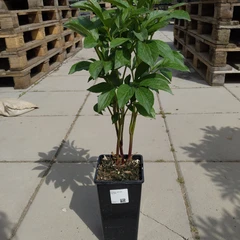
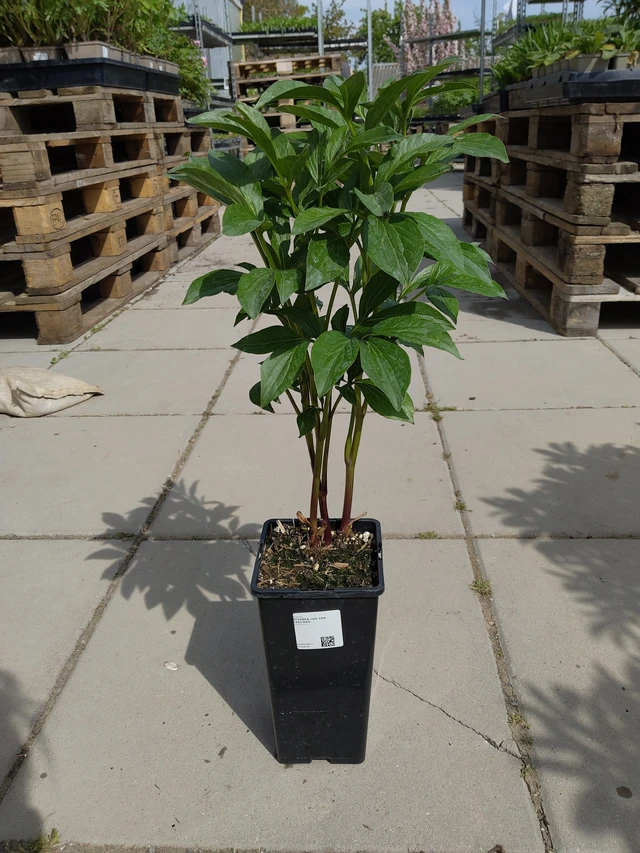
Peony Jan van Leeuwen
Seedling K11
Attracts pollinators 🐝
Difficulty
Diseases
Edible
Flower color
Flower color: Shade
Foliage color
Fragrant (aromatic) 👃
Frost resistance
Hardiness zone
Height
Moisture
Pests
Position
Soil
Spacing
Spacing: Plants per m²
Species
Suitable for cutting
Suitable for drying
Recommended products

Paeonia
Peony Coral Charm

Salvia nemorosa
Woodland Sage Schneehügel

Geranium pratense
Cranesbill Midnight Reiter

Papaver orientale
Oriental Poppy Royal Wedding

Geum chiloense
Avens Tempest Scarlet

Bouteloua gracilis
Mosquito Grass

Geum chiloense
Avens Totally Tangerine

Chamaemelum nobile
Roman Chamomile

Paeonia
Peony Alexander Fleming

Aquilegia vulgaris
Columbine Kristall

Myosotis scorpioides
Water Forget-me-not

Achillea millefolium
Yarrow Cerise Queen


Paeonia
Peony Red Charm

Clematis heracleifolia
Clematis New Love

Panicum virgatum
Switchgrass Northwind

Geum rivale
Geum Mango Lassi

Paeonia
Peony Gardenia

Anemone hybrida
Japanese Anemone Whirlwind

Coreopsis verticillata
Coreopsis Zagreb

Hesperis matronalis
Sweet Rocket Violet

Anemone hybrida
Japanese Anemone Andrea Atkinson

Delphinium hybrida
Larkspur Benary’s Pacific Galahad

Dicentra spectabilis Alba
Bleeding Heart Alba

Delphinium hybrida
Larkspur Benary’s Pacific Astolat

Delphinium hybrida
Larkspur Benary’s Pacific Blue Bird

Achillea millefolium
Yarrow Alabaster

Paeonia
Peony Bridal Shower

Dicentra spectabilis
Bleeding Heart

Aquilegia vulgaris
Columbine Heidi
Cultivation
GENERAL INFO
Peony roots are live material, which is why we store them under specific conditions—we must ensure the roots have sufficient moisture to prevent them from drying out too much. However, when stored in moist conditions, a light surface mold may appear; this is a cosmetic phenomenon that does not affect subsequent growth. We pack the roots just before shipping to keep the storage time in sealed packaging as short as possible.
PLANTING
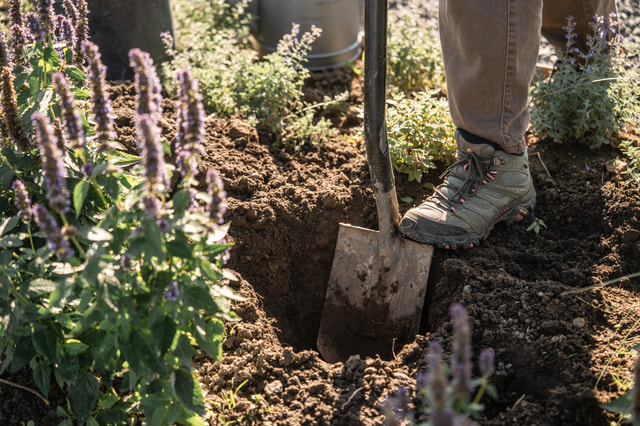
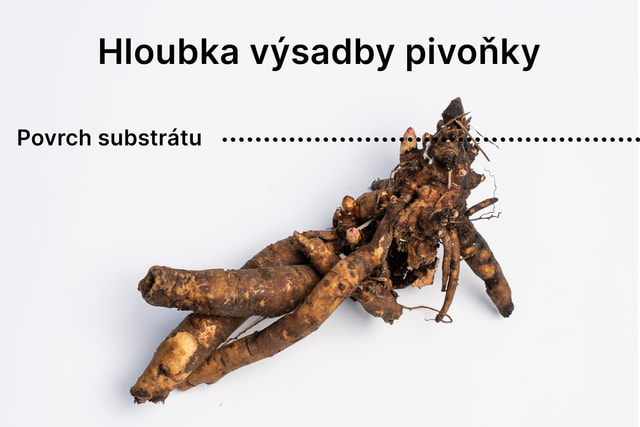
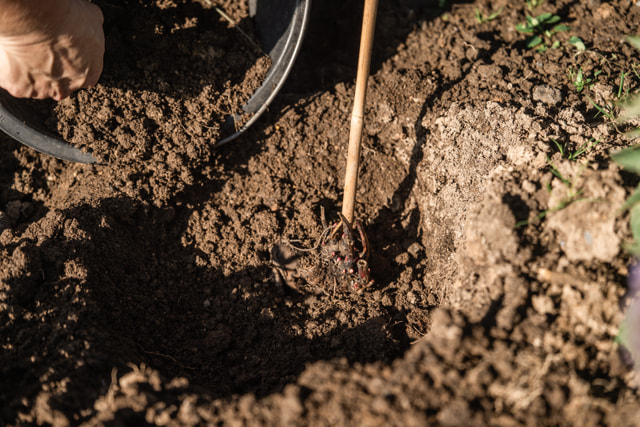
Do not delay planting your peonies, so that their roots do not dry out too much during storage; as mentioned, storage is demanding. When planting, it is necessary to ensure the correct planting depth and avoid "drowning" the plants, otherwise, they will not bloom. Plant them so that after watering, the tips of the growth buds are slightly visible above the surface of the substrate. The lowest buds should be a maximum of 2–3 centimeters below the surface. The planting hole should be twice as wide and deep as the peony root. Account for the soil settling after watering. If planting late in the autumn, you can cover new plants with brushwood before winter.
LOCATION
Peonies bloom best in a sunny spot. However, they are quite adaptable and can thrive in semi-shaded locations, although they need at least 6 hours of sunshine for abundant flowering. All peonies need plenty of space around them; they do not like competition from shrubs or hedges. You should reserve an area of one square meter for each peony, where they will not be crowded by other vigorously growing perennials.
SOIL CONDITIONS
Peonies need well-drained, loamy, and nutrient-rich garden soil that retains reasonable moisture. They do not tolerate waterlogging in overly heavy soil.
WATERING
Newly planted peonies need watering especially during their first spring during dry periods. Mature peonies are more resilient, and watering is only necessary in the event of a very dry spring and early summer. After flowering, they generally do not have issues with summer drought.
FERTILIZING
Peonies need plenty of nutrients; an organic fertilizer rich in potassium is suitable in the spring. Conversely, watch out for excessive nitrogen, as this would make the plants more susceptible to fungal diseases. In the autumn, you can spread a thin, centimeter-thick layer of mature compost around the plant.
DISEASE PREVENTION
Maintain sufficient distance when planting so that air circulates well between the plants. Regularly remove dead flowers and any diseased leaves. These must not be added to the compost but should be disposed of with regular household waste.
CARE AND MAINTENANCE
In the first years after planting, remove side buds to help the plants grow stronger. At the end of autumn, you can remove dead leaves. Plan for plant support, as all herbaceous peonies require it. Beware of spring frosts, especially if they follow a mild winter. Sprouting flower buds can tolerate temperatures dropping to -3°C; at lower temperatures, they will die. In this case, protect the peonies with non-woven fabric.
(NOT) TRANSPLANTING
Choose the location carefully; peonies prefer undisturbed growth without transplanting. This is possible with older plants by dividing them so that each part has three to seven buds. The best period is from September to October.
The information given is based on our experience, please use it as a guide only. Times may vary depending on the season, climate, location, sowing and transplanting dates and possibly also the conditions in the greenhouse/greenhouse. We always recommend testing how the plant performs in your conditions. Please do not take this as a guarantee.
Collections
The product can be found in the following collections.


Perennial Collection with Bulbs and Annual Seeds
Soft Tones for Peonies
A collection of perennials designed for sunny beds and good soil. You can use it just as we suggest, as a classic and time-te…


Perennial, bulb, and annual seed collection
Wedding Entourage for Peonies
A collection in soft, neutral tones for sunny or light-shade spots. It contains species that love good, moist soil. It works …
Do you prefer a different method of growing?
Peony Jan van Leeuwen is also available in this form.

Paeonia
Peony Jan van Leeuwen
Frequently
asked
questions
Growing
Can I transplant the peony to a different spot later?
When and how should I prune a peony?
Is the peony hardy and how should I prepare it for winter?
How deep should I plant the peony root?
Does the Jan van Leeuwen variety need support?
How often do peonies need to be watered?
What should I use to fertilize peonies and when?
Characteristics
Is the peony toxic to children or pets?
When can I expect the first blooms?
Is this plant beneficial for bees and insects?
Planting site
What kind of soil do peonies require?
Where is the best place to plant the 'Jan van Leeuwen' peony?
Can I grow the Paeonia 'Jan van Leeuwen' in a pot?
Diseases & pests
What diseases most commonly affect peonies?
Harvest
Is the Jan van Leeuwen peony suitable for cut flowers?
Photos
in time
See how the seedling looks over the course of a year.
More products in category Peony
Paeonia
Peony Coral Charm
Paeonia
Peony Red Charm

Paeonia
Peony Pink Hawaiian Coral

Paeonia
Peony Red Sarah Bernhardt

Paeonia
Peony Sarah Bernhardt
Paeonia
Peony Gardenia

Paeonia
Peony Karl Rosenfield

Paeonia
Peony Shirley Temple

Paeonia
Peony Monsieur Jules Elie

Paeonia
Peony Jacorma
Paeonia
Peony Bridal Shower
Paeonia
Peony Alexander Fleming

Paeonia
Peony Alertie

Paeonia
Peony Duchesse de Nemours

Paeonia
Peony Marie Lemoine

Paeonia
Peony Raspberry Sundae

Paeonia
Peony Coral Sunset

Paeonia
Peony Catharina Fontijn

Paeonia
Peony Elsa Sass

Paeonia
Peony Mother's Choice
More products in category Perennials

Alchemilla mollis
Lady's mantle Irish Silk

Achillea millefolium
Yarrow Summer Pastels

Verbena bonariensis
Verbena

Salvia nemorosa
Woodland Sage Caradonna

Perovskia atriplicifolia
Russian Sage

Gaura lindheimeri
Gaura Siskiyou Pink

Echinacea purpurea
Coneflower Rubinstern

Echinacea pallida
Echinacea pallida

Eryngium planum
Sea Holly

Echinacea purpurea
Coneflower Magnus

Salvia nemorosa
Woodland Sage Ostfriesland

Calamintha nepeta
Calamint Blue Cloud

Rudbeckia fulgida
Rudbeckia Goldsturm

Calamintha nepeta ssp. nepeta
Calamint

Gaura lindheimeri
Gaura Summer Breeze

Salvia nemorosa
Woodland Sage Amethyst

Leucanthemum vulgare
Daisy Maikönigin

Achillea millefolium
Yarrow Terracotta

Perovskia atriplicifolia
Russian sage Little Spire
Salvia nemorosa


