Ireland
🌷 Pre-orders for bulbs are in full swing! Check out this year's selection. 🌷
Ireland
🌷 Pre-orders for bulbs are in full swing! Check out this year's selection. 🌷
Cornflower Amethyst in Snow, Loukykvět

Centaurea montana

Cornflower Amethyst in Snow

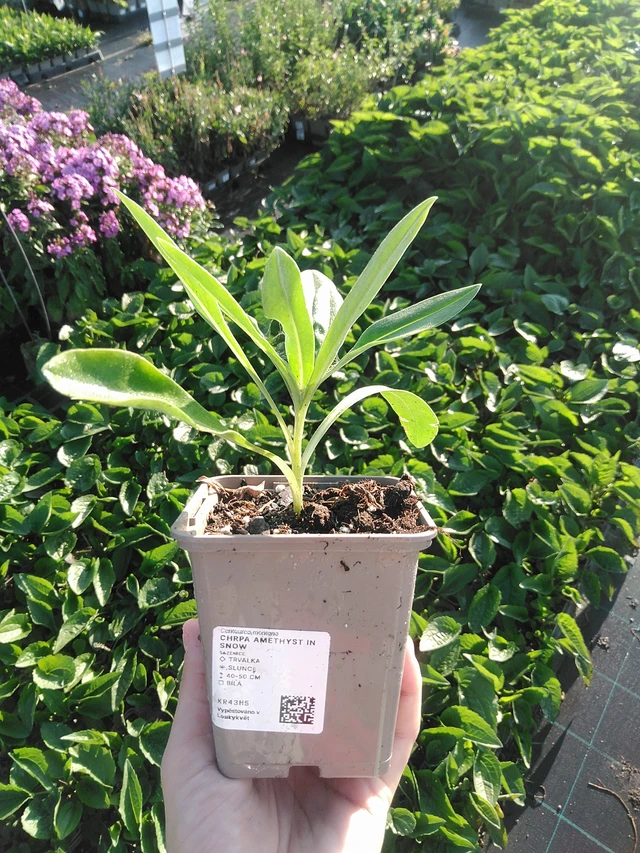
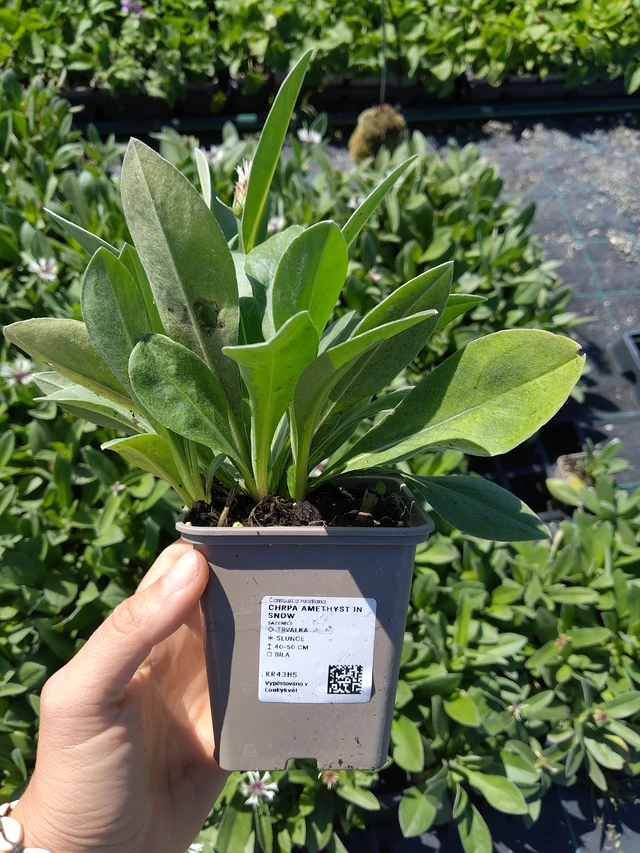
The Amethyst in Snow cornflower is an absolute unique among mountain cornflowers that will liven up every garden. While the classic mountain cornflower blooms blue, this cultivar offers a gorgeous contrast of pure white flowers with a dark purple center. The original species occurs in almost all mountainous areas of Central and Southern Europe on high-altitude meadows and light clearings, thanks to which the plant is extraordinarily resilient and fully frost-resistant. With its height around 40 to 50 centimeters, it excellently suits the edges of beds or into natural plantings, where it will apply in rural submontane gardens with other robust species. It spreads very well and can create a continuous stand over time. The flowers are not only beautiful to look at, but also edible, so you can safely decorate summer salads or desserts with them. If you want to transfer a piece of this beauty home, do not hesitate to cut it into a vase, where it will last fresh for about a week. It is a rewarding perennial for beginners, which does not suffer from diseases or pests and reliably attracts bees. Show full description

Seedling

Květináč K9 (9×9×9,5 cm)
Seedling
Seedling
1-2 kusy
3,89/ks
3-8 kusů
3,49/ks
9-17 kusů
3,09/ks
18+ kusů
2,89/ks
Add to cart
Skladem 117 ks

Attracts pollinators 🐝

Ano

Difficulty

Beginner

Diseases

Disease-free 🙂

Edible

Ano
?
Information on whether the plant is edible.

Flower color

White, purple

Flower color: Shade

Pure white, dark purple

Foliage color

Green

Fragrant (aromatic) 👃

Ne

Frost resistance

-40
?
The temperature down to which the plant is frost hardy.

Hardiness zone

3a (-40 °C to -37.2 °C)

Height

40-50 cm

Moisture

💧💧

Pests

Pest-free 🙂

Position

Sun, partial shade

Soil

Loamy, well-drained

Spacing

40-40 cm
?
Recommended planting spacing.

Spacing: Plants per m²

6-9

Species

Perennial

Suitable for cutting

Ano

Suitable for drying

Ne
1
2
3
4
5
6
7
8
9
10
11
12
Flowering
May
June

Recommended products

Coneflower SunSeekers White Perfection, Loukykvět
New

Echinacea purpurea

A valuable garden perennial native to North America. It blooms in summer, and its spiky flower cones are an irresistible attraction for butterflies. They last 7–10 days in a vase. The Sunseekers series boasts profuse branching and flowering. The plants are compact and suitable for growing in containers.
4,79
More from 3,59
Coming Soon
Meadow rue Decorum, Loukykvět

Thalictrum delavayi

Meadow rue 'Decorum' brings unrepeatable lightness and elegance to perennial beds. This robust perennial comes from the mountainous regions of China, where it grows in moister thickets and on grassy slopes. In the garden, it will enchant you with its delicate, lilac to lavender flowers that hover like a purple haze above the dark green, finely divided leaves. It grows to an impressive height of up to 150 cm, making it a great fit for the background of flower beds, where it forms an airy backdrop for other plants. Given its height and fragile appearance, it will appreciate support so the wind does not break it. It loves humous, well-drained soil with plenty of moisture and a location in full sun or partial shade. The flowers are a magnet for pollinators, and in summer, the bed will literally come alive with buzzing. Even though the plant looks very delicate, it is fully frost-hardy. If you like making bouquets, meadow rue is an ideal addition for lightening up the arrangement, but it is not suitable for drying. Just remember that the entire plant is poisonous.
4,79
More from 3,59
In Stock posledních 67 kusů
Knautia Red Knight, Loukykvět

Knautia macedonica

Macedonian scabious is an abundantly and long-blooming, undemanding perennial that will bring the untamed charm of summer meadows to the garden. Its wild form originates from the sun-drenched Balkans, where it naturally grows on sunny hillsides and in warm thickets. You will receive from us a mature seedling in a pot, which just needs to be transplanted into well-drained loamy or sandy soil in the sun or partial shade. Here it will quickly take root and form a vigorous clump. The Red Knight cultivar enchants with slender stems up to ninety centimeters tall, which all summer from June to September carry a flood of dark burgundy to deep wine-red flowers. These edible flowers act as a huge attraction for bees, bumblebees, and other insects. The plant is an ideal choice for beginners because it reliably resists frosts down to minus twenty-eight degrees and does not suffer from any pests or diseases. Although it belongs to short-lived perennials, in a suitable place it gladly self-seeds. It will fit perfectly into naturalistically designed plantings with ornamental grasses and is popularly used in sweeping meadow bouquets. We recommend cutting the flowers fully open; they will then stay beautifully fresh in a vase for several days.
2,79
More from 1,99
In Stock posledních 9 kusů
Yarrow Paprika, Loukykvět
New

Achillea millefolium

Native wild perennial with a large distribution area from Europe to Siberia. Suitable for natural and wild plantings. Grows in meadows and dry grassy places. Very adaptable and undemanding plant, grows in clumps and spreads by runners. Cutting back after the first flowering promotes a new set of flowers. We harvest for bouquets when the florets are fully open. Lasts 10 days in a vase. Cultivar Paprika has flowers in a warm red shade.
3,49
More from 2,39
In Stock posledních 60 kusů
Blue-eyed Mary, Loukykvět

Omphalodes verna

Spring navelwort is a groundcover woodland perennial native to southern Europe. It naturalized in our gardens as early as the 16th century, and in suitable places, it can form dense carpets of fresh green leaves. Thanks to this, it works as a reliable undergrowth beneath shrubs and trees, where it naturally retains moisture and prevents weed growth. The sky-blue flowers, strikingly similar to forget-me-nots, appear early in the spring, from March to May, and attract the first bees and other pollinators. The plant thrives in partial shade to full shade and requires humus-rich, loamy soil. It is a completely undemanding and frost-hardy perennial that is not bothered by pests or diseases. Although it is a lower plant, its tiny flowers can also be used in delicate spring arrangements.
2,99
More from 2,09
In Stock
Geranium Johnson's Blue, Loukykvět
New

Geranium himalayense

A garden cultivar created by crossing the Himalayan geranium and our native meadow geranium. Its great advantage is the large blue flowers that appear from May and throughout the summer. It creates wide cushion-like clumps, and its leaves turn warm orange-red tones in autumn.
3,49
More from 2,39
In Stock
Sea holly Silver Salentino, Loukykvět
For drying

Eryngium planum

Sea holly Silver Salentino stands out with the silvery metallic color of its flowers and bracts, which looks very modern and novel in flower beds. This perennial will find its use mainly in naturally styled steppe and gravel beds, where it will appreciate full sun and well-drained, even poorer sandy soil. It is an undemanding plant that even beginners can handle; it does not need support and tolerates drought excellently. The flowers are literally a magnet for bees, bumblebees, and butterflies, so you will bring a lot of life to the garden with it. Floristically, sea holly is very valuable because its sturdy stems with striking bracts last a long time in a vase and are also perfectly suited for drying into winter decorations. An interesting historical fact is that the roots of some species used to be eaten candied as sweets in England and France. In folk medicine, it was used as an aphrodisiac, which is where its popular name "male fidelity" comes from.
2,79
More from 1,99
In Stock
Dwarf Lady's Mantle, Loukykvět

Alchemilla erythropoda

Dwarf Lady's Mantle is a smaller and more elegant sister to the more famous Lady's Mantle. This charming perennial comes from the mountain meadows of Eastern Europe and the Caucasus, where it forms low cushions in rock crevices and on grassy slopes. It got its species name from its strikingly red-colored stems, which create a beautiful contrast with its grayish-green leaves. These have the ability to catch drops of morning dew or rain, which sparkle on them like little pearls, giving the plant a magical look. Thanks to its compact growth, reaching a height of only about 25 centimeters, it is an ideal choice for edging flowerbeds, for rockeries, or as an underplanting beneath taller perennials and roses. It blooms from May to July with a flood of tiny lime-yellow blossoms that will brighten up even the semi-shady corners of the garden. It is a completely undemanding plant suitable even for novice growers, it does not suffer from pests or diseases, and reliably handles even stronger frosts. In floristry, Lady's Mantle is valued as universal supplementary greenery. Its airy inflorescences add lightness and volume to bouquets, while staying fresh in a vase for a long time. Furthermore, the flowers can be perfectly dried and used in winter arrangements.
2,79
More from 1,99
Unavailable
Pro rok 2026 nedostupné
Goat's beard Charakter, Loukykvět
New

Aruncus aethusifolius

Goatsbeard 'Charakter' is a cute miniature of its better-known and much larger relative, the standard goatsbeard. This tiny perennial comes from the wooded areas of Korea and Japan, where it decorates the undergrowth of trees with its fine, deeply cut leaves resembling ferns. In May and June, airy panicles of creamy-white flowers appear above the compact clump of fresh green leaves. Thanks to its low growth, it is an ideal choice for shady rockeries, bed borders, or as an underplanting beneath taller shrubs, where it reliably suppresses weeds. It is an absolutely undemanding plant suitable even for novice growers, free from pests, and excellently handles even severe frosts. Its inflorescences can be used in small arrangements and retain their shape after drying, making them perfect for dry binding as well. In autumn, it will additionally delight you when its leaves turn beautiful orange to red shades.
3,89
More from 2,89
In Stock
Lady's Mantle Robustica, Loukykvět

Alchemilla mollis

Lady's mantle 'Robustica' will bring freshness and harmony to your flower beds with its bright green leaves and a flood of tiny flowers. In the wild, it can be found in damp meadows and by streams, and even in the garden, it is very hardy and vigorous. Its main advantage is its decorative leaves with fine hairs, which hold water droplets after rain or in the morning – an effect that has fascinated gardeners for centuries. The 'Robustica' cultivar lives up to its name with its upright growth and strong structure, growing up to 60 cm tall and requiring no support. In flower beds, it plays an important role as a connecting element. It is often planted as an edging for walkways or as a companion plant for roses and peonies, providing them with a calm, green background. In addition to its ornamental function, it is also useful – it attracts pollinators and its leaves are edible. If you like to be creative, you will appreciate it in cut bouquets, where it stays fresh for about ten days. It is equally well suited for drying; just harvest it in full bloom and hang it up, so it reminds you of summer even in the winter months.
2,79
More from 1,99
Unavailable
Pro rok 2026 nedostupné
Cornflower Amethyst Dream, Loukykvět

Centaurea montana

Amethyst Dream brings an unusual shade of deep purple into spring and summer beds, which acts very elegantly. This mountain cornflower grows to a height of around half a meter and forms compact clumps of green leaves, from which conspicuous inflorescences grow from May to July. It is an ideal plant for beginner growers, because it does not require any special care and is fully frost-resistant even up to extreme temperatures. Common loamy and well-draining soil in the sun or in partial shade suits it. Unlike classic blue cornflowers, this cultivar is richer and more color-stable. You can cut the flowers into a vase without worries, where they will last fresh for about a week, or use them in the kitchen, because they are edible. In perennial compositions, it excellently functions as a connecting element between taller and shorter plants and its flowers reliably attract beneficial insects.
3,89
More from 2,89
In Stock
Woodland Sage Amethyst, Loukykvět

Salvia nemorosa

This species of sage originates from the steppe regions of Central and Eastern Europe. It forms profusely flowering small clumps with straight, upright stems. In flower beds, it looks best in groups. It is traditionally planted as a companion to roses due to the matching flowering time. However, it looks equally good in mixed drought-tolerant steppe plantings with grasses. It is an excellent food source for bees. Lasts 7 days in a vase. Amethyst is an elegant variety with long stems and a pink flower color that is unusual for sages.
2,99
More from 2,09
In Stock posledních 5 kusů
Phlox Sweet Summer Ocean, Loukykvět

Phlox paniculata

Phlox is originally a perennial native to North America. It soon achieved great popularity in European gardens and has been systematically bred since the 19th century. It is a classic perennial for cutting into bouquets, where, in addition to colorful flowers, it also delights with a gentle fragrance. We harvest as soon as roughly half the flowers in the inflorescence have bloomed; then they last up to 10 days in a vase. Despite efforts to breed the most resistant cultivars, it remains true that Phlox reacts extremely sensitively to climate and soil conditions, so we carefully pay attention to the correct choice of site. The Sweet Summer series includes cultivars bred for greater resistance to fungal diseases. Sweet Summer Ocean is a very special cultivar introduced to the market in 2012. It is characterized by the color variability of flowers during the day. In cool mornings, the flowers are blue; as temperatures rise, they fade, and by noon they transition to purple-pink.
3,89
More from 2,89
In Stock
Anemone Praecox, Loukykvět

Anemone hupehensis

Anemones come from the same family as buttercups. With their elegant flowers on long, slender stems, they can brighten up and illuminate late summer and autumn flower beds. They stand out against a darker background of shrub groups and will also be grateful for their partial shade. The Czech Perennials Association chose autumn anemones as the perennial of the 2022 season. They last 7 days in a vase. Anemone Praecox is a compactly growing cultivar with a rich set of flowers. Due to its lower stature, it is perfectly suitable even for smaller gardens and for growing in containers. A big plus is the early flowering time, and the slightly darker coloring of the underside of the petals adds an interesting touch.
3,49
More from 3,59
In Stock
Great Burnet, Loukykvět
Perennial of the Season 2026

Sanguisorba officinalis

Great burnet is a native meadow plant that naturally grows in wet meadows, where it forms dense clumps of dark green pinnate leaves. In the middle of summer, tall, richly branched stems grow from them, topped with tiny dark red to burgundy flower heads that gently sway in the breeze. This perennial is absolutely indispensable for the life cycle of the rare scarce large blue butterfly, which it will reliably attract to your garden with its flowers. In perennial beds, it stands out especially in naturalistic compositions, where in combination with ornamental grasses it creates an airy and light effect. The inflorescences are also an excellent material for florists, adding an unusual structure and color accent to bouquets, while staying fresh for seven to ten days in a vase. If you don't harvest them fresh, you can dry them for winter decorations, as they hold their shape for a long time.
2,79
More from 1,99
Coming Soon
Geranium Summer Skies, Loukykvět
New

Geranium pratense

A clump-forming species of hardy geranium. It has deep green, deeply lobed leaves. Upright stems bear double blue-violet flowers. A hardy and long-lived plant in good conditions.
4,79
More from 3,59
Coming Soon
Panicle Hydrangea Pink Diamond, Loukykvět

Hydrangea paniculata

Panicle hydrangeas are beautiful shrubs originating from China and Japan, where their bark was used, among other things, to make paper. We grow them for their impressive conical inflorescences. They are undemanding and richly flowering plants suitable for planting in beds and larger containers. Pink Diamond has 30 cm large inflorescences, initially cream-colored, which later change to pink.
4,29
More from 3,89
In Stock
Yarrow Cassis, Loukykvět

Achillea millefolium

A native wild perennial with a large distribution range from Europe to Siberia. Suitable for natural and wild plantings. It grows in meadows and dry grassy places. A very adaptable and undemanding plant, it grows in clumps and spreads via runners. Cutting back after the first bloom encourages a new set of flowers. Harvest for bouquets when the tiny flowers are fully open. It lasts 10 days in a vase. The Cassis cultivar has flowers colored in shades from cherry-red to burgundy.
2,79
More from 1,99
In Stock posledních 88 kusů
Lovegrass, Loukykvět

Eragrostis spectabilis

Lovegrass originates from the sun-drenched plains of North America, where it naturally grows on dry and well-drained soils. This undemanding tufted grass is an ideal choice for beginner growers, as it does not suffer from any diseases or pests and easily handles frosts down to minus twenty-three degrees. During the season, its green leaves will catch your eye, gradually acquiring a warm orange to wine-red hue as autumn approaches. It stands out primarily in group plantings or in combination with drought-tolerant perennials, where it can beautifully soften and visually connect the entire composition. The real magic, however, lies in its blooming. During August and September, it creates literal clouds of tiny pink flower panicles above the leaf clumps, hovering at a height of around fifty centimeters. For its airiness and elegance, lovegrass is also exceptionally popular for cutting. Florists love to use it in summer and autumn bouquets, to which it adds lightness and volume. It is also perfect for drying, so you can preserve its charm for winter arrangements as well.
3,79
More from 2,69
In Stock
Masterwort Star of Love, Loukykvět
New

Astrantia

Masterwort 'Star of Love' is one of those rare treasures that can fully brighten up even slightly shaded places under trees. In nature, it commonly grows in bright clearings, forest edges, and moister meadow stands of Europe, which clearly hints at what suits it. It likes well-drained but nutrient-rich loamy soil that retains moisture. Although it prefers partial shade, it can handle full sun without difficulty; only in such a case will it need more regular watering. You will receive a healthy and strong seedling in a pot from us, which just needs to be planted in its permanent place in the flower bed. You don't have to worry about tedious care; masterwort is an extremely resilient long-lived perennial. Frost down to minus thirty-three degrees will not surprise it at all, and even complete beginners can easily grow it. Only in spring do we recommend watching out for slugs, which occasionally like to feast on its sprouting leaves. The 'Star of Love' variety lives up to its name and stands out with the striking burgundy coloring of its flowers, which bring joy all summer from June to the end of August. They grow on sturdy stems without the need for any support and form dense green clumps reaching a height of roughly sixty centimeters. The flower itself is composed of a delicate central umbel protected by prominent bracts, giving the whole plant a unique look. These burgundy flowers will not escape the attention of pollinators and happily attract bees from the wide surroundings. From a garden use perspective, it is an ideal filler plant for mixed perennial beds, where it introduces an interesting structure when planted at about seven pieces per square meter. Furthermore, it is an absolute hit for lovers of cut flowers. In a vase as part of bouquets, it looks exceptionally delicate and will continue to bring joy for many days. It is also perfectly suited for drying for various floristry ideas. And you can even use its flowers to decorate desserts.
5,19
More from 3,89
In Stock s doručením od 24. 8. 2026
Speedwell First Love, Loukykvět

Veronica longifolia

Dlouhověká trvalka rozrazil First Love vnese do vašich záhonů svěží vítr díky záplavě drobných květů v netradiční žvýkačkově růžové barvě. Ve volné přírodě byste jeho příbuzné našli na světlých a mírně vlhkých loukách, takže mu i na vaší zahradě bude nejlépe na slunci či v polostínu v běžné hlinité půdě plné živin. Mrazivých zim se bát nemusíte, rostlina v klidu zvládne teploty klesající k minus čtyřiatřiceti stupňům. Od začátku léta až do konce srpna se nad porostem tyčí nápadná růžová květenství, která fungují jako spolehlivý magnet pro opylovače. V zahradě mu to nejvíce sluší po boku jiných trvalek, ideální je dodržet spon kolem čtyřiceti centimetrů. Pevné stonky si určitě nastříhejte i do vázy, kde jako čerstvá kytice nadělají spoustu parády, pro floristy vyhledávající sušené květy ale tento druh vhodný není.
3,79
More from 2,69
In Stock s doručením od 24. 8. 2026
Astilbe Peaches and Cream, Loukykvět

Astilbe arendsii

Delicate decorative, long-lived shade-loving perennials with pinnate leaves and magnificent feathery inflorescences. They originate primarily from East Asia, but also from eastern North America. They look best in large-scale plantings. Due to their relatively late sprouting, it is good to combine them with early-flowering bulbs. They last 4–10 days in a vase. We harvest as soon as half of the inflorescence has bloomed. They are very sensitive to ethylene released from ripening fruit. Peaches and Cream has soft white-pink flowers.
3,89
More from 2,89
In Stock
Clustered Bellflower Joan Elliott, Loukykvět

Campanula glomerata

Clustered bellflower grows wild in meadows and forest edges, predominantly on calcareous soils. Its flowers are arranged in dense clusters at the ends of upright stems. It is well suited for cutting, lasting up to 14 days in a vase. Joan Elliot has distinctively dark purple flowers; its advantage is early flowering.
2,99
More from 2,09
In Stock
Cranesbill Midnight Reiter, Loukykvět
New

Geranium pratense

A clump-forming species of hardy geranium. The original species is a native perennial with striking blue flowers. The garden cultivar Midnight Reiter also meets this description, but the leaves have an unusual dark wine-purple color.
3,89
More from 2,89
In Stock posledních 93 kusů
Hellebore Double Ellen White Spotted, Loukykvět

Helleborus orientalis

Hellebores are evergreen perennials that form slowly expanding clumps of leathery, dark green leaves. The stems usually bear four to five flowers. They bloom very early, already at the end of winter and beginning of spring. They are suitable for a vase only after prominent seed pods form in the center of the flower and the flower matures. Before that, they tend to wilt and the stems cannot hold the flower in an upright position. All parts of the plant are poisonous. The flowers of this cultivar are semi-double, snow-white with burgundy speckling.
4,79
More from 4,69
In Stock
Delphinium Highlander Cha Cha, Loukykvět

Delphinium elatum

Larkspurs are a classic and at the same time a dominant feature among garden perennials. We often see them in the company of roses and peonies. To stand out well, they need to be given enough space and fertilization should not be forgotten. We can enjoy their beauty in beds, bouquets, and even try drying them; the flowers retain their rich color well. They last 7 days in a vase; they are sensitive to ethylene released from ripening fruit. The Highlander series comes from new Scottish breeding. It expands the color range and brings novel shapes. The flowers are incredibly full and the individual petals are waved, which intensifies the impression of fullness even more. It does not form seeds and should therefore be all the more vigorous. Highlander Cha Cha has light pink-purple flowers.
6,29
More from 4,69
In Stock
Persicaria Lisan, Loukykvět

Persicaria amplexicaulis

Persicaria 'Lisan' is an indispensable perennial for anyone who wants to have a blooming garden even in the second half of summer and in autumn. This type of persicaria has its origins in the mountainous regions of the Himalayas, where it naturally inhabits moister meadows and forest edges. As a result, the plant is very hardy and vigorous even in the garden, loves nutritious, humous soils that retain moisture, and thrives in both sun and partial shade. In plantings, it is valued for its ability to quickly close the canopy and suppress weeds, while not suffering from diseases or pests. Its dense clumps of fresh green leaves form a perfect undergrowth under taller shrubs or trees and bring dynamics to the beds even when other summer perennials are already fading. The 'Lisan' cultivar stands out for its striking, crimson-red inflorescences in the shape of narrow spikes, which tower above the leaves from July until the first frosts in October. Compared to some other persicarias, it grows to a more compact height of between 50 and 75 centimeters and does not require support, as its stems are firm and upright. These candle-like flowers look very impressive in perennial plantings and are literally a magnet for bees and other pollinators. Persicaria 'Lisan' is also excellent for cutting into a vase, where its rich color and interesting structure will last for several days and perfectly complement autumn arrangements.
3,89
More from 2,89
Unavailable
Pro rok 2026 nedostupné
Astilbe Anita Pfeifer, Loukykvět

Astilbe simplicifolia

Delicate decorative, long-lived shade-loving perennials with pinnate leaves and magnificent feathery inflorescences. They originate primarily from East Asia, but also from eastern North America. They look best in large-scale plantings. Due to relatively late sprouting, it is good to combine them with early-flowering bulbs. They last 4–10 days in a vase. We harvest as soon as half of the inflorescence is in bloom. They are very sensitive to ethylene released from ripening fruit. Anita Pfeifer has pink flowers.
3,89
More from 2,89
In Stock
Astilbe Europa, Loukykvět

Astilbe japonica

Delicate decorative, long-lived shade-loving perennials with pinnate leaves and magnificent feathery inflorescences. They originate primarily from East Asia, but also from eastern North America. They look best in large-scale plantings. Due to relatively late sprouting, it is good to combine them with early-flowering bulbs. They last 4–10 days in a vase. We harvest as soon as half of the inflorescence is in bloom. They are very sensitive to ethylene released from ripening fruit. Europa blooms light pink.
2,99
More from 2,89
In Stock
Oriental Poppy Brilliant, Loukykvět

Papaver orientale

Oriental poppy Brilliant is a beautiful perennial originating from the regions of the Caucasus, Turkey, and Iran, where it naturally grows on rocky slopes and dry sunny meadows. Thanks to this, it will do best in your garden in full sun in well-drained loamy soil. You will receive a grown seedling in a pot from us, which you just need to transplant straight into the flower bed, where it will root very quickly. In June, you can look forward to huge bowl-shaped flowers on sturdy stems reaching a height of up to eighty centimeters. The Brilliant variety enchants with its radiant scarlet-red petals, which are complemented in the center by dark burgundy to black spots and stamens. These flowers are a great attraction for bees and other pollinators. After flowering, the large fuzzy leaves die back and the plant takes a summer break, so we recommend planting the poppy alongside later-sprouting perennials or ornamental grasses, which will cover the empty space. Even beginners can easily handle its cultivation, the plant does not suffer from common diseases and easily withstands frosts down to minus forty degrees. You only need to watch out for voles, which unfortunately like the taste of its roots. The flowers can also be used for cutting into summer bouquets. We harvest them at the moment when the colored buds begin to open. If you sear the ends of the stems with a flame for about twenty seconds and immediately put them into cold water, they will bring you joy in a vase for up to four days.
2,79
More from 1,99
In Stock posledních 36 kusů

Cultivation

Chrpa horská je vděčnou trvalkou, která se nejlépe uplatní ve venkovských a přírodních zahradách, kde vynikne ve skupinové výsadbě. Sazenice vysazujeme do dobře připravené, kypré a humózní půdy. Místo by mělo být propustné, protože v těžké a zamokřené půdě by mohly kořeny uhnívat. Ideální je stanoviště na slunci, kde se jí daří nejlépe, ale bez problémů poroste i v polostínu pod korunami vyšších stromů, které jí poskytnou ochranu před úpalem. Při výsadbě dbejte na to, aby byl kořenový bal sazenice dostatečně vlhký, a po zasazení rostlinu důkladně zalijte. Díky svému podzemnímu oddenku se rostlina časem rozrůstá do plochy a vytváří husté polštáře, proto jí nechte kolem sebe dostatek prostoru.

Během vegetace je údržba minimální. Rostlina je zvyklá na horské podmínky, takže je velmi vitální. Pokud pěstujete chrpu v chudší půdě, prospěje jí na jaře přídavek kompostu nebo organického hnojiva. Velmi důležitým úkonem je zpětný řez po odkvětu. Když první vlna bílo-fialových květů uvadne, ostříhejte celé stonky nízko nad zemí. Rostlina tím získá novou energii, znovu obrazí krásnými zdravými listy a udrží si úhledný tvar až do podzimu. Často se také stává, že po tomto zásahu vykvete podruhé. Vzhledem k tomu, že rostlina netrpí chorobami a hmyz ji zpravidla nenapadá, nemusíte se obávat složité ochrany a můžete se těšit z opylovačů, které do zahrady přiláká.

Co se týče přezimování, 'Amethyst in Snow' je naprostý nezmar. Je plně mrazuvzdorná v celém našem podnebí a nevyžaduje žádné zakrývání chvojím ani mulčem. Pokud se rozhodnete pro pěstování v truhlíku či květináči na balkoně, je to možné, ale volte dostatečně velkou a hlubokou nádobu. V omezeném prostoru kořenového balu je totiž rostlina náchylnější na výkyvy teplot a vlhkosti. V nádobách dbejte na pravidelnou zálivku, aby substrát nikdy zcela nevyschl, ale zároveň zajistěte dobrý odtok přebytečné vody. Na zimu je vhodné nádobu izolovat nebo zapustit do země, aby kořeny nepromrzly tak rychle jako ve volné půdě, ačkoliv je rostlina vůči mrazu velmi odolná.

The information given is based on our experience, please use it as a guide only. Times may vary depending on the season, climate, location, sowing and transplanting dates and possibly also the conditions in the greenhouse/greenhouse. We always recommend testing how the plant performs in your conditions. Please do not take this as a guarantee.

Show all

Click to view the full growing instructions.

Do you prefer a different method of growing?

Cornflower Amethyst in Snow is also available in this form.

Mountain Cornflower, Loukykvět

Centaurea montana

Mountain cornflower brings to our gardens the charm of wild meadows and bright clearings of central and southern Europe, where it has its natural home. Thanks to its mountain origin, it is an exceptionally resilient and undemanding plant that can easily handle harsher conditions and severe frosts. Its unmistakable blue-purple flowers appear from May to July and reliably attract bees and other pollinators, for whom they are a valuable food source. In the garden, it is best utilized in natural plantings or rural submontane gardens, where it looks great in the company of other robust species. If you like to decorate your home with fresh flowers, you will be pleased to know that it is suitable for cutting and lasts about a week in a vase. It is a rewarding plant that easily self-seeds in a suitable location, creating natural, wild-looking nooks.
3,09
More from 2,19
In Stock
Cornflower Amethyst Dream, Loukykvět

Centaurea montana

Amethyst Dream brings an unusual shade of deep purple into spring and summer beds, which acts very elegantly. This mountain cornflower grows to a height of around half a meter and forms compact clumps of green leaves, from which conspicuous inflorescences grow from May to July. It is an ideal plant for beginner growers, because it does not require any special care and is fully frost-resistant even up to extreme temperatures. Common loamy and well-draining soil in the sun or in partial shade suits it. Unlike classic blue cornflowers, this cultivar is richer and more color-stable. You can cut the flowers into a vase without worries, where they will last fresh for about a week, or use them in the kitchen, because they are edible. In perennial compositions, it excellently functions as a connecting element between taller and shorter plants and its flowers reliably attract beneficial insects.
3,89
More from 2,89
In Stock

Frequently
asked
questions

Pěstování

Sklizeň

Vlastnosti

Základní informace

Nemoci & škudci

Stanoviště

Množení

Photos
in time

See how the seedling looks over the course of a year.
Cornflower Amethyst in Snow - 12. 8. 2026
12. 8. 2026
Cornflower Amethyst in Snow - 22. 7. 2026
22. 7. 2026

More products in category Cornflower

Mountain Cornflower, Loukykvět

Centaurea montana

Mountain cornflower brings to our gardens the charm of wild meadows and bright clearings of central and southern Europe, where it has its natural home. Thanks to its mountain origin, it is an exceptionally resilient and undemanding plant that can easily handle harsher conditions and severe frosts. Its unmistakable blue-purple flowers appear from May to July and reliably attract bees and other pollinators, for whom they are a valuable food source. In the garden, it is best utilized in natural plantings or rural submontane gardens, where it looks great in the company of other robust species. If you like to decorate your home with fresh flowers, you will be pleased to know that it is suitable for cutting and lasts about a week in a vase. It is a rewarding plant that easily self-seeds in a suitable location, creating natural, wild-looking nooks.
3,09
More from 2,19
In Stock
Cornflower Purple Heart, Loukykvět

Centaurea montana

It occurs in almost all mountain regions of Central and Southern Europe in high-altitude meadows and bright clearings. Suitable for natural plantings, applicable in rural foothill gardens with other robust species. Purple Heart blooms with white-purple flowers and lasts about a week in a vase.
5,29
More from 3,89
In Stock
Cornflower Bright Rose, Loukykvět

Centaurea dealbata

This Cornflower comes from the Caucasus, where it grows in mountain meadows and pastures. Over the years, the clumps spread via runners. It looks natural in combination with other robust perennials. It lasts about a week in a vase.
2,79
More from 1,99
Unavailable
Pro rok 2026 nedostupné
Cornflower Alba, Loukykvět

Centaurea montana

It occurs in almost all mountain regions of Central and Southern Europe on high-altitude meadows and bright clearings. It is suitable for natural plantings and finds its place in rural submontane gardens with other robust species. Alba has white flowers and lasts about a week in a vase.
3,79
More from 2,69
Unavailable
Pro rok 2026 nedostupné
Cornflower Amethyst Dream, Loukykvět

Centaurea montana

Amethyst Dream brings an unusual shade of deep purple into spring and summer beds, which acts very elegantly. This mountain cornflower grows to a height of around half a meter and forms compact clumps of green leaves, from which conspicuous inflorescences grow from May to July. It is an ideal plant for beginner growers, because it does not require any special care and is fully frost-resistant even up to extreme temperatures. Common loamy and well-draining soil in the sun or in partial shade suits it. Unlike classic blue cornflowers, this cultivar is richer and more color-stable. You can cut the flowers into a vase without worries, where they will last fresh for about a week, or use them in the kitchen, because they are edible. In perennial compositions, it excellently functions as a connecting element between taller and shorter plants and its flowers reliably attract beneficial insects.
3,89
More from 2,89
In Stock

More products in category Perennials

Lady's mantle Irish Silk, Loukykvět

Alchemilla mollis

Alchemilla mollis, known as lady's mantle, is an indispensable perennial for anyone who wants to bring harmony and softness to the garden. Its home is the moister environments of mountain meadows and light forests, making it a very adaptable plant that will survive even severe frosts without problems in our climate. The 'Irish Silk' cultivar is prized for its vitality and abundant blooming, where clouds of tiny, yellow-green flowers float above clumps of gray-green leaves. It is precisely this neutral color that can work wonders in a flower bed – it softens overly sharp contrasts between other flowers and beautifully unifies the entire composition. Besides its ornamental function, lady's mantle also has practical uses. Thanks to its clumping growth and ability to quickly fill in, it is ideal for edging pathways or as an underplanting beneath taller shrubs and roses. Water droplets catch on its leaves, creating a magical spectacle in the garden. If you enjoy making bouquets, you will love lady's mantle as versatile filler greenery that matches almost anything. It will last beautiful for about ten days in a vase, and its inflorescences can also be easily dried without losing too much of their color or shape. Moreover, it is a magnet for pollinators, and its young leaves are even edible, so it also finds use in a natural kitchen.
2,99
More from 2,09
In Stock s doručením od 31. 8. 2026
Yarrow Summer Pastels, Loukykvět

Achillea millefolium

An original wild perennial with a large distribution area from Europe to Siberia. Suitable for natural and wild plantings. It grows in meadows and dry grassy places. A very adaptable and undemanding plant, it grows in clumps and spreads by runners. By cutting back after the first flowering, we encourage a set of new flowers. For bouquets, we harvest when the florets are fully open. It lasts 10 days in a vase. Summer Pastels is characterized by a changeable and soft range of colors from white and vanilla to salmon, brick red, and bronze.
3,09
More from 1,99
In Stock
Woodland Sage Caradonna, Loukykvět

Salvia nemorosa

This species of sage originally comes from the steppe regions of Central and Eastern Europe. It forms profusely flowering small clumps with straight upright stems. In flower beds, it looks best in groups. Traditionally, due to the identical flowering time, it is planted as a companion to roses. However, it will look just as good in mixed drought-loving steppe plantings with grasses. It lasts 7 days in a vase. The cultivar Caradonna stands out with a long flowering period and dark, almost black-purple stems with tiny purple flowers and dark purple bracts. If we cut it back after flowering, it will bloom again in late August and September.
2,99
More from 2,09
In Stock s doručením od 31. 8. 2026
Verbena, Loukykvět

Verbena bonariensis

A verbena species originally from South America. In our country, it is often used as an annual, but in mild winters it can overwinter and reproduce by self-seeding. The firm, airy stems beautifully soften perennial beds and make them special with their purple color. It beautifully complements steppe plantings with grasses and rose beds.
3,29
More from 2,29
Coming Soon
Russian Sage, Loukykvět

Perovskia atriplicifolia

Russian sage reliably brings a touch of sunny steppes into the garden and places almost no demands on care. These sparsely branched subshrubs originally come from harsh, rocky areas from Afghanistan to Tibet, where they grow on open sun-drenched plains. Thanks to its origin, it delights in full sun and poor, well-drained sandy soil with minimal moisture. You will receive from us a well-rooted seedling in a pot, which just needs to be transplanted straight to the chosen spot in the flower bed. It does not need support, is avoided by common pests and diseases, and will survive frosts down to minus twenty-eight degrees. It grows up to one hundred and twenty centimeters and forms striking white felted shoots with silvery grey aromatic leaves. From July to October, it blooms with tiny blue-purple flowers that act as a lure for bees and butterflies and are even edible. Russian sage stands out next to drought-tolerant perennials. The flowers are suitable for cutting and drying for winter arrangements. Moreover, the silvery stems will ensure a beautiful winter effect in the flower bed.
2,99
More from 2,09
Coming Soon
Gaura Siskiyou Pink, Loukykvět

Gaura lindheimeri

Gaura Siskiyou Pink is a charming perennial that brings lightness and airiness to the garden. Its original native area is in the warm regions of Texas and Louisiana, which is why it thrives in full sun and well-drained sandy soil. It grows in clumps and from June until the autumn frosts produces tiny raspberry-pink flowers that resemble fluttering butterflies. An interesting detail of this variety is the green leaves with a bronze tint and red spots. It is an absolutely undemanding plant, does not suffer from diseases or pests, and even beginners can handle its care. You will receive a grown seedling in a pot from us, which you simply need to transplant directly into the flowerbed. Here it complements ornamental grasses perfectly and acts as an attraction for bees and bumblebees. Although it grows more as a short-lived perennial in our climate, in a suitable place it reliably self-seeds. Occasional pinching will encourage richer branching. Gaura is excellent for summer bouquets. We cut the stems for a vase as soon as the first two to three little flowers open.
2,99
More from 2,09
In Stock poslední 4 kusy
Coneflower Magnus, Loukykvět

Echinacea purpurea

A valuable garden and medicinal perennial, native to North America. It blooms in summer with dark purple-pink flowers. The spiky flower centers are an irresistible attraction for butterflies. They last 7–10 days in a vase. After removing the petals, the stems with the central disks can be dried or used in fresh bouquets as an interesting element. Magnus features distinctive deep pink flowers with an orange-brown center.
2,99
More from 2,09
Coming Soon
Sea Holly, Loukykvět
For drying

Eryngium planum

Sea holly is an indispensable perennial for all lovers of naturally styled gardens. It earned its folk name - male fidelity - in times when it was used in herbal medicine as an aphrodisiac, and its roots were even candied as sweets in France and England. Today, however, you will appreciate it mainly for its low maintenance and unique appearance. Its home is on sunny hillsides and dry meadows, so even in our gardens, it will welcome well-drained, even poorer sandy soil and full sun. It produces upright, sturdy stems topped with blue-purple flowers with prickly bracts, which bring interesting structure and a silvery touch to the flowerbeds. It is literally a magnetic plant for bees, bumblebees, and butterflies, who find a rich food source on it. Floristically, it is extremely valuable, because its flowers are perfectly suited for cutting as well as drying for winter decorations. If you decide not to harvest it, feel free to leave it in the flowerbed all winter. Its silhouette covered in hoarfrost creates a wonderful winter effect. Although it is a short-lived perennial, in a suitable location it reliably self-seeds, so you will enjoy its beauty for many years.
2,79
More from 1,99
Coming Soon
Echinacea pallida, Loukykvět

Echinacea pallida

The pale coneflower is one of the exceptionally interesting prairie perennials of the North American continent. In its natural environment, it grows on open, sunny plains, which is why it thrives best in our gardens in full sun in drier, well-drained soil. You just need to transplant this grown seedling straight into the flower bed, where it will reliably take root. It does not need support, easily withstands severe frosts, and is avoided by common diseases and pests, making it ideal for beginner growers. During June and July, it will reward you with aromatic flowers with unusually narrow and drooping petals in light purple and pink tones. The prominent prickly centers are literally a magnet for bees and bumblebees, and the flowers themselves are surprisingly edible. The plant stands out especially in rustic plantings together with ornamental grasses. Gardeners and florists love it for its versatility. The fresh stems bring joy in a vase for about a week. Moreover, the distinctive central cones hold their shape perfectly, can be perfectly dried for winter decorations, or left in the flower bed, where they will create an eye-catching winter structure under a layer of snow.
2,99
More from 2,09
In Stock
Coneflower Rubinstern, Loukykvět

Echinacea purpurea

A valuable garden and medicinal perennial, originally from North America. It blooms in summer with dark purple-pink flowers. The spiky flower discs are an irresistible lure for butterflies. Lasts 7–10 days in a vase. After plucking the petals, the stems with the central discs can be dried or used in fresh bouquets as an interesting element. Rubinstern is very similar to the Magnus cultivar; the petals are darker and firmer. As they fade, they gradually pale and droop downwards.
2,99
More from 2,09
In Stock
Woodland Sage Amethyst, Loukykvět

Salvia nemorosa

This species of sage originates from the steppe regions of Central and Eastern Europe. It forms profusely flowering small clumps with straight, upright stems. In flower beds, it looks best in groups. It is traditionally planted as a companion to roses due to the matching flowering time. However, it looks equally good in mixed drought-tolerant steppe plantings with grasses. It is an excellent food source for bees. Lasts 7 days in a vase. Amethyst is an elegant variety with long stems and a pink flower color that is unusual for sages.
2,99
More from 2,09
In Stock posledních 5 kusů
Rudbeckia Goldsturm, Loukykvět

Rudbeckia fulgida

Rudbeckia Goldsturm is a reliable and long-lived perennial that will bring the warm tones of late summer and autumn into your garden. It originally comes from the open plains and prairies of North America, so it delights most in sunny locations with common garden soil, whether it is loamy, humus-rich, or clayey. You will receive from us an already grown seedling in a pot, which you just need to transplant to the chosen spot in the flower bed. It is a completely undemanding plant, does not suffer from diseases or pests, and easily survives severe frosts. The Goldsturm cultivar grows to a height of about seventy centimeters and does not need support. From August to October, it produces a flood of golden-yellow flowers with distinctly dark centers. These edible flowers attract pollinators and fit perfectly into both prairie and rustic plantings. Rudbeckia is also great for cutting, lasting around ten days in a vase. In addition, the distinctive dark centers can be easily dried. If you leave them in the flower bed over the winter, they will provide a wonderful spectacle.
2,79
More from 1,99
In Stock
Gaura Summer Breeze, Loukykvět

Gaura lindheimeri

The charming gaura comes from the sun-drenched plains of Texas and Louisiana and represents exactly the plant that can liven up any drought-tolerant planting. It is a naturally profusely blooming perennial that delights in full sun and well-drained, sandy, and nutrient-poor soil. You will receive from us an already grown seedling in a pot, which will quickly form a vigorous clump after being transplanted into the garden. From early summer until late autumn, it will delight you with a flood of tiny flowers in pure white and delicate pink tones. The flowers gently sway in the breeze and with their appearance resemble a flock of tiny butterflies, which also really like to land on the plant, as do bees and bumblebees. Although gaura is known as a short-lived perennial, thanks to its willing self-seeding, it will last for many years in your garden. Caring for it is completely undemanding, it is avoided by most diseases and pests, and it can handle frosts down to eighteen degrees below zero without any problems. It is often used in mixed borders, where it beautifully softens the overall impression, and perfectly matches various types of ornamental grasses. The Summer Breeze variety is popular for its strong and healthy growth as well as its exceptionally generous set of flowers, which grow to about one meter. If you like to create your own bouquets, do not hesitate to cut gaura for a vase. Harvesting is best done the moment the first small flowers on the stem begin to open. These delicate flowers are not suitable for drying into dried arrangements, but they will beautifully lighten up fresh bouquets.
2,99
More from 2,09
Coming Soon
Woodland Sage Ostfriesland, Loukykvět

Salvia nemorosa

This species of sage originates from the steppe regions of Central and Eastern Europe. It forms abundantly flowering small clumps with straight upright stems. In beds, it looks best in groups. Traditionally, it is planted as a companion to roses due to the matching flowering time. However, it will look equally good in mixed drought-loving steppe plantings with grasses. It is an excellent food source for bees. It lasts 7 days in a vase. The cultivar Ostfriesland blooms with a strikingly dark violet-blue color.
2,99
More from 2,09
In Stock
Calamint Blue Cloud, Loukykvět

Calamintha nepeta

Lesser calamint Blue Cloud is an undemanding and modest perennial that reliably perfumes any sunny garden. Its original homeland is the sunny and dry slopes of Southern Europe, which is why it thrives best here in direct sun in well-drained, sandy, or poorer loamy soil. It handles winter without problems, tolerating frosts down to minus twenty-three degrees. You will receive a grown seedling in a pot from us, which you just need to transplant straight into the flowerbed, where it will very soon form a compact, airy small shrub reaching a height of up to forty centimeters. It does not suffer from any diseases or pests, so even complete beginners can easily handle caring for it. Throughout late summer and into autumn, it blooms with a record number of tiny blue flowers that are so typical of the Blue Cloud variety. The whole plant emits a pleasant minty-spicy scent, and its flowers, which resemble thyme, act as a literal magnet for bees, bumblebees, and butterflies. It will look great among roses or in naturally designed steppe flowerbeds, where it naturally complements lower ornamental grasses. Additionally, both the blue flowers and green leaves are edible, so you can use them to garnish summer dishes. Lesser calamint is also excellently suited for cutting into smaller fresh bouquets, adding a fine structure to them in a vase.
2,79
More from 1,99
In Stock s doručením od 31. 8. 2026
Daisy Maikönigin, Loukykvět

Leucanthemum vulgare

A classic perennial for early summer bouquets and cottage gardens. For bouquets, we harvest flowers with firm, smooth central disks. Then they last 7–10 days in a vase. Maikönigin is an exceptionally abundantly flowering garden form.
2,79
More from 1,99
In Stock
Calamint, Loukykvět

Calamintha nepeta ssp. nepeta

An undemanding and modest perennial that blooms with a large number of tiny flowers. It blooms for a record-breaking length of time throughout late summer and autumn. It forms smaller, compact, airy bushes that release a minty-spicy scent. The thyme-like flowers attract bees, bumblebees, and butterflies. It will look good among roses as well as in naturalistic steppe beds, perhaps with lower grasses. This calamint is generally more vigorous. It differs from other calamints with felted leaves by its record flowering length, stiff and shiny leaves, and also a larger number of flowers that do not form seeds and are therefore maximally durable. Sometimes sold under the cultivar name 'Triumphator'.
2,79
More from 1,99
In Stock posledních 32 kusů
Yarrow Terracotta, Loukykvět

Achillea millefolium

A native wild perennial with a large distribution range from Europe to Siberia. Suitable for natural and wild plantings. It grows in meadows and dry grassy places. A very adaptable and undemanding plant, it grows in clumps and spreads via runners. Cutting back after the first bloom encourages a new set of flowers. Harvest for bouquets when the tiny flowers are fully open. It lasts 10 days in a vase. Terracotta features ochre, shades of orange and yellow, and gray-green foliage.
2,99
More from 2,89
In Stock
Russian sage Little Spire, Loukykvět

Perovskia atriplicifolia

Perovskia are sparsely branched subshrubs, originating from areas ranging from Afghanistan to Tibet. They grow in open, sunny, rocky, and stony habitats. Their white-felted shoots and grayish aromatic leaves are striking. They fit well in sunny flower beds with other drought-loving perennials, where they create interesting structures even in the winter months. Little Spire is a smaller cultivar suitable even for pots with a soil volume of 7 liters or more.
3,49
More from 3,59
In Stock s doručením od 7. 9. 2026
Woodland Sage Schneehügel, Loukykvět

Salvia nemorosa

This species of sage originates from the steppe regions of Central and Eastern Europe. It forms abundantly flowering small clumps with straight upright stems. In beds, it looks best in groups. Traditionally, it is planted as a companion to roses due to the matching flowering time. However, it will look equally good in mixed drought-loving steppe plantings with grasses. It is an excellent food source for bees. It lasts 7 days in a vase. Schneehügel blooms white.
2,99
More from 2,09
In Stock