
Aster amellus
Aster Rosa Erfüllung
Seedling

Attracts pollinators 🐝
Difficulty
Diseases
Edible
Flower color
Flower color: Shade
Foliage color
Fragrant (aromatic) 👃
Frost resistance
Hardiness zone
Height
Moisture
Pests
Position
Soil
Spacing
Spacing: Plants per m²
Species
Suitable for cutting
Suitable for drying
Recommended products

Salvia nemorosa
Woodland sage Schwellenburg

Calamintha nepeta ssp. nepeta
Calamint

Anaphalis triplinervis
Pearly Everlasting

Aster novae-angliae
Aster Septemberrubin

Aster ericoides
Aster Pink Cloud

Agastache hybrida
Agastache Danish Delight

Anemone hybrida
Japanese Anemone Serenade

Panicum virgatum
Switchgrass Heavy Metal

Verbena hastata
Blue Vervain Pink Spires

Stokesia laevis
Stokes' aster Peachie's Pick

Veronica pinnata
Speedwell Blue Feathers

Lavandula angustifolia
Lavender Rosea

Erigeron
Fleabane Dominator

Centaurea montana
Cornflower Amethyst Dream

Solidago canadensis
Goldenrod Romantic Glory

Achillea millefolium
Yarrow Terracotta

Achillea millefolium
Yarrow Summer Pastels

Centaurea cyanus
Cornflower Tall Double Blue Boy

Rudbeckia subtomentosa
Rudbeckia Henry Eilers

Achillea millefolium
Yarrow Cassis

Briza media
Quaking grass Tinkerbell

Molinia caerulea
Purple Moor Grass Edith Dudszus

Aster lateriflorus
Aster Lady in Black

Filipendula vulgaris
Meadowsweet Plena

Verbena hastata
Verbena hastata White Spires

Gaura lindheimeri
Gaura

Anaphalis triplinervis
Pearly everlasting Silberregen

Veronica longifolia
Speedwell First Love

Lythrum salicaria
Loosestrife Pink Tails

Scabiosa columbaria
Scabiosa Pink Mist
Cultivation
The 'Rosa Erfüllung' China aster will arrive as a grown seedling in a pot, which you can plant directly into its perennial location. For successful cultivation, choose full sun, ideally a really hot, sunny spot that simulates its native steppe conditions. The soil should be primarily permeable, even poor, sandy, or gravelly. On the other hand, avoid heavy and clay-like soil, where the roots could rot. We recommend planting the seedlings with a spacing of 35 to 40 centimeters, which corresponds to roughly seven to nine plants per square meter. This spacing ensures sufficient air circulation around each plant. The ideal time for planting is from spring to early autumn so that the plant has time to root well before winter.
Care for this long-lived perennial is undemanding and can be managed even by complete beginners. As for moisture, the aster prefers drier spots. After rooting, it requires watering only during very long and hot periods without rain. Too much water or over-fertilizing would lead to leggy and weak growth. On naturally poorer soils, it will maintain sturdy stems that grow to a height of 40 to 60 centimeters and do not need any support. During August to October, it will reward you with a profusion of light pink, even edible flowers. Regular removal of faded shoots will support the plant's vitality and extend the overall attractive appearance of the clump. We recommend leaving the dry stems on the bed over winter as natural protection and performing a cut-back just above the ground early in the spring.
The frost resistance of this variety is absolutely excellent; it easily tolerates temperatures dropping to minus twenty-eight degrees and requires no special winter cover. A great advantage is also its resistance to health ailments; it is simply a plant completely free of diseases and pests. If you do not have a garden available, you can successfully grow it in containers or large window boxes. Here, the selection of a pot with sufficiently large drainage holes and the use of substrate mixed with sand or fine gravel for perfect drainage is key. In a flowerpot, the substrate will dry out faster than in open soil, so check the watering regularly, but it still applies that the soil should slightly dry out between waterings.
The information given is based on our experience, please use it as a guide only. Times may vary depending on the season, climate, location, sowing and transplanting dates and possibly also the conditions in the greenhouse/greenhouse. We always recommend testing how the plant performs in your conditions. Please do not take this as a guarantee.
How should I properly plant these in a flower bed and how far apart should the seedlings be spaced?
How does the plant handle frost? Do I need to cover it for the winter?
Can this perennial be successfully grown in containers on a patio or balcony?
Does this aster need any support in the flower bed so it doesn't fall over?
Frequently asked questions
Basic information
Is this plant suitable for absolute beginner gardeners?
What is Astra Rosa Erfüllung and in what condition will I receive it?
Planting site
What kind of location and soil are ideal for this seedling?
Characteristics
When can I look forward to the first blooms and what exactly is their color?
Are asters safe for small children and pets?
Does this aster have any distinct or specific scent?
Interesting facts
Will growing this perennial help bees and other beneficial pollinators?
Which other plants pair best with this pink aster in the garden?
Diseases & pests
Does Aster amellus suffer from any common diseases or pests?
Propagation
How can a mature plant be successfully propagated after a few years?
Should I be worried about the aster self-seeding uncontrollably all over my garden?
Harvest
Can I cut flowers from this perennial for a vase at home?
Can the flowers of the Rosa Erfüllung aster be used for dried decorations?
Troubleshooting
What should I do if the plant is turning yellow, not growing, and producing very few flowers?
Photos in time
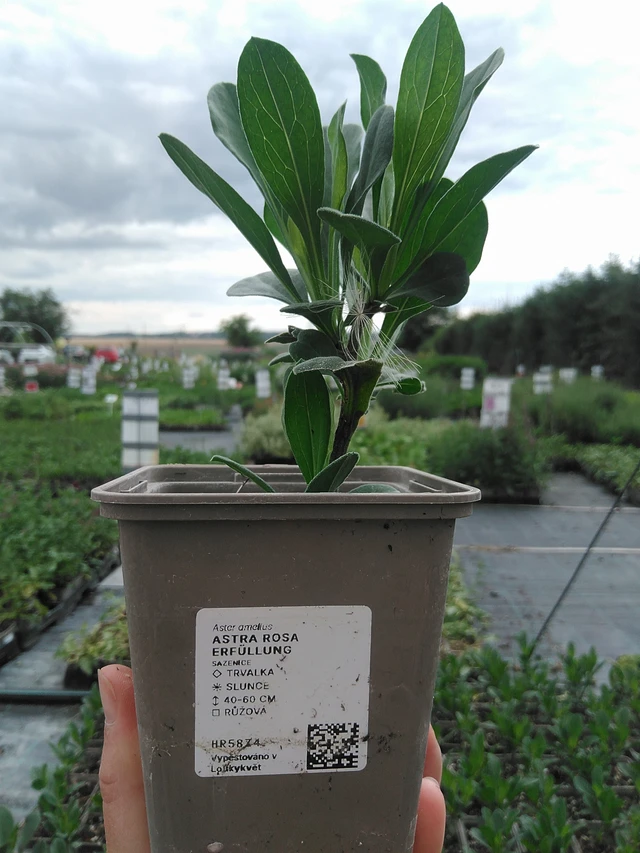
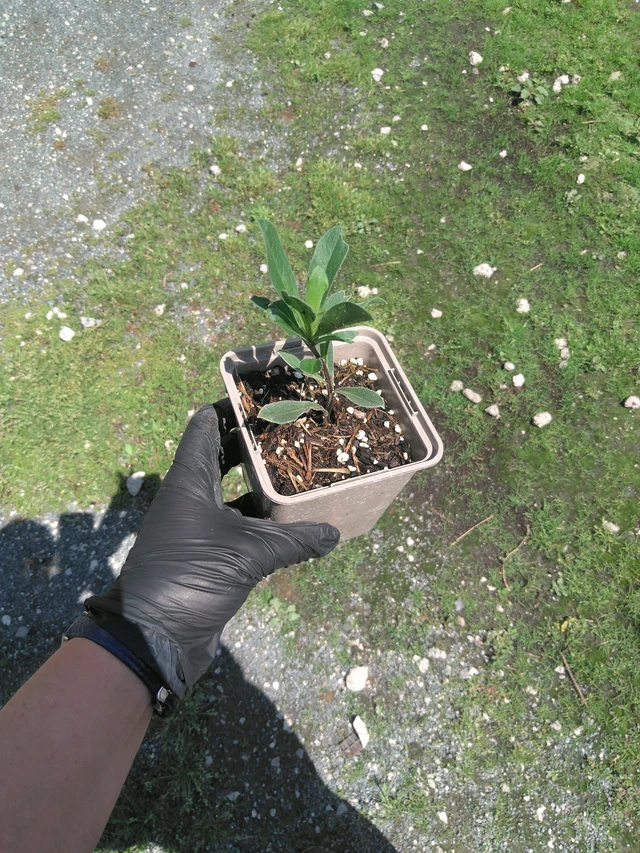
See how the seedling looks over the course of a year.

More products in category Aster

Aster pringlei
Aster Pink Star

Aster novi-belgii
Aster novi-belgii Fellowship

Aster ericoides
Aster Schneetanne

Aster ericoides
Aster Lovely
Aster lateriflorus
Aster Lady in Black
Aster ericoides
Aster Pink Cloud

Kalimeris incisa
Japanese Aster Madiva

Aster dumosus
Aster Professor A. Kippenberg

Aster ericoides
Aster Golden Spray

Aster novi-belgii
Aster novi-belgii Marie Ballard

Aster pringlei
Aster Monte Cassino

Aster novi-belgii
Aster White Ladies

Aster × hybridus
Aster Primavera

Aster ageratoides
Aster ageratoides Starshine

Aster divaricatus
White Wood Aster Eastern Star

Aster ericoides
Aster Blue Star

Aster ericoides
Aster Erlkönig

Aster novae-angliae
Aster Barr’s Pink

Aster x herveyi
Aster Twilight

Aster × hybridus
Aster Blanca
More products in category Perennials

Alchemilla mollis
Lady's mantle Irish Silk
Achillea millefolium
Yarrow Summer Pastels

Verbena bonariensis
Verbena

Salvia nemorosa
Woodland Sage Caradonna

Perovskia atriplicifolia
Russian Sage

Gaura lindheimeri
Gaura Siskiyou Pink

Echinacea purpurea
Coneflower Rubinstern

Echinacea pallida
Echinacea pallida

Eryngium planum
Sea Holly

Echinacea purpurea
Coneflower Magnus

Salvia nemorosa
Woodland Sage Ostfriesland

Calamintha nepeta
Calamint Blue Cloud

Rudbeckia fulgida
Rudbeckia Goldsturm
Calamintha nepeta ssp. nepeta
Calamint

Salvia nemorosa
Woodland Sage Amethyst

Gaura lindheimeri
Gaura Summer Breeze

Leucanthemum vulgare
Daisy Maikönigin

Nepeta racemosa
Catmint Walker’s Low

Perovskia atriplicifolia
Russian sage Little Spire
Achillea millefolium


