
Hypericum perforatum
St. John's Wort
Seedling
Attracts pollinators 🐝
Difficulty
Diseases
Edible
Flower color
Flower color: Shade
Foliage color
Fragrant (aromatic) 👃
Frost resistance
Hardiness zone
Height
Moisture
Pests
Position
Soil
Spacing
Spacing: Plants per m²
Species
Suitable for cutting
Suitable for drying
Recommended products

Lavandula angustifolia
Lavender Rosea

Caryopteris clandonensis
Bluebeard Sterling Silver

Coreopsis
Coreopsis Full Moon

Achillea millefolium
Yarrow Summer Pastels

Perovskia
Russian Sage Blue Spire

Cosmos bipinnatus
Cosmos Cupcakes White

Atriplex hortensis
Orach Plume Red


Achillea millefolium
Yarrow Summer Pastels

Malva moschata f. alba
Musk Mallow Alba

Coreopsis verticillata
Coreopsis Moonbeam

Gypsophila paniculata
Baby's Breath Snowflake

Veronicastrum virginicum
Culver's Root Album

Anaphalis triplinervis
Pearly Everlasting

Sidalcea
Checkerbloom Brilliant

Lychnis coronaria
Campion

Geum rivale
Water Avens

Helianthemum hybrida
Sunrose Bronzeteppich

Helianthemum hybrida
Rock rose Sulphureum Plenum

Triteleia Blues
Triteleia Blues

Helichrysum bracteatum
Strawflower Salmon

Echinops ritro
Globe Thistle


Achillea millefolium
Yarrow Terracotta

Geranium oxonianum
Geranium Claridge Druce

Anemone hybrida
Japanese anemone Lorelei

Sedum telephium
Sedum Herbstfreude

Catananche caerulea
Shoofly plant Blue
Cultivation
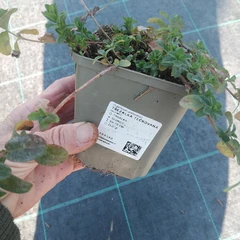
St. John's wort is an ideal choice for any gardener looking for an undemanding and resilient perennial with radiant flowers. Since you will receive an already grown seedling, the complicated pre-growing is eliminated, and you can plant the plant in its permanent location practically anytime during the growing season, provided there is no frost. For planting, choose a sunny location, where the plant will thrive best and bloom most abundantly, although it can tolerate light partial shade. The soil should primarily be well-draining, loamy to sandy; St. John's wort can handle even poorer soil, but it cannot tolerate waterlogging, which could lead to root rot. When planting, maintain a spacing of approximately 30–40 cm (about 6 to 9 plants per m²) so that individual clumps have enough space for air circulation and spreading.
When it comes to care throughout the year, this herb is very modest. It requires watering only after planting for good rooting and subsequently only during periods of prolonged drought. Thanks to its resilience, it is marked with a moisture level of 💧💧, which signifies medium to lower requirements. Fertilization is not necessary on common garden soils; an excess of nutrients could rather be harmful and lead to vigorous leaf growth at the expense of flowers. A great advantage of St. John's wort is its health status – it does not suffer from diseases or pests, so you can do without chemical sprays. Moreover, the plant self-seeds easily, so if you do not want it to spread spontaneously around the garden, it is advisable to remove spent flower heads in time.
In the spring, ideally in March or April, we recommend performing a cutback. Remove all dry and damaged parts from the previous year and do not be afraid to cut the plant back deeper above the ground. This intervention will encourage the formation of new, vital shoots, thicken the clump, and ensure a richer set of flowers for the coming summer. St. John's wort is fully frost-hardy (zone 4a, down to -34 °C), so it does not require any special winter protection in the form of evergreen branches or mulch, not even in the colder regions of the country. It is a long-lived perennial that will please you for many years.
Customers often ask about the possibility of growing it in containers. St. John's wort can be grown without problems in a larger pot or window box on a balcony or terrace. However, ensuring perfect drainage is essential – pour a layer of expanded clay or gravel into the bottom of the container and use a light, well-draining substrate mixed with sand. In a container, the substrate dries out faster than in open ground, so the plant will require more frequent watering checks, but the rule of not overwatering still applies. While it handles frost excellently in a flowerbed, in a container the root system is more susceptible to freezing; therefore, we recommend wrapping the pot with burlap or polystyrene for the winter and placing it in a protected spot.
The information given is based on our experience, please use it as a guide only. Times may vary depending on the season, climate, location, sowing and transplanting dates and possibly also the conditions in the greenhouse/greenhouse. We always recommend testing how the plant performs in your conditions. Please do not take this as a guarantee.
How do I prune St. John's wort properly?
Will St. John's wort survive the winter in the garden?
How often do I need to water the planted seedlings?
What is the spacing and how many plants per square meter should I plant?
Do I need to fertilize the St. John's wort?
Frequently asked questions
Harvest
How should St. John's wort be dried for the winter?
When and how should St. John's wort be harvested for medicinal purposes?
Characteristics
How do I identify true St. John's wort (Hypericum perforatum)?
Does St. John's wort attract bees and butterflies?
Is Hypericum perforatum poisonous or dangerous?
Planting site
Can I grow St. John's wort in a pot on the balcony?
What is the most suitable location for Hypericum perforatum?
Diseases & pests
Is St. John's wort prone to any diseases or pests?
Propagation
Does St. John's wort spread aggressively around the garden?
Photos in time
See how the seedling looks over the course of a year.
More products in category St. John's wort

Hypericum
St. John's Wort Globo Raspberry

Hypericum
St. John's Wort Globo Ruby

Hypericum
St. John's Wort Globo Champagne

Hypericum calycinum
Creeping St. John's wort

Hypericum
St. John's Wort Globo Coral

Hypericum inodorum
St. John's Wort Magical Universe

Hypericum inodorum
St. John's Wort Magical Royal Princess

Hypericum inodorum
St. John's Wort Magical Green Revival

Hypericum inodorum
St. John's Wort Magical Innocence
More products in category Perennials

Alchemilla mollis
Lady's mantle Irish Silk
Achillea millefolium
Yarrow Summer Pastels

Verbena bonariensis
Verbena

Salvia nemorosa
Woodland Sage Caradonna

Perovskia atriplicifolia
Russian Sage

Gaura lindheimeri
Gaura Siskiyou Pink

Echinacea purpurea
Coneflower Rubinstern

Echinacea pallida
Echinacea pallida

Eryngium planum
Sea Holly

Echinacea purpurea
Coneflower Magnus

Salvia nemorosa
Woodland Sage Ostfriesland

Calamintha nepeta
Calamint Blue Cloud

Rudbeckia fulgida
Rudbeckia Goldsturm

Calamintha nepeta ssp. nepeta
Calamint

Gaura lindheimeri
Gaura Summer Breeze

Salvia nemorosa
Woodland Sage Amethyst

Leucanthemum vulgare
Daisy Maikönigin
Achillea millefolium
Yarrow Terracotta

Perovskia atriplicifolia
Russian sage Little Spire

Salvia nemorosa


