Ireland
We will open the seedling e-shop after the end of the Loukykvět Days (May 6-10, 2026), specifically on Tuesday, May 12, 2026. 🪴
Baptisia Bright Blue, Loukykvět

Baptisia hybride

Baptisia Bright Blue

Baptisia comes from North America, belongs to the legume family, and resembles the lupine in appearance. Unlike it, however, it does not suffer from fungal diseases and does not taste as good to slugs. In addition to blue flowers, the large pods, which adorn the plant long after flowering, are interesting. North American Indians used Baptisia roots to disinfect wounds and reduce fever, and the leaves to dye fabrics. With Baptisia, patience is most important; it takes some time to fully establish itself and create a massive root system adapted to survive long periods of drought and fires. Then it is very long-lived. It was chosen as the perennial of the year for the 2019 season. Blue flowers, deeper colored buds. Show full description

Large seedling

Nedostupné
Na skladě máme 0 kusů
Květináč K11 (11×11×12 cm)
KB-15.1
11. 7. 2025
10. 9. 2025
1+ kus
5,39
3+ kusy
4,89
9+ kusů
4,29
15+ kusů
4,09

Pro rok 2026 nedostupné.

Pro rok 2026 nedostupné.

Attracts pollinators 🐝

Ano

Difficulty

Beginner

Diseases

Disease-free 🙂

Edible

Ne
?
Information on whether the plant is edible.

Flower color

Blue, purple

Flower color: Shade

Indigo, royal blue

Foliage color

Green, grey-green

Fragrant (aromatic) 👃

Ne

Frost resistance

-34
?
The temperature down to which the plant is frost hardy.

Hardiness zone

4a (-34.4 °C to -31.7 °C)

Height

100-120 cm

Moisture

💧

Pests

Pest-free 🙂

Position

Sun

Soil

Loamy, well-drained

Spacing

80-100 cm
?
Recommended planting spacing.

Spacing: Plants per m²

1-2

Species

Perennial

Suitable for cutting

Ano

Suitable for drying

Ano
1
2
3
4
5
6
7
8
9
10
11
12
Flowering
May
June

Recommended products

Achillea sibirica

A lesser-known species of Yarrow has dark green glossy serrated leaves that remain attractive throughout the growing season, and a sweet pink color of flowers that are larger than the flowers of common Yarrow. It lasts 10 days in a vase.
2,79
Více ks od 1,99
Unavailable
Pro rok 2026 nedostupné.

Baptisia australis

Baptisia comes from North America, belongs to the legume family, and resembles lupine in appearance. Unlike lupine, however, it does not suffer from fungal diseases and does not taste as good to slugs. Besides the blue flowers, the large pods that adorn the plant long after flowering are interesting. North American Indians used Baptisia roots to disinfect wounds and lower fever, and leaves to dye fabrics. With Baptisia, patience is most important; it takes some time to fully establish and create a massive root system adapted to survive long periods of drought and fire. Then it is very long-lived. It was chosen as the Perennial of the Year for the 2019 season.
3,89
Více ks od 4,09
Coming Soon
Doskladníme v 18. týdnu 2026.

Dicentra spectabilis

The original home of bleeding hearts is Korea and China, where they grow in light deciduous forests. They are classic garden perennials. They will look perfect in nostalgically styled flower beds; the white variant fits well even into naturalistic woodland gardens. They are popular for their heart-shaped flowers hanging on horizontal or arching stems. These weaken and die back some time after flowering; all the plant's energy then concentrates in the roots, and at that moment, we can cut the above-ground part back completely. For the rest of the year, we won't even know the bleeding heart is in the garden. It will remind us of its charm again in the spring. Perfect vase life, at least 7 days. Harvest when the first 3–4 flowers open on the stem. The basic species has pink-white flowers. In spring, the sprouting shoots have a pink tinge.
3,89
Více ks od 2,89
In Stock

Knautia macedonica

Knautia macedonica is a profusely and long-blooming undemanding perennial. Its wild form originates from the Balkans, where it grows on meadows and in scrublands. Red Knight charms in flower beds with slender high stems that carry dark wine-colored flowers. It is suitable for naturally designed sunny to semi-shady beds and meadow bouquets.
2,79
Více ks od 1,99
Coming Soon
Doskladníme ve 20. týdnu 2026.

Nepeta racemosa

Catmints are ideal companions for roses, suitable for naturalistic gardens, and lower species also for boxes and pots. Some of them are an irresistible attraction for cats, caused by the hallucinogen nepetalactone. This should be present in the highest amount in the species Nepeta cataria. Conversely, lemon-scented catmints reportedly do not attract cats. The botanical name Nepeta likely comes from the name of the ancient Etruscan city Nepet - Nepi in the territory of today's Italian province of Viterbo, where the plant was once cultivated. Nepeta racemosa naturally grows on dry meadows and rocky, stony slopes from the Caucasus to Central Asia. It has aromatic grey-green leaves and forms a tufted semi-spherical bush. Walker’s Low got its name after an Irish estate where it was bred in 1970. It has the most intense blue-violet flower coloration.
2,99
Více ks od 2,09
In Stock poslední 3 kusy

Phlox paniculata

Phlox, also known as garden phlox, is originally a perennial native to North America. It soon achieved great popularity in European gardens and has been systematically bred since the 19th century. It is a classic perennial for cutting into bouquets, where, in addition to colorful flowers, it also delights with a gentle fragrance. We harvest as soon as roughly half of the flowers in the inflorescence have bloomed; then it lasts up to 10 days in a vase. Despite efforts to breed the most resistant cultivars possible, it remains true that phlox reacts extremely sensitively to climate and soil conditions, so we pay careful attention to the correct choice of location. Nora Leight attracts attention with creamy variegated leaves, which complement the delicate pinkish-white flowers with a darker eye. Thanks to the light foliage, it can brighten up darker corners of the garden.
2,99
Více ks od 2,09
In Stock poslední 2 kusy
For Drying

Limonium latifolium

Broad-leaved statice, also known as sea lavender, is a plant originally from the steppe regions of southern Europe. Leathery leaves form a basal rosette. From these, veil-like panicles formed by tiny light lavender flowers grow. Perfect for bouquets; for drying, harvest when the flowers are fully colored.
3,29
Více ks od 2,29
Coming Soon
Doskladníme v 19. týdnu 2026.

Physostegia virginiana

Obedient plant is a native plant of the eastern regions of North America, where it grows on river banks and wet meadows. It forms upright, bushy clumps that spread to the surroundings via root runners. The flowers have the shape of a slender spike with four rows of tubular flowers and resemble Snapdragon flowers. We harvest as soon as the first flowers in the inflorescence open; they then continue to bloom in the vase. In a bouquet, they are a suitable companion for Dahlia, and they last 10–14 days in a vase. The spent spikes with seeds are interesting and usable for drying as well. 'Bouquet Rose' has flowers of a sweet purple-pink color.
2,99
Více ks od 2,09
In Stock posledních 28 kusů

Brunnera macrophylla

Brunnera is a long-lived perennial originally from the mountain meadows and forests of the Caucasus. It is interesting not only when in bloom. The leaves are large, heart-shaped, and light green. They form a contrasting background for the delicate and tiny flowers that appear above the carpet of leaves from April to May. It sprouts early and dies back late, making it a valuable groundcover perennial.
3,89
Více ks od 3,59
Coming Soon
Doskladníme v 18. týdnu 2026.

Saponaria officinalis

Soapwort is a hardy and low-maintenance perennial that blooms for a very long time and has a sweet, subtle fragrance. Its roots contain saponin and were once used to wash wool. The wild form spreads too aggressively in the garden. Cultivated double-flowered forms are much more moderate. Harvest as soon as one-third of the flowers on the stem have opened. Lasts 7 days in a vase. Rosea Plena features full, sweet pink flowers.
3,49
Více ks od 2,39
Coming Soon
Doskladníme v 18. týdnu 2026.

Verbascum hybrida

A beautiful although rather short-lived perennial, ideal for steppe areas together with fine drought-tolerant grasses and perennials. We harvest it for bouquets as soon as approximately half of the flowers in the inflorescence are open. Lasts about 5 days in a vase. A beautiful cultivar with flowers in shades of purple and pink.
3,49
Více ks od 2,39
Coming Soon
Doskladníme v 18. týdnu 2026.

Baptisia Decadence

Baptisia originates from North America, belongs to the legume family, and resembles the lupine in appearance. Unlike it, however, it does not suffer from fungal diseases and does not taste as good to slugs. Besides the blue flowers, the large pods are interesting, decorating the plant long after flowering. North American Indians used Baptisia roots to disinfect wounds and lower fever, and leaves to dye fabrics. Patience is most important with Baptisia; it takes some time to fully establish and create a massive root system adapted for surviving long periods of drought and fires. Then it is very long-lived.
4,79
Více ks od 3,59
Coming Soon
Doskladníme v 18. týdnu 2026.

Salvia nemorosa

This species of sage originates from the steppe regions of Central and Eastern Europe. It forms profusely flowering small clumps with straight, upright stems. In flower beds, it looks best in groups. It is traditionally planted as a companion to roses due to the matching flowering time. However, it looks equally good in mixed drought-tolerant steppe plantings with grasses. It is an excellent food source for bees. Lasts 7 days in a vase. Amethyst is an elegant variety with long stems and a pink flower color that is unusual for sages.
2,99
Více ks od 2,09
Coming Soon
Doskladníme v 18. týdnu 2026.

Agastache hybrida

Most hybrids available here come from plants originating in North America and Mexico. It is characterized by a delicate overall appearance. An elegant plant with small fragrant leaves, it blooms continuously during the summer with plenty of tiny florets and attracts butterflies and bees.
3,49
Více ks od 2,39
Coming Soon
Doskladníme ve 25. týdnu 2026.

Delphinium hybrida

Larkspurs are a classic and dominant feature among bedding perennials. We often see them accompanying roses and peonies. To stand out, they require plenty of space and regular fertilizing. You can enjoy their beauty in flower beds, bouquets, and even try drying them; the flowers retain their rich color well. They last 7 days in a vase but are sensitive to ethylene released from ripening fruit.
2,99
Více ks od 2,09
Coming Soon
Doskladníme ve 23. týdnu 2026.

Agastache hybrida

Most hybrids available here come from plants originating in North America and Mexico. It is characterized by a delicate overall appearance. An elegant plant with small fragrant leaves, it blooms continuously during the summer with plenty of tiny florets and attracts butterflies and bees.
2,99
Více ks od 2,09
Coming Soon
Doskladníme ve 27. týdnu 2026.

Calamintha nepeta

An undemanding and modest perennial that blooms with a large number of tiny flowers. It blooms for a record-breaking length of time throughout late summer and autumn. It forms smaller, compact, airy bushes that emit a minty-spicy fragrance. The thyme-like flowers attract bees, bumblebees, and butterflies. It will look good among roses as well as in natural-style steppe beds, perhaps with lower grasses.
2,79
Více ks od 1,99
In Stock poslední 1 kus

Delphinium hybrida

Larkspurs are a classic and dominant feature among bedding perennials. We often see them accompanying roses and peonies. To stand out, they require plenty of space and regular fertilizing. You can enjoy their beauty in flower beds, bouquets, and even try drying them; the flowers retain their rich color well. They last 7 days in a vase but are sensitive to ethylene released from ripening fruit.
2,99
Více ks od 2,09
In Stock
New

Lavandula angustifolia

Lavenders are a must for every sunny herb garden. We classify them as sub-shrubs, and they are valuable for gardens due to their winter habit. They add not only color and structure to flower beds but also an unmistakable fragrance. They will look good with lower-growing drought-loving grasses and perennials. Rosea blooms a sweet pink.
2,99
Více ks od 2,09
Coming Soon
Doskladníme ve 29. týdnu 2026.

Aster × hybridus

These autumn asters were bred specifically for florist use. They are characterized by strong, straight, and upright stems and an exceptionally abundant set of flowers. Blanca has a double flower about 35 mm large. Vase life is 10 days.
3,49
Více ks od 2,39
Unavailable
Pro rok 2026 nedostupné.

Catananche caerulea

Cupid's dart is a medium-tall short-lived perennial. It originates from the Mediterranean and is therefore suitable for areas with milder winters. Attractive with blue flowers that resemble chicory. The unopened flower buds and silvery spent inflorescences are also nice. It is also suitable for drying. Fresh, it lasts 7 days in a vase.
2,79
Více ks od 1,99
Coming Soon
Doskladníme ve 23. týdnu 2026.

Hydrangea paniculata

Panicle hydrangeas are beautiful shrubs originally from China and Japan, where their bark was used, among other things, to make paper. We grow them for their impressive cone-shaped inflorescences. They are undemanding and abundantly flowering plants suitable for planting in flower beds and large containers. The cultivar Phantom is an airily built shrub. The cone-shaped inflorescences keep their creamy white color throughout the flowering period, turning light pink only at the very end.
4,29
Více ks od 3,19
Coming Soon
Doskladníme ve 20. týdnu 2026.

Luzula nivea

A beautiful, delicate woodland grass with evergreen overwintering leaves and interesting white inflorescences. An interesting element for spring beds. The flowers are suitable for fresh bouquets as well as for drying.
2,99
Více ks od 2,09
Coming Soon
Doskladníme ve 23. týdnu 2026.

Sidalcea

Sidalcea is a beautiful long-flowering perennial. Its inflorescence resembles miniature hollyhocks or mallow. It fits well into classic combinations with roses as well as into wilder beds with grasses.
3,49
Více ks od 2,39
In Stock posledních 5 kusů

Phlox paniculata

Phlox is a perennial originally native to North America. It soon achieved great popularity in European gardens and has been systematically bred since the 19th century. It is a classic perennial for cut bouquets, where it delights with a delicate fragrance in addition to colorful flowers. We harvest as soon as roughly half of the flowers in the inflorescence are open; then it lasts up to 10 days in a vase. Despite efforts to breed the most resistant cultivars possible, it remains true that Phlox reacts extremely sensitively to climate and soil conditions, so we pay careful attention to the correct choice of location. The Franz Schubert cultivar has pastel lilac flowers that fade towards the edge. The delicate flower color looks especially beautiful in combination with dark-leaved plants. It smells lovely.
2,99
Více ks od 2,89
In Stock

Helenium autumnale

Helenium originates from North America, where it occurs on damp meadows. It grows upright and in clumps. The inflorescences form small "suns" with a diameter of 5 cm. Hence their scientific name Helenium. A great perennial for cutting with a long durability of up to 14 days. Helena Red Shades blooms in shades from red to copper.
2,79
Více ks od 1,99
Coming Soon
Doskladníme v 18. týdnu 2026.

Filipendula hybridum

A magnificent plant with feathery terminal inflorescences of a sweet pink color. It smells pleasant, and the pinnate dark green leaves are also aromatic. Unlike the common meadowsweet, it loves moisture, so it is excellent for waterlogged areas and near ponds. Lasts 7 days in a vase. The cultivar Kahome blooms with fluffy deep pink clouds of flowers that spread a honey scent around.
3,49
Více ks od 2,89
Coming Soon
Doskladníme v 18. týdnu 2026.

Hydrangea paniculata

Panicle hydrangeas are beautiful shrubs originating from China and Japan, where their bark was used, among other things, to make paper. We grow them for their impressive conical inflorescences. They are undemanding and richly flowering plants suitable for planting in beds and larger containers. Pink Diamond has 30 cm large inflorescences, initially cream-colored, which later change to pink.
4,29
Více ks od 3,19
In Stock

Hypericum

St. John's Wort bred for floristry use. It blooms with smaller yellow flowers, but the essential part comes after them. Namely, spherical, slightly pointed berries that hold well on the plant. They are neither poisonous nor edible; their use is purely decorative. St. John's Wort often blooms again immediately after the ripening of the first wave of berries, so we can find flowers and berries on one bush at the same time. It lasts two weeks in a vase. Globo Champagne has salmon-colored berries.
3,49
Více ks od 2,39
Coming Soon
Doskladníme v 18. týdnu 2026.

Baptisia hybride

Baptisia comes from North America, belongs to the legume family, and resembles the lupine in appearance. Unlike it, however, it does not suffer from fungal diseases and does not taste as good to slugs. In addition to blue flowers, the large pods, which adorn the plant long after flowering, are interesting. North American Indians used Baptisia roots to disinfect wounds and reduce fever, and the leaves to dye fabrics. With Baptisia, patience is most important; it takes some time to fully establish itself and create a massive root system adapted to survive long periods of drought and fires. Then it is very long-lived. It was chosen as the perennial of the year for the 2019 season. Sky blue flowers, deeper colored buds.
5,39
Více ks od 4,09
Coming Soon
Doskladníme v 18. týdnu 2026.

Cultivation

Baptisie dobře poroste na slunci nebo v polostínu, v propustné zahradní zemině. Po zakořenění dobře snáší i půdy sušší, lze ji použít i do štěrkových záhonů.

The information given is based on our experience, please use it as a guide only. Times may vary depending on the season, climate, location, sowing and transplanting dates and possibly also the conditions in the greenhouse/greenhouse. We always recommend testing how the plant performs in your conditions. Please do not take this as a guarantee.

Show all

Click to view the full growing instructions.

Photos
in time

See how the seedling looks over the course of a year.
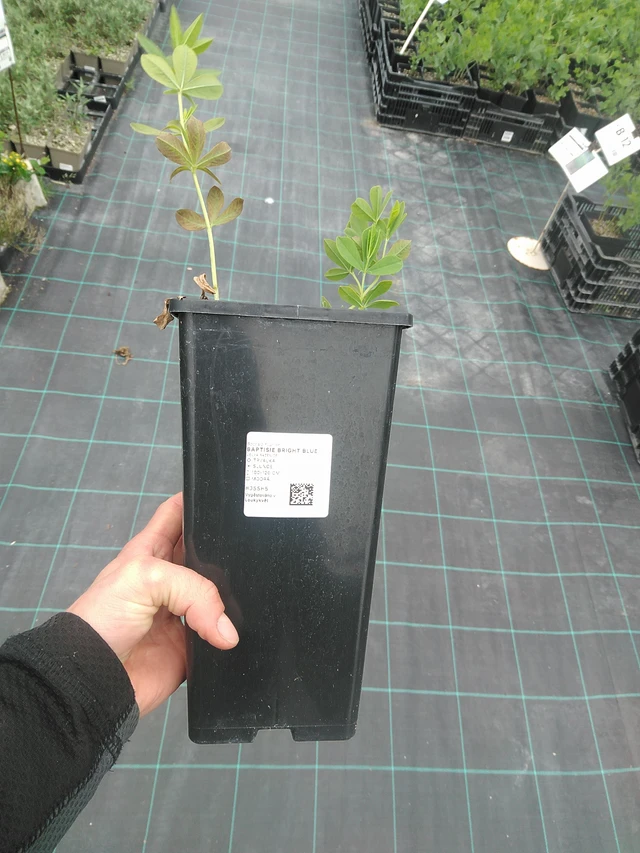
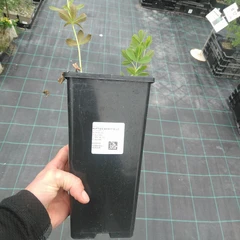
Baptisia Bright Blue - 10. 9. 2025
10. 9. 2025
Baptisia Bright Blue - 11. 7. 2025
11. 7. 2025
Baptisia Bright Blue - 24. 6. 2025
24. 6. 2025
Baptisia Bright Blue - 9. 6. 2025
9. 6. 2025

More products in category Wild indigo

Baptisia australis

Baptisia comes from North America, belongs to the legume family, and resembles lupine in appearance. Unlike lupine, however, it does not suffer from fungal diseases and does not taste as good to slugs. Besides the blue flowers, the large pods that adorn the plant long after flowering are interesting. North American Indians used Baptisia roots to disinfect wounds and lower fever, and leaves to dye fabrics. With Baptisia, patience is most important; it takes some time to fully establish and create a massive root system adapted to survive long periods of drought and fire. Then it is very long-lived. It was chosen as the Perennial of the Year for the 2019 season.
3,89
Více ks od 4,09
Coming Soon
Doskladníme v 18. týdnu 2026.

Baptisia alba

Baptisia comes from North America, belongs to the legume family, and resembles the lupine in appearance. Unlike lupines, however, it does not suffer from fungal diseases and does not taste as good to slugs. In addition to the blue flowers, the large pods are interesting, decorating the plant long after flowering. Native Americans used Baptisia roots to disinfect wounds and reduce fever, and the leaves to dye fabrics. Patience is key with Baptisia; it takes some time to fully establish and create a massive root system adapted to survive long periods of drought and fire. Then it is very long-lived. It was voted Perennial of the Year for the 2019 season. The elegant pure white 'Alba' also has slightly lighter leaves.
3,89
Více ks od 3,59
Coming Soon
Doskladníme v 18. týdnu 2026.

Baptisia hybride

Baptisia comes from North America, belongs to the legume family, and resembles the lupine in appearance. Unlike it, however, it does not suffer from fungal diseases and does not taste as good to slugs. In addition to blue flowers, the large pods, which adorn the plant long after flowering, are interesting. North American Indians used Baptisia roots to disinfect wounds and reduce fever, and the leaves to dye fabrics. With Baptisia, patience is most important; it takes some time to fully establish itself and create a massive root system adapted to survive long periods of drought and fires. Then it is very long-lived. It was chosen as the perennial of the year for the 2019 season. Chocolate Chip captivates with chocolate-brown flowers with a purple tinge and a contrasting creamy yellow keel.
5,39
Více ks od 4,09
Coming Soon
Doskladníme v 18. týdnu 2026.

Baptisia hybride

Baptisia comes from North America, belongs to the legume family, and resembles the lupine in appearance. Unlike it, however, it does not suffer from fungal diseases and does not taste as good to slugs. In addition to blue flowers, the large pods, which adorn the plant long after flowering, are interesting. North American Indians used Baptisia roots to disinfect wounds and reduce fever, and the leaves to dye fabrics. With Baptisia, patience is most important; it takes some time to fully establish itself and create a massive root system adapted to survive long periods of drought and fires. Then it is very long-lived. It was chosen as the perennial of the year for the 2019 season. Sky blue flowers, deeper colored buds.
5,39
Více ks od 4,09
Coming Soon
Doskladníme v 18. týdnu 2026.

Baptisia Decadence

Baptisia originates from North America, belongs to the legume family, and resembles the lupine in appearance. Unlike it, however, it does not suffer from fungal diseases and does not taste as good to slugs. Besides the blue flowers, the large pods are interesting, decorating the plant long after flowering. North American Indians used Baptisia roots to disinfect wounds and lower fever, and leaves to dye fabrics. Patience is most important with Baptisia; it takes some time to fully establish and create a massive root system adapted for surviving long periods of drought and fires. Then it is very long-lived.
4,79
Více ks od 3,59
Coming Soon
Doskladníme v 18. týdnu 2026.
New

Baptisia minor

Baptisia originates from North America, belongs to the legume family, and resembles a lupine in appearance. Unlike it, however, it does not suffer from fungal diseases and does not taste as good to slugs. Besides the blue flowers, the large pods are interesting, decorating the plant long after flowering. North American Indians used Baptisia roots to disinfect wounds and lower fever, and the leaves to dye fabrics. Patience is most important with Baptisia; it takes some time to fully establish and create a massive root system adapted to survive long periods of drought and fires. Then it is very long-lived. It was voted Perennial of the Year for the 2019 season. Minor is a lower form suitable even for smaller gardens.
3,89
Více ks od 3,59
Coming Soon
Doskladníme v 18. týdnu 2026.

Baptisia Decadence

Baptisia comes from North America, belongs to the legume family, and resembles the lupine in appearance. Unlike it, however, it does not suffer from fungal diseases and does not taste as good to slugs. Besides the blue flowers, the large seed pods are interesting, adorning the plant long after blooming. North American Indians used Baptisia roots to disinfect wounds and reduce fever, and the leaves for dyeing fabrics. Patience is most important with Baptisia; it takes some time to fully establish and create a massive root system adapted for surviving long periods of drought and fires. Then it is very long-lived. A hybrid with vanilla-yellow flowers.
5,39
Více ks od 4,09
Coming Soon
Doskladníme ve 32. týdnu 2026.

Baptisia Decadence

Baptisia comes from North America, belongs to the legume family, and resembles the lupine in appearance. Unlike it, however, it does not suffer from fungal diseases and does not taste as good to slugs. Besides the blue flowers, the large seed pods are interesting, adorning the plant long after blooming. North American Indians used Baptisia roots to disinfect wounds and reduce fever, and the leaves for dyeing fabrics. Patience is most important with Baptisia; it takes some time to fully establish and create a massive root system adapted for surviving long periods of drought and fires. Then it is very long-lived. This Baptisia has blue-green leaves and bright yellow flowers.
5,39
Více ks od 4,09
Coming Soon
Doskladníme ve 32. týdnu 2026.

Baptisia Decadence

Baptisia comes from North America, belongs to the legume family, and resembles the lupine in appearance. Unlike it, however, it does not suffer from fungal diseases and does not taste as good to slugs. Besides the blue flowers, the large seed pods are interesting, adorning the plant long after blooming. North American Indians used Baptisia roots to disinfect wounds and reduce fever, and the leaves for dyeing fabrics. Patience is most important with Baptisia; it takes some time to fully establish and create a massive root system adapted for surviving long periods of drought and fires. Then it is very long-lived. The flowers are dark purple-brown with yellow.
5,39
Více ks od 4,09
Coming Soon
Doskladníme ve 32. týdnu 2026.

Baptisia Decadence

Baptisia comes from North America, belongs to the legume family, and resembles the lupine in appearance. Unlike it, however, it does not suffer from fungal diseases and does not taste as good to slugs. Besides the blue flowers, the large seed pods are interesting, adorning the plant long after blooming. North American Indians used Baptisia roots to disinfect wounds and reduce fever, and the leaves for dyeing fabrics. Patience is most important with Baptisia; it takes some time to fully establish and create a massive root system adapted for surviving long periods of drought and fires. Then it is very long-lived. The flowers are blue-violet.
5,39
Více ks od 4,09
Coming Soon
Doskladníme ve 32. týdnu 2026.

Baptisia Decadence

Baptisia originates from North America, belongs to the legume family, and resembles the lupine in appearance. Unlike it, however, it does not suffer from fungal diseases and does not taste as good to slugs. Besides the blue flowers, the large pods are interesting, decorating the plant long after flowering. North American Indians used Baptisia roots to disinfect wounds and lower fever, and leaves to dye fabrics. Patience is most important with Baptisia; it takes some time to fully establish and create a massive root system adapted for surviving long periods of drought and fires. Then it is very long-lived. The flowers of this cultivar are pastel yellow and pink.
5,99
Více ks od 4,49
Coming Soon
Doskladníme ve 32. týdnu 2026.

Baptisia hybride

Baptisia comes from North America, belongs to the legume family, and resembles the lupine in appearance. Unlike it, however, it does not suffer from fungal diseases and does not taste as good to slugs. In addition to blue flowers, the large pods, which adorn the plant long after flowering, are interesting. North American Indians used Baptisia roots to disinfect wounds and reduce fever, and the leaves to dye fabrics. With Baptisia, patience is most important; it takes some time to fully establish itself and create a massive root system adapted to survive long periods of drought and fires. Then it is very long-lived. It was chosen as the perennial of the year for the 2019 season. Beautiful Baptisia with smoky blue-violet flowers and a striking anthracite-grey tinge to the stems.
5,99
Více ks od 4,49
Unavailable
Pro rok 2026 nedostupné.

More products in category Perennials

Alchemilla mollis

Lady's mantle naturally grows on mountain pastures and meadows and in mixed forests. It is ornamental in both leaf and flower. The leaves have fine hairs giving the plant a velvety character. It is a perennial sought after by ancient alchemists for the drops of dew that appear in the pleated leaves. Valuable for florists for its multitude of tiny greenish-yellow flowers. Important in flower beds for its ground-covering character. Lasts 10 days in a vase.
2,99
Více ks od 2,09
In Stock

Achillea millefolium

An original wild perennial with a large distribution area from Europe to Siberia. Suitable for natural and wild plantings. It grows in meadows and dry grassy places. A very adaptable and undemanding plant, it grows in clumps and spreads by runners. By cutting back after the first flowering, we encourage a set of new flowers. For bouquets, we harvest when the florets are fully open. It lasts 10 days in a vase. Summer Pastels is characterized by a changeable and soft range of colors from white and vanilla to salmon, brick red, and bronze.
3,09
Více ks od 1,99
Coming Soon
Doskladníme ve 23. týdnu 2026.

Verbena bonariensis

A verbena species originally from South America. In our country, it is often used as an annual, but in mild winters it can overwinter and reproduce by self-seeding. The firm, airy stems beautifully soften perennial beds and make them special with their purple color. It beautifully complements steppe plantings with grasses and rose beds.
2,99
Více ks od 2,09
Coming Soon
Doskladníme v 18. týdnu 2026.

Gaura lindheimeri

Gaura is a clump-forming perennial native to Texas and Louisiana. Here, it behaves more like a short-lived perennial. It combines beautifully with grasses and adds lightness and airiness to flower beds. It is an excellent food source for insects. Tiny flowers resembling small butterflies bloom tirelessly from June until the first frosts. For bouquets, harvest as soon as the first two or three flowers open on the stem. Siskiyou Pink is a beautiful variety with pink-red flowers on slightly arching stems. It is less hardy than the white-flowering varieties. The red-spotted leaves are also interesting.
2,99
Více ks od 2,09
Coming Soon
Doskladníme v 18. týdnu 2026.

Echinacea purpurea

A valuable garden and medicinal perennial, native to North America. It blooms in summer with dark purple-pink flowers. The spiky flower centers are an irresistible attraction for butterflies. They last 7–10 days in a vase. After removing the petals, the stems with the central disks can be dried or used in fresh bouquets as an interesting element. Magnus features distinctive deep pink flowers with an orange-brown center.
2,99
Více ks od 2,09
Coming Soon
Doskladníme v 18. týdnu 2026.
For Drying

Eryngium planum

A perennial that finds its place in naturalistic steppe and gravel beds. It attracts bees, bumblebees, and butterflies. It is floristically valuable for its flowers with striking bracts, which are also perfect for drying. The roots of some species were formerly eaten candied as sweets in England and France and added to pastries and jellies. In herbal medicine, it was used as an aphrodisiac, among other things, hence its folk name "male fidelity".
2,79
Více ks od 1,99
Coming Soon
Doskladníme ve 23. týdnu 2026.

Perovskia atriplicifolia

Perovskia are sparsely branched subshrubs, native to regions from Afghanistan to Tibet. They grow in open, sunny, rocky, and stony habitats. Their white felted shoots and grayish aromatic leaves are striking. They are suitable for sunny flower beds alongside other drought-loving perennials, where they create interesting structures even in the winter months.
2,99
Více ks od 2,09
Coming Soon
Doskladníme ve 20. týdnu 2026.

Echinacea pallida

A valuable garden and medicinal perennial, native to North America. It blooms in late summer and captivates with long drooping petals. The spiky flower centers are an irresistible attraction for butterflies. It lasts 7–10 days in a vase. After removing the petals, the stems with the central discs can be dried or used in fresh bouquets as an interesting element.
2,99
Více ks od 2,09
Coming Soon
Doskladníme ve 27. týdnu 2026.

Rudbeckia fulgida

Rudbeckia, also known as coneflowers, originates from North America; they are robust and abundantly blooming perennials of late summer and autumn. They are suitable for prairie plantings with tall grasses as well as for cottage gardens. The central disks look very effective even after flowering and decorate perennial beds throughout the winter. Harvest for the vase as soon as they bloom. Vase life is 7 to 10 days. We can also use the dry central disks. Goldsturm is a reliable and long-proven cultivar. It has bright golden-yellow flowers with dark centers.
2,79
Více ks od 1,99
Coming Soon
Doskladníme ve 27. týdnu 2026.

Salvia nemorosa

This species of sage originally comes from the steppe regions of Central and Eastern Europe. It forms profusely flowering small clumps with straight upright stems. In flower beds, it looks best in groups. Traditionally, due to the identical flowering time, it is planted as a companion to roses. However, it will look just as good in mixed drought-loving steppe plantings with grasses. It lasts 7 days in a vase. The cultivar Caradonna stands out with a long flowering period and dark, almost black-purple stems with tiny purple flowers and dark purple bracts. If we cut it back after flowering, it will bloom again in late August and September.
2,99
Více ks od 2,09
Coming Soon
Doskladníme v 19. týdnu 2026.

Echinacea purpurea

A valuable garden and medicinal perennial, originally from North America. It blooms in summer with dark purple-pink flowers. The spiky flower discs are an irresistible lure for butterflies. Lasts 7–10 days in a vase. After plucking the petals, the stems with the central discs can be dried or used in fresh bouquets as an interesting element. Rubinstern is very similar to the Magnus cultivar; the petals are darker and firmer. As they fade, they gradually pale and droop downwards.
2,99
Více ks od 2,09
Coming Soon
Doskladníme v 18. týdnu 2026.

Gaura lindheimeri

Gaura is a clump-forming perennial native to Texas and Louisiana. Here, it behaves more like a short-lived perennial. It combines beautifully with grasses and adds lightness and airiness to flower beds. It is excellent pasture for insects. Tiny flowers resembling small butterflies bloom tirelessly from June until the first frosts. For bouquets, harvest as soon as the first two or three flowers on the stem open. Summer Breeze has a rich abundance of flowers in white and pink. It is robust and hardy.
2,99
Více ks od 2,09
Coming Soon
Doskladníme v 19. týdnu 2026.

Leucanthemum vulgare

A classic perennial for early summer bouquets and cottage gardens. For bouquets, we harvest flowers with firm, smooth central disks. Then they last 7–10 days in a vase. Maikönigin is an exceptionally abundantly flowering garden form.
2,79
Více ks od 1,99
Coming Soon
Doskladníme v 18. týdnu 2026.

Achillea millefolium

A native wild perennial with a large distribution range from Europe to Siberia. Suitable for natural and wild plantings. It grows in meadows and dry grassy places. A very adaptable and undemanding plant, it grows in clumps and spreads via runners. Cutting back after the first bloom encourages a new set of flowers. Harvest for bouquets when the tiny flowers are fully open. It lasts 10 days in a vase. Terracotta features ochre, shades of orange and yellow, and gray-green foliage.
2,99
Více ks od 2,89
Coming Soon
Doskladníme v 18. týdnu 2026.

Salvia nemorosa

This species of sage originates from the steppe regions of Central and Eastern Europe. It forms abundantly flowering small clumps with straight upright stems. In beds, it looks best in groups. Traditionally, it is planted as a companion to roses due to the matching flowering time. However, it will look equally good in mixed drought-loving steppe plantings with grasses. It is an excellent food source for bees. It lasts 7 days in a vase. The cultivar Ostfriesland blooms with a strikingly dark violet-blue color.
2,99
Více ks od 2,09
In Stock

Calamintha nepeta

An undemanding and modest perennial that blooms with a large number of tiny flowers. It blooms for a record-breaking length of time throughout late summer and autumn. It forms smaller, compact, airy bushes that emit a minty-spicy fragrance. The thyme-like flowers attract bees, bumblebees, and butterflies. It will look good among roses as well as in natural-style steppe beds, perhaps with lower grasses.
2,79
Více ks od 1,99
In Stock poslední 1 kus

Knautia macedonica

Knautia macedonica is a profusely and long-blooming undemanding perennial. Its wild form originates from the Balkans, where it grows on meadows and in scrublands. Red Knight charms in flower beds with slender high stems that carry dark wine-colored flowers. It is suitable for naturally designed sunny to semi-shady beds and meadow bouquets.
2,79
Více ks od 1,99
Coming Soon
Doskladníme ve 20. týdnu 2026.

Calamintha nepeta ssp. nepeta

An undemanding and modest perennial that blooms with a large number of tiny flowers. It blooms for a record-breaking length of time throughout late summer and autumn. It forms smaller, compact, airy bushes that release a minty-spicy scent. The thyme-like flowers attract bees, bumblebees, and butterflies. It will look good among roses as well as in naturalistic steppe beds, perhaps with lower grasses. This calamint is generally more vigorous. It differs from other calamints with felted leaves by its record flowering length, stiff and shiny leaves, and also a larger number of flowers that do not form seeds and are therefore maximally durable. Sometimes sold under the cultivar name 'Triumphator'.
2,79
Více ks od 1,99
Coming Soon
Doskladníme v 19. týdnu 2026.

Salvia nemorosa

This species of sage originates from the steppe regions of Central and Eastern Europe. It forms profusely flowering small clumps with straight, upright stems. In flower beds, it looks best in groups. It is traditionally planted as a companion to roses due to the matching flowering time. However, it looks equally good in mixed drought-tolerant steppe plantings with grasses. It is an excellent food source for bees. Lasts 7 days in a vase. Amethyst is an elegant variety with long stems and a pink flower color that is unusual for sages.
2,99
Více ks od 2,09
Coming Soon
Doskladníme v 18. týdnu 2026.
For Drying

Achillea filipendulina

Fernleaf Yarrow originates from the Caucasus and Central Asia. Unlike Common Yarrow, it grows in clumps and is also suitable for drying. Cutting back soon after flowering encourages re-blooming. However, if you decide to leave the spent stems in the beds, you gain a perfect structure that remains impressive long into winter. The leaves of this species emit a typical bitter Yarrow aroma. It lasts 10 days in a vase.
2,79
Více ks od 1,99
In Stock posledních 59 kusů