Ireland
🟢 The e-shop for seedlings is open again. 🌱 I also have dahlia seedlings and eucalyptus. 🟢
Ireland
🟢 The e-shop for seedlings is open again. 🌱 I also have dahlia seedlings and eucalyptus. 🟢
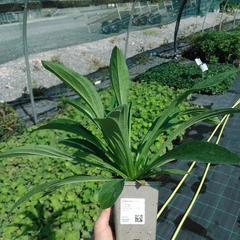
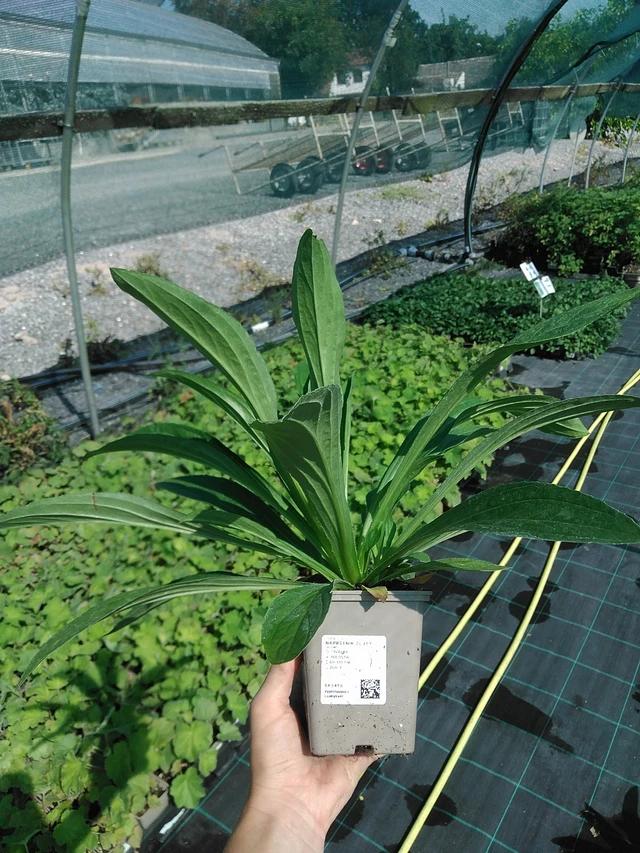
Yellow Foxglove, Loukykvět

Digitalis lutea

Yellow Foxglove

Yellow foxglove is an elegant and persistent relative of the better-known purple foxglove. Unlike it, it is a truly long-lived perennial that will last in your garden for many years. It originally comes from the light forests and rocky hillsides of Western and Southern Europe, so it thrives best here in partial shade or shade, where it can beautifully illuminate darker corners with its pastel yellow flowers. It grows up to one meter tall and forms slender inflorescences full of tiny, lemon-colored tubular flowers. These are a great attraction for bumblebees and bees, who like to hide in the narrow calyxes. The plant is undemanding and frost-resistant, and will welcome humous and well-drained soil. The inflorescences are also suitable for cutting into vases, where they look very delicate and natural. Remember, however, that the entire plant is poisonous, so handle it with care. Show full description

Seedling

Květináč K9 (9×9×9,5 cm)
Seedling
1-2 kusy
2,99/ks
3-8 kusů
2,69/ks
9-17 kusů
2,39/ks
18+ kusů
2,09/ks
Add to cart
Skladem 129 ks
Připravujeme 250 ks

Attracts pollinators 🐝

Ano

Difficulty

Beginner

Diseases

Disease-free 🙂

Edible

Ne
?
Information on whether the plant is edible.

Flower color

Yellow

Flower color: Shade

Lemon, pastel yellow

Foliage color

Green, dark green

Fragrant (aromatic) 👃

Ne

Frost resistance

-34
?
The temperature down to which the plant is frost hardy.

Hardiness zone

4a (-34.4 °C to -31.7 °C)

Height

60-100 cm

Moisture

💧💧

Pests

Pest-free 🙂

Position

Partial shade, shade

Soil

Loamy, humus-rich, well-drained

Spacing

30-40 cm
?
Recommended planting spacing.

Spacing: Plants per m²

7-9

Species

Perennial

Suitable for cutting

Ano

Suitable for drying

Ne
1
2
3
4
5
6
7
8
9
10
11
12
Flowering
June
½ August

Recommended products

Foxglove Dalmatian Rose, Loukykvět

Digitalis purpurea

The Dalmatian Rose cultivar brings an unmistakable charm to gardens with striking pink flowers on sturdy stems. Foxglove is a native species of Central Europe, seeking out moist meadows and forest glades. We have prepared a mature seedling in a pot for you, which you can easily transplant to the flowerbed. It suits sun and partial shade, and will most appreciate ordinary loamy and well-drained soil. It forms a basal rosette of leaves and in spring sends up stems up to one hundred and twenty centimeters tall. As a short-lived perennial, it self-seeds in a suitable location, so you will not lose it. The flowers bloom during May and attract bees, butterflies, and bumblebees from afar. It is an extremely undemanding plant without pests, surviving severe frosts around minus twenty-eight degrees. Since the entire plant is poisonous, it is mainly suitable for ornamental flowerbeds. It serves excellently for floristic purposes and in bouquets. Stems with bells stay fresh in a vase for six to eight days. This variety blooms abundantly right in its first year and has a very distinct pattern in the throat.
2,79
More from 1,99
In Stock
Foxglove Dalmatian White, Loukykvět

Digitalis purpurea

The 'Dalmatian White' foxglove is a majestic flower that will naturally bring the magic of forest clearings and light groves into your garden. Originally, it is a native species of Central Europe. In the garden, it thrives best in partial shade or in the sun, in well-drained and slightly moist loamy soil. It is a very undemanding plant avoided by pests and diseases, so even a beginner can easily manage growing it. You will receive a grown seedling in a pot from us, which just needs to be transplanted into the flower bed. It can handle severe frosts and grows as a short-lived perennial or biennial. In spring, it puts out sturdy stems, and from May to June, floods of pure white bell-shaped flowers open on them. These act as a great attraction for pollinators. In a suitable location, it reliably self-seeds, so you will not lose it. It is excellent for natural plantings, and its flowers are very popular for cutting into vases. They will stay fresh at home for six to eight days. Keep in mind, however, that all parts of the plant are poisonous.
2,79
More from 1,99
In Stock posledních 95 kusů
Baby's Breath Snowflake, Loukykvět
For drying

Gypsophila paniculata

Baby's breath Snowflake is an absolute classic that should not be missing in any traditional or modern garden. This perennial plant originally comes from the sandy steppes and sunny slopes of southern Europe and Central Asia, which predestines it to love full sun and well-drained, even sandy soil. It has been grown in botanical gardens since the eighteenth century, and thanks to its low maintenance, it quickly found its way into private gardens as well. It forms rich, airy clumps that look like white clouds when in bloom and bring a unique lightness to flower beds. The Snowflake variety stands out with a flood of pure white, mostly double flowers that appear from June to August. It is an ideal plant for modern steppe plantings, where it perfectly complements ornamental grasses and drought-tolerant perennials, but it is also traditionally planted as a delicate companion to roses. For florists, baby's breath is indispensable. It is excellent for cutting into fresh bouquets, where it adds volume and softens the overall impression, and it can just as well be dried for winter decorations. The plant is frost-hardy and long-lived, so it will bring you joy in the garden for many years.
3,09
More from 2,19
In Stock posledních 68 kusů
Black Mullein, Loukykvět

Verbascum nigrum var. album

Dark mullein is a native perennial and a popular medicinal herb that will bring a piece of unbridled nature into your garden. Its natural home is found on sunny slopes, embankments, and roadsides, which is why it thrives best in our gardens in full sun, in well-drained and rather sandy soil. It can handle longer periods of drought and easily survives frosts down to minus twenty-three degrees. It forms a neat basal rosette of dark green leaves, from which sturdy stems over a meter tall emerge in May and June. While the original wild species blooms yellow, this exceptional var. album form boasts pure white flowers cleverly decorated with purple and finely hairy stamens. These flowers act literally as a magnet for bees and other beneficial pollinators. Although it is a short-lived perennial, if it likes it at your place, it will reliably take care of new seedlings and grow in the same spot in the following years. In a flowerbed, it perfectly complements drought-tolerant grasses and fits beautifully into naturally styled plantings. You can also confidently cut the sturdy, tall flower stems for a vase, where they will look stunning for several days, and they serve as an unconventional element in summer bouquets. Mullein does not require any complicated care, and generally does not suffer from pests or diseases, so even complete beginners can grow it without any trouble.
2,79
More from 1,99
In Stock posledních 71 kusů
White Wood Aster Eastern Star, Loukykvět

Aster divaricatus

The Eastern Star White wood aster is a reliable perennial originating from North American forest clearings and forest edges. It thrives best in partial shade to shade, where it will appreciate ordinary well-draining and loamy soil. It is perfect for planting under mature trees because it deals surprisingly well with the competition from their roots. You will receive an already grown seedling in a pot from us, ready to be transplanted. It soon forms dense clumps of fresh green leaves and dark wiry stems. Despite its dense growth, it looks delicate and airy. During August and September, it blooms with a flood of white flowers with fewer petals, which bring light into shady corners and reliably attract bees. It is an exceptionally resilient plant for beginners that does not suffer from diseases and survives even harsh frosts dropping to minus twenty-eight degrees. It serves excellently for cutting into fresh bouquets as well as for drying for floristry purposes. Furthermore, when left in the garden bed, it offers a beautiful winter effect.
2,99
More from 2,09
In Stock
Columbine Kristall, Loukykvět

Aquilegia vulgaris

The common columbine is a versatile perennial that will reliably inhabit both rural and modern flowerbeds. In the wild, it grows on the edges of forests and in light groves across all of Europe, which is why it thrives best in the garden in full sun to partial shade and ordinary loamy soil rich in humus. Its main charm lies in its unusually shaped flowers, but it is also valuable for its very early sprouting green leaves, which awaken the garden after winter. You will receive a beautifully grown seedling in a pot from us, which you just need to transplant to your chosen spot. Although the plant is poisonous, it represents a huge asset for gardeners. Even complete beginners can manage growing it, pests avoid it, and it easily survives severe frosts dropping to minus thirty-four degrees. During May and June, delicate flowers bloom on sturdy, sixty to eighty-centimeter-tall stems, bringing typical airiness and lightness to the planting. The 'Kristall' cultivar is a large-flowered variety that stands out with pure white flowers and prominent spurs. These act as a reliable magnet for bees, bumblebees, and other beneficial pollinators. Keep in mind that in a favorable location, columbine very willingly self-seeds, taking care of natural-looking wild stands. It works well in perennial beds and as an undergrowth beneath taller shrubs. If you like bringing a piece of the garden home, columbine certainly won't disappoint you. It is perfectly suited for cutting and will bring a novel structure to spring bouquets. Fresh flowers will bring you joy in a vase for about seven days. If you leave some of the flowers to finish blooming on the flowerbed, they will form interesting seed pods, which are highly popular among florists for creating various natural decorations and can also be dried well. Just watch out for the occasional occurrence of powdery mildew during the drier months, but otherwise, the plant needs almost no care.
2,79
More from 1,99
In Stock
Carthusian Pink, Loukykvět
New

Dianthus carthusianorum

Dianthus carthusianorum, known as the Carthusian pink, owes its species name to the Carthusian monks, who fondly grew it in monastery gardens for its beauty and resilience. This charming perennial will bring the lightness, color, and elegance of wild meadows to your flowerbeds. The plant forms dense basal clumps of narrow leaves, above which tiny but vividly colored flower heads in shades of magenta and red hover in the summer. It requires full sun and very well-drained, loamy-sandy soil where water will not stagnate; otherwise, it is entirely undemanding to grow. If you are looking for a plant that combines beauty with utility, the Carthusian pink will not disappoint you. Its flowers are not only a flowerbed decoration but also excellent material for florists. They last surprisingly long in a vase and fit into both rustic and modern arrangements. In flowerbeds, it combines wonderfully with shorter ornamental grasses, thyme, or other drought-loving perennials, forming a harmonious community that withstands the summer heat. It is a healthy plant that does not suffer from pests or diseases and reliably overwinters in our climate.
2,99
More from 2,09
In Stock posledních 80 kusů
Geranium Rozanne, Loukykvět
New

Geranium hybrida

A unique cultivar of hardy geranium. An exceptionally long flowering period from May to November. The flowers are violet-blue. Suitable for beds and containers. If growth becomes too vigorous, it can be cut back; it will soon regrow and bloom profusely again. It is frost-hardy, yet it is good to protect it in winter with a light covering of brushwood.
4,79
More from 3,59
In Stock s doručením od 10. 8. 2026
Knautia Red Knight, Loukykvět

Knautia macedonica

Macedonian scabious is an abundantly and long-blooming, undemanding perennial that will bring the untamed charm of summer meadows to the garden. Its wild form originates from the sun-drenched Balkans, where it naturally grows on sunny hillsides and in warm thickets. You will receive from us a mature seedling in a pot, which just needs to be transplanted into well-drained loamy or sandy soil in the sun or partial shade. Here it will quickly take root and form a vigorous clump. The Red Knight cultivar enchants with slender stems up to ninety centimeters tall, which all summer from June to September carry a flood of dark burgundy to deep wine-red flowers. These edible flowers act as a huge attraction for bees, bumblebees, and other insects. The plant is an ideal choice for beginners because it reliably resists frosts down to minus twenty-eight degrees and does not suffer from any pests or diseases. Although it belongs to short-lived perennials, in a suitable place it gladly self-seeds. It will fit perfectly into naturalistically designed plantings with ornamental grasses and is popularly used in sweeping meadow bouquets. We recommend cutting the flowers fully open; they will then stay beautifully fresh in a vase for several days.
2,79
More from 1,99
In Stock
Rudbeckia Henry Eilers, Loukykvět

Rudbeckia subtomentosa

Rudbeckia Henry Eilers is an extraordinary perennial that will bring the magic of late summer and the wild North American prairies into the garden. As a native species, it grows wild on sunny plains, so even here it thrives best in full sun in loamy, clayey, and well-drained soil. You will receive a grown seedling in a pot from us, which you simply transplant straight into the flower bed. It is a very reliable and long-lived plant that does not suffer from diseases or pests and easily handles harsh frosts down to minus twenty-eight degrees. Even complete beginners can playfully manage caring for it. The Henry Eilers cultivar, named after its discoverer, catches the eye at first glance. Bright yellow petals, which are unconventionally rolled into narrow tubes, grow out of prominent brown centers. The flowers on sturdy stems grow over one meter tall and do not need any support. In the garden, this rudbeckia is perfectly suited for prairie plantings alongside ornamental grasses or in country gardens, where its flowers attract bees and butterflies. Florists love using it for cutting. We cut the stems for a vase as soon as the flowers open, and they will bring you joy for seven to ten days. The faded dark cones look great in dry arrangements, and if you leave them in the flower bed, they will create a beautiful spectacle during the winter, especially when covered in frost.
3,89
More from 2,89
In Stock
Nepal Cinquefoil Shogran, Loukykvět

Potentilla nepalensis

*Potentilla nepalensis* is a wild mountain plant native to the western regions of the Himalayas. It has also captured the attention of gardeners and breeders. There once existed a large number of garden varieties, which are unfortunately lost and unavailable today. Potentilla fits well into mixed perennial beds. Shogran is a low-growing cultivar with pink flowers and a contrasting raspberry-red eye.
3,29
More from 2,29
Unavailable
Pro rok 2026 nedostupné
Toadflax Canon Went, Loukykvět

Linaria purpurea

The Canon Went toadflax is a delicate-looking perennial with upright, thin stems, originally hailing from the Mediterranean. Even though it looks fragile at first glance, it is a resilient plant that creates wonderful vertical accents in the garden. It loves sunny locations and well-drained, even sandy soil, where it thrives best. It blooms repeatedly throughout the summer until autumn, so it will bring you joy for a really long time. The Canon Went cultivar boasts tiny flowers in a light salmon-pink shade, resembling miniature snapdragons. The leaves are also delicate, linear, and have a grayish-green color. In flower beds, it perfectly complements ornamental grasses or other drought-tolerant perennials, adding lightness and airiness to them. It is also a great magnet for pollinators, especially bees. Although it is a short-lived perennial, it reliably self-seeds in a suitable location, allowing you to enjoy it for many years. If you like to decorate your home, you will be pleased to know it is suitable for cutting and lasts up to 14 days in a vase.
3,09
More from 2,19
Coming Soon
Phlox Sweet Summer Compact White, Loukykvět

Phlox paniculata

The Phlox 'Sweet Summer Compact White', commonly known as garden phlox, is a perennial that inherently belongs in country gardens and grandmother's flower beds. It originally comes from North America, where it grows in moist meadows and woodland edges, suggesting that it will also appreciate nutritious, well-drained soil with plenty of moisture in your garden. If you provide it with a sunny or partially shaded location, it will reward you with rich panicles of snow-white flowers that spread a delicate, nostalgic fragrance around them. It is an ideal choice for beginner growers because it is a vigorous and resilient plant. The 'Sweet Summer' series, to which this compact cultivar belongs, was bred with an emphasis on high resistance to powdery mildew, a common ailment of older varieties. Thanks to its smaller stature of around fifty to sixty centimeters, it is perfectly suited for the front parts of perennial beds, where it will not overshadow other plants. Furthermore, the flowers are fantastic for cutting. Cut them for a vase when about half of the inflorescence is open. They will bring you joy for up to ten days and scent your entire home. Additionally, they reliably attract bees and butterflies, so your garden will be full of life.
3,49
More from 2,39
In Stock posledních 47 kusů
Foxglove Dalmatian Peach, Loukykvět

Digitalis purpurea

The delicate apricot flowers of the 'Dalmatian Peach' foxglove will reliably enliven partial shade and sunny corners of any garden. This native species grows most often in moister meadows and light forest edges. The same conditions with well-drained loamy soil will suit it well in your garden too. You will receive from us a beautifully grown seedling in a pot ready for planting in the flower bed. Foxglove is grown as a biennial or short-lived perennial that reliably self-seeds in a favorable location. The 'Dalmatian Peach' cultivar will delight you with the pastel apricot and pink coloring of its flowers, which bloom from the bottom up on long stems and provide valuable pasture for pollinators. It is an absolutely undemanding plant that does not suffer from pests and survives even severe frosts without problems. But it is good to know that it is entirely poisonous. In flower beds, it looks beautiful in mixed plantings with other perennials. It also offers excellent material for florists and lovers of fresh flowers. If you cut the majestic stems to create bouquets, they will keep bringing you joy in a vase for about six to eight days.
2,79
More from 1,99
Unavailable
Pro rok 2026 nedostupné
Foxglove Hanabee Deep Rose, Loukykvět

Digitalis purpurea

Foxglove flowers bring the magic of nature into gardens, and the Hanabee Deep Rose cultivar makes them an even more breathtaking spectacle. In the wild, you will most often find it on the light edges of forests and moist clearings of Central Europe. In the garden, it will appreciate similar conditions; it will grow well in sun and partial shade if you provide it with standard well-draining loamy soil. From us, you will receive an already mature seedling in a pot, which you just need to plant straight into the ground with a spacing of roughly forty centimeters. The plant first forms a basal rosette of leaves, and from it, tall stems dotted with bell-shaped flowers will shoot up. Even though it grows more like a short-lived perennial, in a suitable place it readily self-seeds, so you will enjoy it for long years. As with all foxgloves, the rule applies here that the entire plant is poisonous. The uniqueness of the Hanabee series lies in massive branching. Instead of a single stem, a dark pink fireworks display of flowers awaits you, which will reliably attract bees and bumblebees from far and wide at the beginning of summer. It can handle even severe frosts around minus twenty-eight degrees and does not suffer from diseases. It will perfectly complement the rear parts of mixed beds, and you can also harvest the blooming stems for a vase, where they will stay fresh and bring joy for roughly six to eight days.
2,99
More from 2,09
In Stock posledních 11 kusů
Aster Lovely, Loukykvět

Aster ericoides

Fine tiny leaves and well-branched long stems with a large number of tiny star-shaped flowers make this Aster an ideal autumn cut flower. In beds, it serves as a fluffy delicate filler and brightens up the garden after summer perennials have finished blooming. It will look good in combination with roses and in wild plantings with grasses. It is important for bees and butterflies as the last pasture before winter. It lasts 7 to 10 days in a vase. 'Lovely' is characterized by countless small, delicate pink flowers in loose panicles on firm, wiry stems.
3,29
More from 3,19
In Stock
Agastache Blue Fortune, Loukykvět

Agastache rugosa

Agastache 'Blue Fortune' is an amazingly fragrant perennial that will bring a flood of purple flowers and a lot of life to your garden. Its original homeland is the mountain meadows and forest edges in China and Japan. It forms stable and upright clumps with green, toothed leaves. At first glance, these resemble an ordinary nettle, but they don't sting, and when you rub them between your fingers, you'll smell a pleasant mint-anise scent. From July to September, lavender-purple flowers appear on stems up to one meter high, acting as a reliable magnet for bees, bumblebees, and butterflies. It is a very hardy and undemanding plant, which you will receive as a grown seedling in a pot, ready to be planted straight into the flower bed. It thrives best in full sun in well-drained, sandy, or loamy soil. It doesn't need any complicated care, doesn't suffer from pests or diseases, and can handle even severe Czech frosts without problems. It fits perfectly into mixed perennial beds, where it complements ornamental grasses. The flowers are also edible, so you can use them to garnish summer dishes. The 'Blue Fortune' cultivar stands out for its compact shape and exceptionally long blooming period. It is also excellent for cutting into summer bouquets. Fresh stems will last approximately seven days in a vase, but they also look beautiful after blooming when you can dry them for winter decorations.
2,99
More from 2,09
In Stock posledních 65 kusů
Feather Reed Grass Karl Förster, Loukykvět

Calamagrostis acutiflora

A tufted, upright growing grass. It sprouts very early. It is decorative due to its overall vertical habit and fine flower panicles, which bloom silvery-grey, turn yellow in summer, and transition to sandy beige. It decorates the garden until winter. You can plant it in mixed beds or use it as an element to rhythmically divide the space. Usable for bouquets and drying.
4,29
More from 3,89
Coming Soon
Anemone Praecox, Loukykvět

Anemone hupehensis

Anemones come from the same family as buttercups. With their elegant flowers on long, slender stems, they can brighten up and illuminate late summer and autumn flower beds. They stand out against a darker background of shrub groups and will also be grateful for their partial shade. The Czech Perennials Association chose autumn anemones as the perennial of the 2022 season. They last 7 days in a vase. Anemone Praecox is a compactly growing cultivar with a rich set of flowers. Due to its lower stature, it is perfectly suitable even for smaller gardens and for growing in containers. A big plus is the early flowering time, and the slightly darker coloring of the underside of the petals adds an interesting touch.
3,49
More from 3,59
In Stock
Snapdragon Snapstar Champagne, Loukykvět
4,29
In Stock
Snapdragon Frappe Light Pink, Loukykvět

Antirrhinum majus

Great news for all Snapdragon lovers! Finally, a new "open-faced" Snapdragon has appeared on the market, meaning an open flower instead of the classic Snapdragon "mouth". And the second piece of good news is that we immediately added it to our assortment! Snapdragon Frappe Light Pink blooms in shades of the lightest cool pink. The Chantilly series of open-faced Snapdragons seems to be unavailable long-term, so we are glad to have a replacement for you. And it seems to be an even greater replacement. The stems are robust, the plants tall—for us, true cut-flower quality!
7,39
In Stock
Larkspur QIS Rose, Loukykvět

Delphinium consolida

Larkspurs are spring beauties that are unmatched. But if you want to harvest them for cut flowers, you must be vigilant and harvest quickly before all buds open. Especially in the warm springs of recent years, they bloom quickly, so we sow several batches 14 days apart just to keep up with the harvest. Larkspur QIS Rose is an unusual shade of darker warm pink, fitting beautifully in combination with orange. From one plant you will harvest one thicker stem and 4-5 smaller side ones.
4,79
In Stock
Lovegrass, Loukykvět

Eragrostis spectabilis

Lovegrass originates from the sun-drenched plains of North America, where it naturally grows on dry and well-drained soils. This undemanding tufted grass is an ideal choice for beginner growers, as it does not suffer from any diseases or pests and easily handles frosts down to minus twenty-three degrees. During the season, its green leaves will catch your eye, gradually acquiring a warm orange to wine-red hue as autumn approaches. It stands out primarily in group plantings or in combination with drought-tolerant perennials, where it can beautifully soften and visually connect the entire composition. The real magic, however, lies in its blooming. During August and September, it creates literal clouds of tiny pink flower panicles above the leaf clumps, hovering at a height of around fifty centimeters. For its airiness and elegance, lovegrass is also exceptionally popular for cutting. Florists love to use it in summer and autumn bouquets, to which it adds lightness and volume. It is also perfect for drying, so you can preserve its charm for winter arrangements as well.
3,79
More from 2,69
In Stock
Eucalyptus Silver Dollar, Loukykvět

Eucalyptus cinerea

Eucalyptus 'Silver Dollar' has round, silvery grey-green young leaves. With us, it is most often used as a portable potted plant that benefits from spending the summer on sunny terraces and balconies. Before the first frosts, it is moved to a frost-free, bright space.
6,89
More from 5,19
In Stock
Tento produkt bohužel není možné zakoupit ve vaší zemi.
Salvia Love & Wishes, Loukykvět
New

Salvia hybrida

Salvia Love & Wishes is a modern hybrid variety that has won the hearts of gardeners with its incredible vitality and long blooming period. The original botanical species from which this cross originates come from warmer regions, giving the plant a love for the sun and tolerance to summer heat. This salvia stands out with deep purple flowers that, in contrast with dark calyxes and stems as well as deep green leaves, create an unmissable spectacle in containers and flowerbeds. It reaches a respectable height of 80 to 100 cm and, thanks to its upright habit, adds the necessary structure and vertical accent to plantings. In our climatic conditions, it is grown as a so-called patio plant, because its frost resistance only reaches -5 °C. Therefore, it is an ideal choice for large terracotta pots on terraces or balconies, which you simply move to a frost-free, bright place for the winter. If you plant it in the open ground, it will act as a luxurious, massively blooming annual that will decorate the garden from June until the first frosts. The flowers are rich in nectar and act as a magnet for bees and bumblebees, who love to visit them. Love & Wishes is also suitable for cutting into summer bouquets, where its sturdy stems and striking color perfectly complement more delicate perennials.
4,29
More from 3,19
Unavailable
Pro rok 2026 nedostupné
Japanese forest grass Greenhills, Loukykvět
New

Hakonechloa macra

Japanese forest grass Greenhills is one of the most elegant ornamental grasses you can plant in the shady corners of your garden. It originates from the moist rocky slopes of the Japanese island of Honshu, which predestines its growing requirements. It loves humus-rich, well-draining soil that does not dry out, and it thrives best in partial shade or shade, where its leaves won't be burned by the sharp midday sun. In gardens, it is valued for its cascading growth that resembles flowing water, thus bringing much-desired movement and lightness to static plantings under trees. The Greenhills cultivar stands out with a fresh, bright green leaf color that literally lights up the darker areas under tree canopies. Unlike variegated varieties, it looks very natural and calm, creating a perfect background for other perennials. This long-lived grass does not spread by aggressive runners and keeps its compact clumping shape. Although it is not used much for cutting, it fulfills its ornamental function until late autumn, when the leaves turn warm beige and golden tones. We leave the dry clumps in the bed throughout the whole winter, when they are decorated with frost, and cut them back only in the spring.
4,29
More from 3,89
Unavailable
Pro rok 2026 nedostupné
Yarrow Alabaster, Loukykvět

Achillea millefolium

A native wild perennial with a large distribution range from Europe to Siberia. Suitable for natural and wild plantings. It grows in meadows and dry grassy places. A very adaptable and undemanding plant, it grows in clumps and spreads via runners. Cutting back after the first bloom encourages a new set of flowers. Harvest for bouquets when the tiny flowers are fully open. It lasts 10 days in a vase.
3,49
More from 2,39
In Stock
Calamagrostis villosa, Loukykvět

Calamagrostis brachytricha

Korean feather reed grass originates from East Asia. It is grown for its beautiful fluffy panicles on strong upright stems. Arching leaves sprout early in spring and take on a bronze tint in autumn. Spectacular on misty autumn mornings when dew drops get caught in the panicles and sparkle in the sun. Hence its name – diamond grass. Lasts up to 10 days in a vase.
4,29
More from 2,99
In Stock posledních 73 kusů
Phlomis Russeliana, Loukykvět

Phlomis russeliana

Phlomis, sometimes nicknamed Jerusalem sage, is a valuable perennial bringing a Mediterranean atmosphere to the garden. Originally from the Greek islands and Turkey, this plant is accustomed to harsher conditions, thanks to which it perfectly handles our hot summers and poorer, well-drained soils. Its gray-green, felt-like leaves form a dense cover that works as a reliable barrier against weeds, and it surprisingly tolerates shade under tree canopies well, provided it is not too moist there. In summer, it will thrill you with pastel yellow flowers arranged in regular whorls above each other, which look very exotic and attract plenty of bees and bumblebees. For florists, phlomis is a literal treasure. The fresh flowers look very elegant in a vase, but dried stems with mature seed pods will put on an even greater show. These hold their shape for a long time and are one of the best materials for dried arrangements. Moreover, you can leave them standing in the flowerbed until spring, because their striking silhouette looks breathtaking when covered in frost. It is a rewarding and long-lived plant that even a complete beginner can easily handle.
2,99
More from 2,09
In Stock

Cultivation

Náprstník žlutý (Digitalis lutea) je skutečným pokladem pro stinné části vaší zahrady. Jelikož od nás obdržíte již vzrostlou sazenici, můžete se rovnou pustit do výsadby. Pro tento náprstník vyberte stanoviště v polostínu nebo stínu, ideálně pod korunami stromů nebo u severní zdi domu, kde bude chráněn před přímým poledním úpalem. Půda by měla být humózní, hlinitá a dobře propustná. Tato trvalka miluje půdu bohatou na živiny, proto doporučujeme při výsadbě přimíchat do jamky vyzrálý kompost nebo listovku. Dodržujte doporučený spon 30–40 cm (přibližně 7 až 9 rostlin na metr čtvereční), aby měly rostliny dostatek prostoru pro cirkulaci vzduchu a rozvoj kořenového systému.
Během vegetační sezóny je péče o náprstník velmi snadná, což ocení i začínající zahradníci. Rostlina vyžaduje střední zálivku; půda by neměla nikdy zcela vyschnout, ale zároveň nesmí být přemokřená, aby neuhnily kořeny. Výborným pomocníkem je mulčování kůrou nebo štěpkou, které udrží vláhu v půdě a potlačí plevel. Rostlina je přirozeně odolná a netrpí na choroby ani škůdce, takže chemická ochrana není potřeba. Po odkvětu můžete stonky sestřihnout, čímž podpoříte vitalitu rostliny a zamezíte tvorbě semen, pokud si nepřejete, aby se náprstník sám přeséval po zahradě. Nezapomínejte, že celá rostlina je jedovatá, proto při stříhání a manipulaci doporučujeme používat rukavice a po práci si důkladně umýt ruce.
Tento druh náprstníku je plně mrazuvzdorný (až do -34 °C) a v našich podmínkách bez problémů přezimuje bez nutnosti jakékoliv ochrany. Jedná se o dlouhověkou trvalku, která vám bude dělat radost mnoho let. Pokud nemáte zahradu, můžete náprstník pěstovat i ve větší nádobě nebo truhlíku. V takovém případě je nutné zajistit kvalitní drenáž na dně květináče a dbát na pravidelnější zálivku, protože substrát v nádobách vysychá rychleji než ve volné půdě. Nádobu umístěte do stínu, aby se kořeny v horkých dnech nepřehřívaly.

The information given is based on our experience, please use it as a guide only. Times may vary depending on the season, climate, location, sowing and transplanting dates and possibly also the conditions in the greenhouse/greenhouse. We always recommend testing how the plant performs in your conditions. Please do not take this as a guarantee.

Show all

Click to view the full growing instructions.

Frequently
asked
questions

Stanoviště

Základní informace

Pěstování

Nemoci & škudci

Vlastnosti

Sklizeň

Photos
in time

See how the seedling looks over the course of a year.

Yellow Foxglove - 13. 7. 2026
13. 7. 2026

More products in category Foxglove

Foxglove Sutton’s Apricot, Loukykvět

Digitalis purpurea

The Sutton’s Apricot foxglove will bring a romantic touch of the countryside to any garden and reliably liven up semi-shady and sunny places. The original wild species comes from our Central European nature, where you can find it in clearings, moist meadows, and light forest edges. You will receive from us a grown seedling in a pot, which you just need to transplant into loamy and well-drained soil. Although it is a short-lived perennial, it reliably self-seeds in a suitable spot. During May and June, massive stems up to one hundred and twenty centimeters high grow from the basal rosette of green leaves. The Sutton’s Apricot variety stands out with an unusual shade that smoothly transitions from a soft apricot to a pink color. The flowers act as a great lure for bees and bumblebees. Foxglove is suitable for the back areas of perennial beds and does not require complex care. It can easily handle frosts down to minus twenty-eight degrees and does not suffer from pests. If you like to create bouquets, its sturdy stems will also please in a vase, where they stay fresh for six to eight days. Just remember that all parts of the plant are poisonous.
2,79
More from 1,99
Coming Soon
Foxglove Dalmatian White, Loukykvět

Digitalis purpurea

The 'Dalmatian White' foxglove is a majestic flower that will naturally bring the magic of forest clearings and light groves into your garden. Originally, it is a native species of Central Europe. In the garden, it thrives best in partial shade or in the sun, in well-drained and slightly moist loamy soil. It is a very undemanding plant avoided by pests and diseases, so even a beginner can easily manage growing it. You will receive a grown seedling in a pot from us, which just needs to be transplanted into the flower bed. It can handle severe frosts and grows as a short-lived perennial or biennial. In spring, it puts out sturdy stems, and from May to June, floods of pure white bell-shaped flowers open on them. These act as a great attraction for pollinators. In a suitable location, it reliably self-seeds, so you will not lose it. It is excellent for natural plantings, and its flowers are very popular for cutting into vases. They will stay fresh at home for six to eight days. Keep in mind, however, that all parts of the plant are poisonous.
2,79
More from 1,99
In Stock posledních 95 kusů
Foxglove Dalmatian Peach, Loukykvět

Digitalis purpurea

The delicate apricot flowers of the 'Dalmatian Peach' foxglove will reliably enliven partial shade and sunny corners of any garden. This native species grows most often in moister meadows and light forest edges. The same conditions with well-drained loamy soil will suit it well in your garden too. You will receive from us a beautifully grown seedling in a pot ready for planting in the flower bed. Foxglove is grown as a biennial or short-lived perennial that reliably self-seeds in a favorable location. The 'Dalmatian Peach' cultivar will delight you with the pastel apricot and pink coloring of its flowers, which bloom from the bottom up on long stems and provide valuable pasture for pollinators. It is an absolutely undemanding plant that does not suffer from pests and survives even severe frosts without problems. But it is good to know that it is entirely poisonous. In flower beds, it looks beautiful in mixed plantings with other perennials. It also offers excellent material for florists and lovers of fresh flowers. If you cut the majestic stems to create bouquets, they will keep bringing you joy in a vase for about six to eight days.
2,79
More from 1,99
Unavailable
Pro rok 2026 nedostupné
Foxglove Pam’s Choice, Loukykvět

Digitalis purpurea

The Pam's Choice foxglove cultivar is an unmissable classic of both country and modern gardens, bringing the magic of nature into your flower beds. It is a native species to Central Europe, where it grows in forest clearings and light forest margins. Therefore, it thrives best in partial shade or full sun with slightly moist but well-drained loamy soil. You will receive a grown seedling in a pot from us, which you simply transplant directly into your flower bed. It usually behaves as a biennial or short-lived perennial, easily handling frosts down to minus twenty-eight degrees Celsius and not suffering from diseases. From a basal rosette of leaves, it sends up sturdy stems up to one hundred and twenty centimeters tall. These carry creamy white bell-shaped flowers with breathtaking dark burgundy marbling inside the throat. The flowers reliably attract bees and bumblebees. Although the entire plant is poisonous, for growers it is a completely undemanding species that is also popular for cutting. In a vase, the stems stay fresh for six to eight days. After blooming, the foxglove reliably self-seeds in a suitable location.
2,79
More from 1,99
Coming Soon
Foxglove Dalmatian Rose, Loukykvět

Digitalis purpurea

The Dalmatian Rose cultivar brings an unmistakable charm to gardens with striking pink flowers on sturdy stems. Foxglove is a native species of Central Europe, seeking out moist meadows and forest glades. We have prepared a mature seedling in a pot for you, which you can easily transplant to the flowerbed. It suits sun and partial shade, and will most appreciate ordinary loamy and well-drained soil. It forms a basal rosette of leaves and in spring sends up stems up to one hundred and twenty centimeters tall. As a short-lived perennial, it self-seeds in a suitable location, so you will not lose it. The flowers bloom during May and attract bees, butterflies, and bumblebees from afar. It is an extremely undemanding plant without pests, surviving severe frosts around minus twenty-eight degrees. Since the entire plant is poisonous, it is mainly suitable for ornamental flowerbeds. It serves excellently for floristic purposes and in bouquets. Stems with bells stay fresh in a vase for six to eight days. This variety blooms abundantly right in its first year and has a very distinct pattern in the throat.
2,79
More from 1,99
In Stock
Foxglove Camelot Lavender, Loukykvět

Digitalis purpurea

The Camelot Lavender foxglove is a classic rustic plant that will bring a touch of wild nature to your garden. This originally native species of Central Europe naturally grows in clearings, moist meadows, and light forest edges. In your garden, it will do best in partial shade or in the sun with ordinary and slightly moist soil. It is a short-lived perennial. You will receive from us a grown seedling in a pot, which you just need to transplant into the flower bed with a spacing of about forty centimeters. In the spring, the plant sends up strong stems over a meter high. In May and June, it is covered with tubular flowers in a soft lavender shade, which reliably attract bees and bumblebees. Foxglove is very undemanding for growers, does not suffer from pests, and can handle even severe frosts. In a suitable spot, it reliably self-seeds, so it will last for many years in the flower bed. Just remember that all parts of the plant are poisonous. It is perfectly suited for bouquets as well, where the tall stems stay fresh in a vase for six to eight days.
2,79
More from 1,99
Unavailable
Pro rok 2026 nedostupné
Foxglove Hanabee White, Loukykvět

Digitalis purpurea

Native to Central Europe, originating from clearings, damp meadows, and bright forest edges. Usually a biennial or short-lived perennial. In the autumn of the first year, the plant forms a basal rosette of leaves; flowering stems grow from these in the spring. Further development depends on the chosen location. In some places, it survives for another season; elsewhere, we must rely on self-seeding or plant new plants. All parts of the foxglove are poisonous. It lasts 6 to 8 days in a vase. A cultivar from the award-winning Hanabi series. Apart from its ability to bloom in the first year after sowing, its great advantage is its rich branching, creating literally a firework of flowers. The Japanese word 'hanabi' means firework. The connection to the English term for a bee reminds us of the importance of richly flowering perennials for pollinators.
2,99
More from 2,09
Unavailable
Pro rok 2026 nedostupné
Foxglove Hanabee Pink, Loukykvět

Digitalis purpurea

The common foxglove originally comes from the light forest edges, clearings, and moister meadows of Central Europe. The Hanabee Pink variety will enchant you with its light pink bell-shaped flowers, which appear during May and June. The name of the cultivar hides the Japanese word for fireworks and the English expression for a bee, which perfectly captures its essence. It offers an explosion of flowers thanks to unusually rich branching and acts as an irresistible lure for pollinators. From us, you will receive a mature seedling in a pot, which just needs to be transplanted into the flowerbed. The ideal spacing for planting is forty centimeters. It will thrive best in partial shade or on the sun, in well-draining and loamy soil. Although it is a short-lived perennial, even beginners will playfully manage the care. It does not suffer from diseases or pests and survives severe frosts without difficulty. In a suitable place, it reliably self-seeds. Just remember that the entire plant is poisonous. Foxglove is also an excellent choice for cutting into bouquets. The sturdy stems will add height to the vase and will last to bring joy for six to eight days.
2,99
More from 2,09
Unavailable
Pro rok 2026 nedostupné
Foxglove Hanabee Deep Rose, Loukykvět

Digitalis purpurea

Foxglove flowers bring the magic of nature into gardens, and the Hanabee Deep Rose cultivar makes them an even more breathtaking spectacle. In the wild, you will most often find it on the light edges of forests and moist clearings of Central Europe. In the garden, it will appreciate similar conditions; it will grow well in sun and partial shade if you provide it with standard well-draining loamy soil. From us, you will receive an already mature seedling in a pot, which you just need to plant straight into the ground with a spacing of roughly forty centimeters. The plant first forms a basal rosette of leaves, and from it, tall stems dotted with bell-shaped flowers will shoot up. Even though it grows more like a short-lived perennial, in a suitable place it readily self-seeds, so you will enjoy it for long years. As with all foxgloves, the rule applies here that the entire plant is poisonous. The uniqueness of the Hanabee series lies in massive branching. Instead of a single stem, a dark pink fireworks display of flowers awaits you, which will reliably attract bees and bumblebees from far and wide at the beginning of summer. It can handle even severe frosts around minus twenty-eight degrees and does not suffer from diseases. It will perfectly complement the rear parts of mixed beds, and you can also harvest the blooming stems for a vase, where they will stay fresh and bring joy for roughly six to eight days.
2,99
More from 2,09
In Stock posledních 11 kusů
Foxglove Dalmatian Crème, Loukykvět

Digitalis purpurea

The 'Dalmatian Crème' foxglove is a beautiful and majestic plant that will bring a touch of wild nature's magic to your garden. Originally, it is a native species of Central Europe, where it naturally grows in clearings, damp meadows, and light forest edges. That is why it will thrive best for you in partial shade or in the sun, where it will appreciate normally moist soil. From our pre-grown seedling, a robust plant with a basal rosette of green leaves will grow quite quickly, from which sturdy stems reaching a height of about one meter will sprout in May and June. The shade of the flowers for this variety is beautifully pink, and the typical delicate spotting appears on the inside of the bells. Foxglove is classified as a short-lived perennial, which means its prolonged stay in the flower bed depends on the specific location. However, in a suitable place, it very willingly and reliably self-seeds, so you will not lose its presence. It is a completely undemanding species that even a complete beginner can easily grow. It does not suffer from any diseases or pests and withstands frosts down to minus twenty-eight degrees without problems. Foxglove is perfectly suited for naturally styled gardens, under trees or shrubs, and stands out absolutely brilliantly in group plantings. Its large flowers act as a huge attraction for pollinators, so plenty of bees and bumblebees will soon appear around it. Remember, however, that all parts of the plant are poisonous. If you like decorating your home with cut flowers, foxglove will bring you great joy. You can confidently cut the sturdy stems with open flowers into a vase, where they will retain their beauty for six to eight days.
2,79
More from 2,79
Unavailable
Pro rok 2026 nedostupné
Foxglove Camelot Cream, Loukykvět

Digitalis purpurea

The common foxglove in the Camelot Cream variety attracts attention with its tall stems featuring dozens of striking bell-shaped flowers. As a native species of Central Europe, it is naturally accustomed to clearings and light forest edges. Thus, in the garden, it is best suited to a semi-shady or sunny location and ordinary, well-drained loamy soil. You will receive from us a beautiful and grown seedling in a pot, which after a quick transplant will immediately adorn your flower bed. The Camelot Cream cultivar brings an unconventional creamy yellow coloration, which literally brightens up darker corners of the garden at the turn of spring and summer. It will perfectly complement naturally styled plantings and become an important food source for pollinators. Foxglove usually acts as a short-lived perennial. In some places it survives a few seasons, in others it reliably ensures future generations through very abundant self-seeding. It is an absolutely undemanding plant, which pests and diseases avoid, but it is necessary to keep in mind that the whole plant is poisonous. You can also boldly use the sturdy stems, up to one hundred and twenty centimeters long, for cutting. In a vase, these delicate cream flowers will create a wonderful spectacle and stay fresh for about six to eight days.
2,79
More from 1,79
Unavailable
Pro rok 2026 nedostupné
Foxglove Camelot White, Loukykvět

Digitalis purpurea

The Camelot White foxglove will bring the charm of forest clearings and light groves to your garden. This native species originally comes from clearings and moist forest edges of Central Europe, so it will most favor a semi-shady or sunny spot with slightly moist soil. You will receive from us a beautifully grown seedling in a pot, which you can simply transplant straight into the flower bed, ideally with a spacing of about forty centimeters. Cultivation can be easily handled even by beginners, the plant does not suffer from diseases and reliably withstands frosts down to minus twenty-eight degrees. At the turn of spring and summer, the Camelot White cultivar will reward you with pure white bell-shaped flowers, which from sturdy stems act as a large magnet for bees and bumblebees. Although it is a short-lived perennial, it reliably self-seeds in a suitable location, so you will not lose it in your garden. The flowers are also excellent for cutting into summer bouquets, where they will last a beautiful six to eight days in a vase. Just don't forget that all parts of the plant are poisonous.
2,79
More from 1,79
Unavailable
Pro rok 2026 nedostupné

More products in category Perennials

Lady's mantle Irish Silk, Loukykvět

Alchemilla mollis

Alchemilla mollis, known as lady's mantle, is an indispensable perennial for anyone who wants to bring harmony and softness to the garden. Its home is the moister environments of mountain meadows and light forests, making it a very adaptable plant that will survive even severe frosts without problems in our climate. The 'Irish Silk' cultivar is prized for its vitality and abundant blooming, where clouds of tiny, yellow-green flowers float above clumps of gray-green leaves. It is precisely this neutral color that can work wonders in a flower bed – it softens overly sharp contrasts between other flowers and beautifully unifies the entire composition. Besides its ornamental function, lady's mantle also has practical uses. Thanks to its clumping growth and ability to quickly fill in, it is ideal for edging pathways or as an underplanting beneath taller shrubs and roses. Water droplets catch on its leaves, creating a magical spectacle in the garden. If you enjoy making bouquets, you will love lady's mantle as versatile filler greenery that matches almost anything. It will last beautiful for about ten days in a vase, and its inflorescences can also be easily dried without losing too much of their color or shape. Moreover, it is a magnet for pollinators, and its young leaves are even edible, so it also finds use in a natural kitchen.
2,99
More from 2,09
Coming Soon
Yarrow Summer Pastels, Loukykvět

Achillea millefolium

An original wild perennial with a large distribution area from Europe to Siberia. Suitable for natural and wild plantings. It grows in meadows and dry grassy places. A very adaptable and undemanding plant, it grows in clumps and spreads by runners. By cutting back after the first flowering, we encourage a set of new flowers. For bouquets, we harvest when the florets are fully open. It lasts 10 days in a vase. Summer Pastels is characterized by a changeable and soft range of colors from white and vanilla to salmon, brick red, and bronze.
3,09
More from 1,99
In Stock
Verbena, Loukykvět

Verbena bonariensis

A verbena species originally from South America. In our country, it is often used as an annual, but in mild winters it can overwinter and reproduce by self-seeding. The firm, airy stems beautifully soften perennial beds and make them special with their purple color. It beautifully complements steppe plantings with grasses and rose beds.
3,29
More from 2,29
In Stock
Woodland Sage Caradonna, Loukykvět

Salvia nemorosa

This species of sage originally comes from the steppe regions of Central and Eastern Europe. It forms profusely flowering small clumps with straight upright stems. In flower beds, it looks best in groups. Traditionally, due to the identical flowering time, it is planted as a companion to roses. However, it will look just as good in mixed drought-loving steppe plantings with grasses. It lasts 7 days in a vase. The cultivar Caradonna stands out with a long flowering period and dark, almost black-purple stems with tiny purple flowers and dark purple bracts. If we cut it back after flowering, it will bloom again in late August and September.
2,99
More from 2,09
In Stock posledních 78 kusů
Russian Sage, Loukykvět

Perovskia atriplicifolia

Russian sage reliably brings a touch of sunny steppes into the garden and places almost no demands on care. These sparsely branched subshrubs originally come from harsh, rocky areas from Afghanistan to Tibet, where they grow on open sun-drenched plains. Thanks to its origin, it delights in full sun and poor, well-drained sandy soil with minimal moisture. You will receive from us a well-rooted seedling in a pot, which just needs to be transplanted straight to the chosen spot in the flower bed. It does not need support, is avoided by common pests and diseases, and will survive frosts down to minus twenty-eight degrees. It grows up to one hundred and twenty centimeters and forms striking white felted shoots with silvery grey aromatic leaves. From July to October, it blooms with tiny blue-purple flowers that act as a lure for bees and butterflies and are even edible. Russian sage stands out next to drought-tolerant perennials. The flowers are suitable for cutting and drying for winter arrangements. Moreover, the silvery stems will ensure a beautiful winter effect in the flower bed.
2,99
More from 2,09
In Stock posledních 67 kusů
Gaura Siskiyou Pink, Loukykvět

Gaura lindheimeri

Gaura Siskiyou Pink is a charming perennial that brings lightness and airiness to the garden. Its original native area is in the warm regions of Texas and Louisiana, which is why it thrives in full sun and well-drained sandy soil. It grows in clumps and from June until the autumn frosts produces tiny raspberry-pink flowers that resemble fluttering butterflies. An interesting detail of this variety is the green leaves with a bronze tint and red spots. It is an absolutely undemanding plant, does not suffer from diseases or pests, and even beginners can handle its care. You will receive a grown seedling in a pot from us, which you simply need to transplant directly into the flowerbed. Here it complements ornamental grasses perfectly and acts as an attraction for bees and bumblebees. Although it grows more as a short-lived perennial in our climate, in a suitable place it reliably self-seeds. Occasional pinching will encourage richer branching. Gaura is excellent for summer bouquets. We cut the stems for a vase as soon as the first two to three little flowers open.
2,99
More from 2,09
In Stock
Coneflower Magnus, Loukykvět

Echinacea purpurea

A valuable garden and medicinal perennial, native to North America. It blooms in summer with dark purple-pink flowers. The spiky flower centers are an irresistible attraction for butterflies. They last 7–10 days in a vase. After removing the petals, the stems with the central disks can be dried or used in fresh bouquets as an interesting element. Magnus features distinctive deep pink flowers with an orange-brown center.
2,99
More from 2,09
Coming Soon
Sea Holly, Loukykvět
For drying

Eryngium planum

Sea holly is an indispensable perennial for all lovers of naturally styled gardens. It earned its folk name - male fidelity - in times when it was used in herbal medicine as an aphrodisiac, and its roots were even candied as sweets in France and England. Today, however, you will appreciate it mainly for its low maintenance and unique appearance. Its home is on sunny hillsides and dry meadows, so even in our gardens, it will welcome well-drained, even poorer sandy soil and full sun. It produces upright, sturdy stems topped with blue-purple flowers with prickly bracts, which bring interesting structure and a silvery touch to the flowerbeds. It is literally a magnetic plant for bees, bumblebees, and butterflies, who find a rich food source on it. Floristically, it is extremely valuable, because its flowers are perfectly suited for cutting as well as drying for winter decorations. If you decide not to harvest it, feel free to leave it in the flowerbed all winter. Its silhouette covered in hoarfrost creates a wonderful winter effect. Although it is a short-lived perennial, in a suitable location it reliably self-seeds, so you will enjoy its beauty for many years.
2,79
More from 1,99
Coming Soon
Echinacea pallida, Loukykvět

Echinacea pallida

The pale coneflower is one of the exceptionally interesting prairie perennials of the North American continent. In its natural environment, it grows on open, sunny plains, which is why it thrives best in our gardens in full sun in drier, well-drained soil. You just need to transplant this grown seedling straight into the flower bed, where it will reliably take root. It does not need support, easily withstands severe frosts, and is avoided by common diseases and pests, making it ideal for beginner growers. During June and July, it will reward you with aromatic flowers with unusually narrow and drooping petals in light purple and pink tones. The prominent prickly centers are literally a magnet for bees and bumblebees, and the flowers themselves are surprisingly edible. The plant stands out especially in rustic plantings together with ornamental grasses. Gardeners and florists love it for its versatility. The fresh stems bring joy in a vase for about a week. Moreover, the distinctive central cones hold their shape perfectly, can be perfectly dried for winter decorations, or left in the flower bed, where they will create an eye-catching winter structure under a layer of snow.
2,99
More from 2,09
In Stock s doručením od 24. 8. 2026
Coneflower Rubinstern, Loukykvět

Echinacea purpurea

A valuable garden and medicinal perennial, originally from North America. It blooms in summer with dark purple-pink flowers. The spiky flower discs are an irresistible lure for butterflies. Lasts 7–10 days in a vase. After plucking the petals, the stems with the central discs can be dried or used in fresh bouquets as an interesting element. Rubinstern is very similar to the Magnus cultivar; the petals are darker and firmer. As they fade, they gradually pale and droop downwards.
2,99
More from 2,09
In Stock
Woodland Sage Amethyst, Loukykvět

Salvia nemorosa

This species of sage originates from the steppe regions of Central and Eastern Europe. It forms profusely flowering small clumps with straight, upright stems. In flower beds, it looks best in groups. It is traditionally planted as a companion to roses due to the matching flowering time. However, it looks equally good in mixed drought-tolerant steppe plantings with grasses. It is an excellent food source for bees. Lasts 7 days in a vase. Amethyst is an elegant variety with long stems and a pink flower color that is unusual for sages.
2,99
More from 2,09
In Stock posledních 10 kusů
Rudbeckia Goldsturm, Loukykvět

Rudbeckia fulgida

Rudbeckia Goldsturm is a reliable and long-lived perennial that will bring the warm tones of late summer and autumn into your garden. It originally comes from the open plains and prairies of North America, so it delights most in sunny locations with common garden soil, whether it is loamy, humus-rich, or clayey. You will receive from us an already grown seedling in a pot, which you just need to transplant to the chosen spot in the flower bed. It is a completely undemanding plant, does not suffer from diseases or pests, and easily survives severe frosts. The Goldsturm cultivar grows to a height of about seventy centimeters and does not need support. From August to October, it produces a flood of golden-yellow flowers with distinctly dark centers. These edible flowers attract pollinators and fit perfectly into both prairie and rustic plantings. Rudbeckia is also great for cutting, lasting around ten days in a vase. In addition, the distinctive dark centers can be easily dried. If you leave them in the flower bed over the winter, they will provide a wonderful spectacle.
2,79
More from 1,99
In Stock
Gaura Summer Breeze, Loukykvět

Gaura lindheimeri

The charming gaura comes from the sun-drenched plains of Texas and Louisiana and represents exactly the plant that can liven up any drought-tolerant planting. It is a naturally profusely blooming perennial that delights in full sun and well-drained, sandy, and nutrient-poor soil. You will receive from us an already grown seedling in a pot, which will quickly form a vigorous clump after being transplanted into the garden. From early summer until late autumn, it will delight you with a flood of tiny flowers in pure white and delicate pink tones. The flowers gently sway in the breeze and with their appearance resemble a flock of tiny butterflies, which also really like to land on the plant, as do bees and bumblebees. Although gaura is known as a short-lived perennial, thanks to its willing self-seeding, it will last for many years in your garden. Caring for it is completely undemanding, it is avoided by most diseases and pests, and it can handle frosts down to eighteen degrees below zero without any problems. It is often used in mixed borders, where it beautifully softens the overall impression, and perfectly matches various types of ornamental grasses. The Summer Breeze variety is popular for its strong and healthy growth as well as its exceptionally generous set of flowers, which grow to about one meter. If you like to create your own bouquets, do not hesitate to cut gaura for a vase. Harvesting is best done the moment the first small flowers on the stem begin to open. These delicate flowers are not suitable for drying into dried arrangements, but they will beautifully lighten up fresh bouquets.
2,99
More from 2,09
In Stock s doručením od 17. 8. 2026
Woodland Sage Ostfriesland, Loukykvět

Salvia nemorosa

This species of sage originates from the steppe regions of Central and Eastern Europe. It forms abundantly flowering small clumps with straight upright stems. In beds, it looks best in groups. Traditionally, it is planted as a companion to roses due to the matching flowering time. However, it will look equally good in mixed drought-loving steppe plantings with grasses. It is an excellent food source for bees. It lasts 7 days in a vase. The cultivar Ostfriesland blooms with a strikingly dark violet-blue color.
2,99
More from 2,09
In Stock
Calamint Blue Cloud, Loukykvět

Calamintha nepeta

Lesser calamint Blue Cloud is an undemanding and modest perennial that reliably perfumes any sunny garden. Its original homeland is the sunny and dry slopes of Southern Europe, which is why it thrives best here in direct sun in well-drained, sandy, or poorer loamy soil. It handles winter without problems, tolerating frosts down to minus twenty-three degrees. You will receive a grown seedling in a pot from us, which you just need to transplant straight into the flowerbed, where it will very soon form a compact, airy small shrub reaching a height of up to forty centimeters. It does not suffer from any diseases or pests, so even complete beginners can easily handle caring for it. Throughout late summer and into autumn, it blooms with a record number of tiny blue flowers that are so typical of the Blue Cloud variety. The whole plant emits a pleasant minty-spicy scent, and its flowers, which resemble thyme, act as a literal magnet for bees, bumblebees, and butterflies. It will look great among roses or in naturally designed steppe flowerbeds, where it naturally complements lower ornamental grasses. Additionally, both the blue flowers and green leaves are edible, so you can use them to garnish summer dishes. Lesser calamint is also excellently suited for cutting into smaller fresh bouquets, adding a fine structure to them in a vase.
2,79
More from 1,99
Coming Soon
Daisy Maikönigin, Loukykvět

Leucanthemum vulgare

A classic perennial for early summer bouquets and cottage gardens. For bouquets, we harvest flowers with firm, smooth central disks. Then they last 7–10 days in a vase. Maikönigin is an exceptionally abundantly flowering garden form.
2,79
More from 1,99
In Stock
Yarrow Terracotta, Loukykvět

Achillea millefolium

A native wild perennial with a large distribution range from Europe to Siberia. Suitable for natural and wild plantings. It grows in meadows and dry grassy places. A very adaptable and undemanding plant, it grows in clumps and spreads via runners. Cutting back after the first bloom encourages a new set of flowers. Harvest for bouquets when the tiny flowers are fully open. It lasts 10 days in a vase. Terracotta features ochre, shades of orange and yellow, and gray-green foliage.
2,99
More from 2,89
In Stock
Calamint, Loukykvět

Calamintha nepeta ssp. nepeta

An undemanding and modest perennial that blooms with a large number of tiny flowers. It blooms for a record-breaking length of time throughout late summer and autumn. It forms smaller, compact, airy bushes that release a minty-spicy scent. The thyme-like flowers attract bees, bumblebees, and butterflies. It will look good among roses as well as in naturalistic steppe beds, perhaps with lower grasses. This calamint is generally more vigorous. It differs from other calamints with felted leaves by its record flowering length, stiff and shiny leaves, and also a larger number of flowers that do not form seeds and are therefore maximally durable. Sometimes sold under the cultivar name 'Triumphator'.
2,79
More from 1,99
In Stock
Woodland Sage Schneehügel, Loukykvět

Salvia nemorosa

This species of sage originates from the steppe regions of Central and Eastern Europe. It forms abundantly flowering small clumps with straight upright stems. In beds, it looks best in groups. Traditionally, it is planted as a companion to roses due to the matching flowering time. However, it will look equally good in mixed drought-loving steppe plantings with grasses. It is an excellent food source for bees. It lasts 7 days in a vase. Schneehügel blooms white.
2,99
More from 2,09
In Stock
Japanese Anemone Whirlwind, Loukykvět

Anemone hybrida

Anemones come from the same family as buttercups. With their elegant flowers on long slender stems, they can liven up and brighten late summer and autumn beds. They stand out against the darker background of shrub groups and will also be grateful for their partial shade. The Czech Perennial Association chose autumn Anemones as the perennial of the season for 2022. They last 7 days in a vase. Whirlwind is a historical variety bred in 1887 in the USA. It has a semi-double pure white flower, often with inner twisted petals, and compact, strictly upright growth. The flowers are very durable.
3,49
More from 3,59
In Stock