

Eryngium planum
Sea holly Glitter White
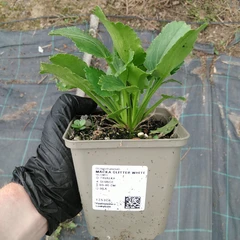
Seedling


Attracts pollinators 🐝
Difficulty
Diseases
Edible
Flower color
Flower color: Shade
Foliage color
Fragrant (aromatic) 👃
Frost resistance
Hardiness zone
Height
Moisture
Pests
Position
Soil
Spacing
Spacing: Plants per m²
Species
Suitable for cutting
Suitable for drying
Recommended products

Echinops bannaticus
Globe thistle Star Frost

Gypsophila paniculata
Baby's breath Flamingo

Achillea millefolium
Yarrow Terracotta

Echinops bannaticus
Globe thistle Blue Glow

Achillea millefolium
Yarrow Summer Pastels

Achillea ptarmica
Yarrow The Pearl

Sedum telephium
Sedum Star Dust

Limonium latifolium
Sea lavender

Alchemilla mollis
Lady's mantle Irish Silk

Achillea millefolium
Yarrow Cerise Queen

Achillea millefolium
Yarrow Lilac Beauty

Knautia macedonica
Knautia Red Knight

Salvia nemorosa
Woodland Sage Schneehügel

Sanguisorba officinalis
Great Burnet

Verbena bonariensis
Verbena

Achillea millefolium
Yarrow Lachsschönheit

Lychnis coronaria
Campion Alba

Liatris spicata
Liatris Floristan White

Gypsophila paniculata
Baby's Breath Snowflake

Geum rivale
Water Avens

Sedum spectabile
Sedum Matrona

Delphinium hybrida
Larkspur Benary’s Pacific Black Knight

Solidago canadensis
Goldenrod Romantic Glory

Verbascum nigrum var. album
Black Mullein

Perovskia
Russian Sage Blue Spire

Aquilegia vulgaris
Columbine Kristall

Achillea millefolium
Yarrow Cassis

Salvia nemorosa
Woodland sage Schwellenburg

Papaver orientale
Oriental Poppy Royal Wedding

Cephalaria gigantea
Giant scabious
Cultivation
Growing the sea holly 'Glitter White' is an ideal choice even for beginning gardeners who desire a striking but undemanding perennial. Crucial for successful growth is selecting the right location. This plant unconditionally requires full sun and heat; in the shade, it would not bloom and would languish. The soil must be well-draining, sandy, and rather poor in nutrients. Sea holly does not tolerate heavy, clay, and waterlogged soils, in which its roots rot in winter. If you have heavier soil in your garden, you must lighten it with gravel or sand before planting the seedling, or create a raised bed where water drains quickly. When planting, keep a spacing of about 45–50 cm (3 to 5 plants per m²) so that air can flow freely between the plants, which functions as prevention against fungal diseases.
Regarding watering and nutrition, sea holly is a typical plant of dry steppes and gravel beds. Seedlings need more regular watering only shortly after planting, until they are sufficiently rooted. Adult plants are very drought-resistant and require additional water only during periods of extreme heat. Avoid over-fertilizing, especially with fertilizers high in nitrogen. In overly nutritious soil, sea holly loses its compact shape, stretches out, and may lodge. The plant has a strong taproot that allows it to draw moisture from the depths, but at the same time makes it sensitive to transplanting, so plant it directly into its permanent place. Watch out for voles, which really like the sweet roots of sea hollies.
Maintenance during the season is minimal. Sea holly is indeed a short-lived perennial, but it reliably maintains itself in its location by self-seeding, if you allow it to. You can remove faded inflorescences in autumn to prevent self-seeding, or leave them on the plant for a winter effect, when the silvery heads frosted by frost look magical. The plant is fully hardy (down to -34 °C), so it does not need winter protection as long as it has dryness at the roots. If you would like to grow 'Glitter White' in a container, it is possible, but choose a deeper pot because of the long root. Put a thick drainage layer at the bottom and use a substrate mixed with sand in a 1:1 ratio. On the balcony, place it in the warmest and sunniest spot.
The information given is based on our experience, please use it as a guide only. Times may vary depending on the season, climate, location, sowing and transplanting dates and possibly also the conditions in the greenhouse/greenhouse. We always recommend testing how the plant performs in your conditions. Please do not take this as a guarantee.
How far apart should I plant the seedlings?
How often do I need to water the plant?
Does the plant need to be fertilized?
Is the Eryngium 'Glitter White' hardy?
Should I prune the plant before winter?
Frequently asked questions
Planting site
Where is the best place to plant Poppy 'Glitter White'?
What kind of soil does Poppy need?
Can I grow sea holly in a container?
Diseases & pests
What pests or diseases is Eryngium susceptible to?
Characteristics
Is this plant poisonous or dangerous to pets?
Does Eryngium attract bees and butterflies?
Is Eryngium edible?
When and how long does Eryngium bloom?
How long will sea holly last in one spot?
Harvest
Are Eryngium flowers suitable for drying?
Photos in time
See how the seedling looks over the course of a year.


More products in category Sea Holly

Eryngium planum
Sea Holly

Eryngium planum
Sea Holly Glitter Blue

Eryngium planum
Sea holly Silver Salentino

Eryngium yuccifolium
Eryngium yuccifolium

Eryngium alpinum
Sea holly Blue Star
More products in category Perennials
Alchemilla mollis
Lady's mantle Irish Silk
Achillea millefolium
Yarrow Summer Pastels
Verbena bonariensis
Verbena

Salvia nemorosa
Woodland Sage Caradonna

Perovskia atriplicifolia
Russian Sage

Gaura lindheimeri
Gaura Siskiyou Pink

Echinacea purpurea
Coneflower Rubinstern

Echinacea pallida
Echinacea pallida
Eryngium planum
Sea Holly

Echinacea purpurea
Coneflower Magnus

Salvia nemorosa
Woodland Sage Ostfriesland

Calamintha nepeta
Calamint Blue Cloud

Rudbeckia fulgida
Rudbeckia Goldsturm

Calamintha nepeta ssp. nepeta
Calamint

Gaura lindheimeri
Gaura Summer Breeze

Salvia nemorosa
Woodland Sage Amethyst

Leucanthemum vulgare
Daisy Maikönigin
Achillea millefolium
Yarrow Terracotta

Perovskia atriplicifolia
Russian sage Little Spire
Salvia nemorosa


