
Geranium pratense
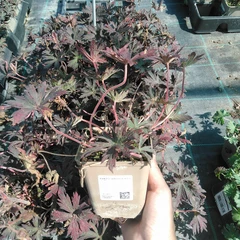
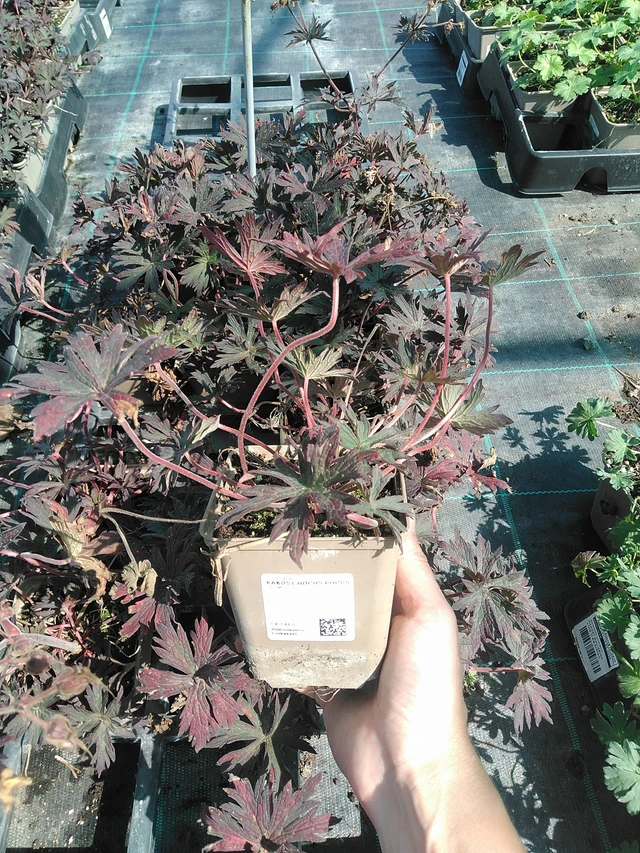
Geranium Hocus Pocus
Seedling


Attracts pollinators 🐝
Difficulty
Diseases
Edible
Flower color
Flower color: Shade
Foliage color
Fragrant (aromatic) 👃
Frost resistance
Hardiness zone
Height
Moisture
Pests
Position
Soil
Spacing
Spacing: Plants per m²
Species
Suitable for cutting
Suitable for drying
Recommended products

Geranium pratense
Cranesbill Midnight Reiter

Alchemilla mollis
Lady's mantle Irish Silk

Geranium oxonianum
Geranium Claridge Druce

Helleborus orientalis
Hellebore Double Ellen Yellow Spotted

Salvia pratensis
Meadow Sage Rose Rhapsody

Thalictrum aquilegiifolium
Columbine meadow-rue

Salvia pratensis
Meadow Sage Sky Dance

Clematis heracleifolia
Clematis Mrs R. Brydon

Salvia nemorosa
Woodland Sage Schneehügel

Nepeta faassenii
Catmint Alba

Lavandula angustifolia
Lavender Rosea

Pennisetum alopecuroides
Fountain grass Hameln

Dicentra spectabilis
Bleeding Heart

Sedum spectabile
Sedum Matrona

Gypsophila paniculata
Baby's Breath Snowflake

Geum rivale
Geum Mango Lassi

Geranium sanguineum
Bloody Cranesbill Apfelblüte

Leucanthemum vulgare
Daisy Maikönigin

Aquilegia vulgaris
Columbine Kristall

Anemone hybrida
Japanese Anemone Serenade

Echinacea purpurea
Coneflower White Swan

Geum chiloense
Avens Tempest Scarlet

Geranium maculatum
Geranium Espresso

Veronica longifolia
Speedwell First Love

Helleborus orientalis
Hellebore Double Ellen White

Bouteloua gracilis
Mosquito Grass

Deschampsia cespitosa
Tufted hairgrass Palava

Betonica (Stachys) grandiflora
Betony Superba

Helleborus orientalis
Hellebore Double Ellen Picotee

Liatris spicata
Liatris Floristan White
Cultivation
For cranesbill, choose a sunny or semi-shady spot. It will thrive best in naturally humous and loamy soil that holds nutrients well but at the same time does not remain waterlogged. When planting in a bed, keep a spacing of about 40 centimeters, which corresponds to roughly six to nine plants per square meter. This space is crucial to ensure adequate air circulation. Although cranesbills are highly resistant to pests, powdery mildew could appear in too dense a stand. An airy spot and a less dense stand will naturally prevent this problem.
During the growing season, this perennial requires medium watering. Keep the soil slightly moist, especially in the warmer summer months, when the cranesbill blooms with blue-purple flowers from June to August. You can boldly cut these flowers for a vase, and what's more, they will reliably attract bees and butterflies to the garden. After the main flowering, don't be afraid to cut the plant back slightly. This pruning will support the formation of new, attractively colored burgundy to bronze leaves and keep the perennial in perfect condition until autumn. Fertilizing early in the spring with ordinary compost is sufficient.
Thanks to its compact growth, which reaches thirty to forty centimeters, this variety is absolutely ideal for growing in containers and window boxes. When planting in a pot, don't forget a good drainage layer at the bottom and use a high-quality substrate for perennials. Plants in containers will need slightly more frequent watering than those in a bed. With the arrival of winter, you don't have to worry about protection at all, because this cranesbill can easily handle frosts down to minus 34 degrees. The above-ground part dies back for the winter and in the spring it reliably sprouts again from its strong roots.
The information given is based on our experience, please use it as a guide only. Times may vary depending on the season, climate, location, sowing and transplanting dates and possibly also the conditions in the greenhouse/greenhouse. We always recommend testing how the plant performs in your conditions. Please do not take this as a guarantee.
Can Geranium 'Hocus Pocus' also be successfully grown in a pot on a balcony?
How often should I water the seedling after planting?
What spacing should I follow when planting multiple seedlings next to each other?
How tall will the plant grow in total and will it need support?
Frequently asked questions
Characteristics
Does this cultivar of Geranium attract pollinators to the garden?
When exactly does the Geranium bloom and what color are the flowers?
Is this plant suitable for absolute beginners?
Planting site
What kind of soil does Geranium 'Hocus Pocus' need for proper growth?
Where is the best place in the garden to plant this seedling?
Can Geranium 'Hocus Pocus' handle Czech winters, or do I need to protect it?
Propagation
Does this meadow cranesbill (Geranium pratense) self-seed in the flower bed?
Troubleshooting
What should I do if a white powdery coating appears on the leaves?
Harvest
Can the flowers be used for cutting for vases or for drying later?
Basic information
What is the Hocus Pocus geranium and what makes it special?
Is the plant poisonous or otherwise dangerous to children and pets?
Photos in time
See how the seedling looks over the course of a year.


More products in category Cranesbill

Geranium hybrida
Geranium Rozanne

Geranium cantabrigiense
Cranesbill Biokovo

Geranium sanguineum
Bloody Cranesbill Elsbeth

Geranium cantabrigiense
Cranesbill Cambridge

Geranium oxonianum
Geranium Rose Claire

Geranium sanguineum
Bloody cranesbill

Geranium renardii
Geranium Philippe Vapelle

Geranium pratense
Geranium Summer Skies

Geranium endressii
Geranium Wargrave Pink

Geranium cantabrigiense
Cambridge Geranium Saint Ola
Geranium oxonianum
Geranium Claridge Druce
Geranium pratense
Cranesbill Midnight Reiter

Geranium himalayense
Geranium Johnson's Blue
Geranium sanguineum
Bloody Cranesbill Apfelblüte

Geranium himalayense
Geranium Gravetye

Geranium pratense
Geranium Azure Skies

Geranium pratense
Geranium Cloud Nine

Geranium versicolor
Pencilled cranesbill

Geranium sylvaticum
Wood Cranesbill Album

Geranium phaeum
Cranesbill Samobor
More products in category Perennials
Alchemilla mollis
Lady's mantle Irish Silk

Achillea millefolium
Yarrow Summer Pastels

Verbena bonariensis
Verbena

Salvia nemorosa
Woodland Sage Caradonna

Perovskia atriplicifolia
Russian Sage

Gaura lindheimeri
Gaura Siskiyou Pink

Echinacea purpurea
Coneflower Rubinstern

Echinacea pallida
Echinacea pallida

Eryngium planum
Sea Holly

Echinacea purpurea
Coneflower Magnus

Salvia nemorosa
Woodland Sage Ostfriesland

Calamintha nepeta
Calamint Blue Cloud

Rudbeckia fulgida
Rudbeckia Goldsturm

Calamintha nepeta ssp. nepeta
Calamint

Gaura lindheimeri
Gaura Summer Breeze

Salvia nemorosa
Woodland Sage Amethyst
Leucanthemum vulgare
Daisy Maikönigin

Achillea millefolium
Yarrow Terracotta

Perovskia atriplicifolia
Russian sage Little Spire
Salvia nemorosa


