
Persicaria amplexicaulis
Persicaria JS Calor
Seedling

Attracts pollinators 🐝
Difficulty
Diseases
Edible
Flower color
Flower color: Shade
Foliage color
Fragrant (aromatic) 👃
Frost resistance
Hardiness zone
Height
Moisture
Pests
Position
Soil
Spacing
Spacing: Plants per m²
Species
Suitable for cutting
Suitable for drying
Recommended products

Calamintha nepeta ssp. nepeta
Calamint

Phlomis russeliana
Phlomis Russeliana

Sanguisorba officinalis
Great Burnet

Calamagrostis acutiflora
Feather Reed Grass Overdam

Salvia nemorosa
Woodland Sage Schneehügel

Knautia macedonica
Knautia Red Knight

Persicaria amplexicaulis
Persicaria Rosea

Sanguisorba
Great Burnet Rock and Roll

Persicaria amplexicaulis
Persicaria Alba

Hydrangea arborescens
Smooth Hydrangea Annabelle

Salvia nemorosa
Salvia Mainacht

Persicaria affinis
Persicaria Superba

Achillea millefolium
Yarrow Cassis

Lavandula intermedia
Lavender Edelweiss

Veronicastrum virginicum
Culver's Root Album

Zinnia elegans
Zinnia Oklahoma Salmon

Limonium sinuatum
Statice QIS Pastel

Rudbeckia fulgida
Rudbeckia Goldsturm

Sedum spectabile
Sedum Matrona

Delphinium hybrida
Larkspur Benary’s Pacific Black Knight

Delphinium elatum
Delphinium Magic Fountains Dark Blue (Dark Bee)

Coreopsis
Coreopsis Full Moon

Sanguisorba tenuifolia
Sanguisorba Alba

Penstemon digitalis
Penstemon Husker Red

Pennisetum alopecuroides
Fountain Grass Hameln Gold

Helleborus orientalis
Hellebore Double Ellen White

Helleborus orientalis
Hellebore Double Ellen Picotee

Deschampsia cespitosa
Tufted hairgrass Tardiflora

Coreopsis verticillata
Coreopsis Moonbeam

Gypsophila paniculata
Baby's breath Bristol Fairy
Cultivation
To successfully establish the 'JS Calor' knotweed seedling, choose a location that offers plenty of sunshine or light partial shade, but avoid scorching hot places unless you can provide regular watering. This Himalayan perennial is grateful for loamy and humous soil that can retain moisture but is not permanently waterlogged or muddy. Before planting itself, we recommend improving the soil by working in mature compost, which will support a quick start for the plant. Plant the seedlings with a spacing of 40–60 cm (approximately 3 to 5 plants per square metre) so they have enough space to form their typical, up to a metre tall and rich clumps. Water the plant thoroughly after planting and keep an eye on the moisture, especially in the first weeks before it fully takes root.
Knotweed is a plant that literally loves water, and therefore watering is the most important point of care, especially on hot summer days. If you treat the plant to enough moisture, it will reward you with lush growth and a flood of coral-red flower spikes from July to October. As for fertilizing, this perennial is not too demanding; adding a dose of organic fertilizer or compost in the spring is enough. A great advantage of the 'JS Calor' cultivar is its extraordinary resilience – it does not suffer from diseases or pests, not even slugs, which makes it an ideal choice for maintenance-free and ecological gardens, where its flowers additionally reliably attract bees and other pollinators.
Care for knotweed during the year is minimal, since it is a long-lived perennial that will last for many years in one place. With the arrival of winter, no complicated measures are necessary, because the plant is fully frost-resistant down to -28 °C (zone 5a) and overwinters in our conditions without problems without the need for covering. The above-ground part of the plant dies back and dries up with the first frosts. We recommend leaving these dry stems and leaves on the flowerbed over the winter as natural root protection and removing them with a deep cut just above the ground early in the spring (March), before new shoots begin to sprout. This will keep the plant vital and ready for the new season.
If you are considering growing knotweed in containers or window boxes, it is possible, but you must count on its greater demands for space and moisture. Given its height of 75–100 cm, choose a sufficiently large and stable pot with drainage holes. You must never let the soil in the container dry out completely, which in summer can mean even daily watering. Although knotweed stands out better in flowerbeds in the company of grasses and asters, it can serve as a solitary element on a terrace in a container, provided you ensure conditions similar to those in its natural environment – i.e., moisture and nutrients.
The information given is based on our experience, please use it as a guide only. Times may vary depending on the season, climate, location, sowing and transplanting dates and possibly also the conditions in the greenhouse/greenhouse. We always recommend testing how the plant performs in your conditions. Please do not take this as a guarantee.
How often and how much should I water the Persicaria?
Do I need to prune the Persicaria? When is the best time?
Frequently asked questions
Planting site
What is the best location for Persicaria 'JS Calor'?
What kind of soil does knotweed need?
Can I grow knotweed in a large pot?
Characteristics
Is this knotweed frost-hardy, or do I need to cover it for the winter?
When and for how long does this plant bloom?
How tall does the Persicaria grow and how much space does it need?
Is Persicaria toxic to children or pets?
Will the Persicaria spread aggressively throughout the garden?
Harvest
Are the Persicaria flowers suitable for cutting?
Propagation
How can I propagate knotweed?
Diseases & pests
Is this Persicaria prone to pests or diseases?
Photos in time
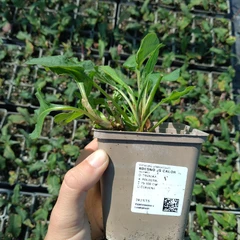
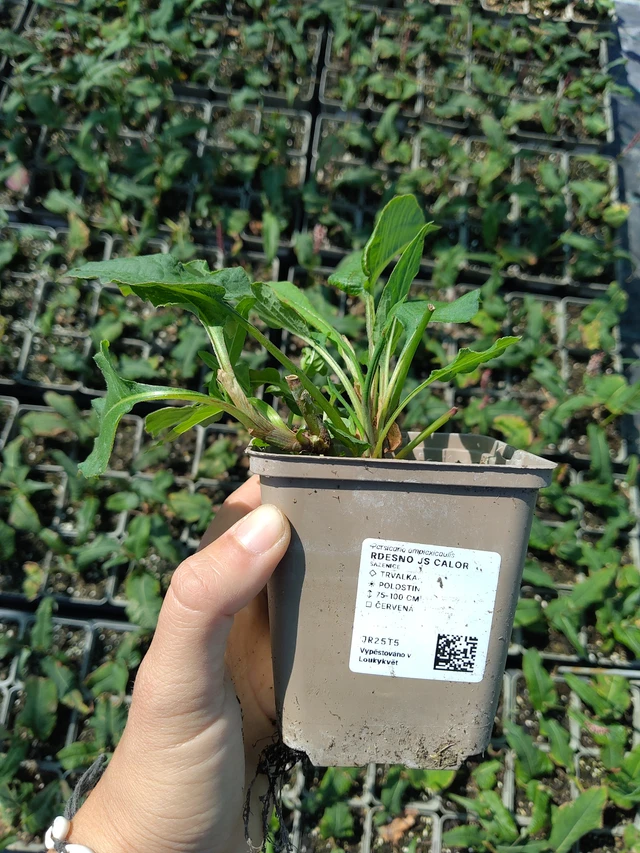
See how the seedling looks over the course of a year.

More products in category Persicaria

Persicaria amplexicaulis
Persicaria Speciosa
Persicaria amplexicaulis
Persicaria Alba

Persicaria amplexicaulis
Persicaria Fat Domino
Persicaria affinis
Persicaria Superba

Persicaria amplexicaulis
Persicaria Dark Red

Persicaria amplexicaulis
Persicaria Lisan
Persicaria amplexicaulis
Persicaria Rosea

Persicaria amplexicaulis
Persicaria JS Caliente

Persicaria amplexicaulis
Persicaria JS Misty Morning
More products in category Perennials

Alchemilla mollis
Lady's mantle Irish Silk

Achillea millefolium
Yarrow Summer Pastels

Verbena bonariensis
Verbena

Salvia nemorosa
Woodland Sage Caradonna

Perovskia atriplicifolia
Russian Sage

Gaura lindheimeri
Gaura Siskiyou Pink

Echinacea purpurea
Coneflower Rubinstern

Echinacea pallida
Echinacea pallida

Eryngium planum
Sea Holly

Echinacea purpurea
Coneflower Magnus

Salvia nemorosa
Woodland Sage Ostfriesland

Calamintha nepeta
Calamint Blue Cloud
Rudbeckia fulgida
Rudbeckia Goldsturm
Calamintha nepeta ssp. nepeta
Calamint

Salvia nemorosa
Woodland Sage Amethyst

Gaura lindheimeri
Gaura Summer Breeze

Leucanthemum vulgare
Daisy Maikönigin

Achillea millefolium
Yarrow Terracotta

Perovskia atriplicifolia
Russian sage Little Spire
Salvia nemorosa


