Ireland
Come along to the Loukykvět AUTUMN days 🪴, taking place this week from September 11th–13th, 2026.
Ireland
Come along to the Loukykvět AUTUMN days 🪴, taking place this week from September 11th–13th, 2026.
Fleabane Sommerneuschnee, Loukykvět

Erigeron

Fleabane Sommerneuschnee

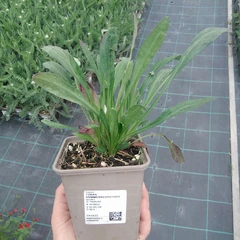
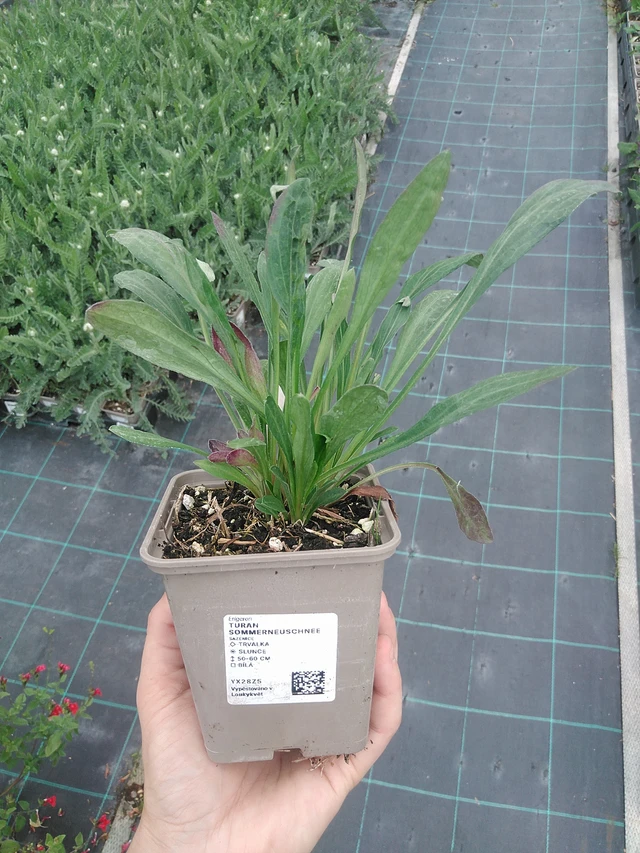
Turan vyniká svou nenáročností, díky které si ho rychle oblíbí i úplní začátečníci. Ve své domovině osidluje slunné horské pláně, a proto na vaší zahradě ocení místo na plném slunci s propustnou půdou a mírnou zálivkou. Obdržíte od nás zdravou sazenici v květináči, připravenou k okamžité výsadbě. Doporučujeme sázet šest až devět rostlin na metr čtvereční v rozestupech zhruba čtyřicet centimetrů, brzy tak vytvoří zapojený porost. Odrůda Sommerneuschnee dorůstá výšky do šedesáti centimetrů a nepotřebuje vyvazovat. Během celého léta nese úchvatné množství květů, které plynule přecházejí z bílé do svěže růžové barvy. Celý trs působí nadýchaným dojmem a na záhonu skvěle propojuje výraznější trvalky. Květy fungují jako obrovské lákadlo pro opylovače. Využití turanu nekončí jen na zahradě, je to mimořádně oblíbená květina k řezu. Bohatě větvené stonky jsou ideální výplní do pestrých letních kytic. Na sušení se tyto jemné květy nehodí, ale čerstvé aranžmá krásně oživí na spoustu dní. Show full description

Seedling

Květináč K9 (9×9×9,5 cm)
Seedling
Seedling
Seedling
1-2 kusy
3,79/ks
3-8 kusů
3,39/ks
9-17 kusů
2,99/ks
18+ kusů
2,69/ks
Add to cart
Skladem 66 ks

Attracts pollinators 🐝

Ano

Difficulty

Beginner

Diseases

Powdery mildew, leaf spot

Edible

Ne
?
Information on whether the plant is edible.

Flower color

White, pink

Flower color: Shade

Pure white, light pink

Foliage color

Green

Fragrant (aromatic) 👃

Ne

Frost resistance

-34
?
The temperature down to which the plant is frost hardy.

Hardiness zone

4a (-34.4 °C to -31.7 °C)

Height

50-60 cm

Moisture

💧💧

Pests

Aphids, slugs

Position

Sun

Soil

Sandy, loamy, well-drained

Spacing

30-40 cm
?
Recommended planting spacing.

Spacing: Plants per m²

6-9

Species

Perennial

Suitable for cutting

Ano

Suitable for drying

Ne
1
2
3
4
5
6
7
8
9
10
11
12
Flowering
June
September

Recommended products

Rudbeckia Henry Eilers, Loukykvět

Rudbeckia subtomentosa

Rudbeckia Henry Eilers is an extraordinary perennial that will bring the magic of late summer and the wild North American prairies into the garden. As a native species, it grows wild on sunny plains, so even here it thrives best in full sun in loamy, clayey, and well-drained soil. You will receive a grown seedling in a pot from us, which you simply transplant straight into the flower bed. It is a very reliable and long-lived plant that does not suffer from diseases or pests and easily handles harsh frosts down to minus twenty-eight degrees. Even complete beginners can playfully manage caring for it. The Henry Eilers cultivar, named after its discoverer, catches the eye at first glance. Bright yellow petals, which are unconventionally rolled into narrow tubes, grow out of prominent brown centers. The flowers on sturdy stems grow over one meter tall and do not need any support. In the garden, this rudbeckia is perfectly suited for prairie plantings alongside ornamental grasses or in country gardens, where its flowers attract bees and butterflies. Florists love using it for cutting. We cut the stems for a vase as soon as the flowers open, and they will bring you joy for seven to ten days. The faded dark cones look great in dry arrangements, and if you leave them in the flower bed, they will create a beautiful spectacle during the winter, especially when covered in frost.
3,89
More from 2,89
In Stock
Rudbeckia Little Henry, Loukykvět

Rudbeckia subtomentosa

Rudbeckia Little Henry brings the untamed energy of the North American prairies to gardens, where these robust perennials originally come from. Accustomed to open spaces bathed in sunlight, it thrives best in direct sunlight in regular loamy or more clayey, but well-drained soil. From us, you will receive a grown seedling in a pot, which you simply need to transplant directly into the flowerbed, where it will take root very quickly and form a strong clump. It does not need any support, common diseases and pests avoid it, and it easily withstands severe frosts down to minus twenty-eight degrees. Therefore, it is an absolutely ideal choice for beginning growers looking for a reliable and long-lived perennial. From July to October, it will delight you with a flood of distinctive flowers. The Little Henry cultivar is indeed exceptional in its shape; the yellow petals are rolled up into narrow tubes and surround a prominent brown center. Compared to the original species, this variant is slightly shorter, growing to about one meter, and blooms slightly earlier. In the flowerbed, it perfectly complements tall ornamental grasses and fits into both modern gravel plantings and rustic cottage gardens. Although it is not a fragrant lure, its edible flowers attract bees, bumblebees, and butterflies from the wide surroundings. Florists like to use it for cutting. We cut the stems into a vase as soon as the flowers open, and they stay fresh in water for seven to ten days. It also looks beautiful in dry arrangements, where the prominent center cones themselves can be used. If you decide not to harvest it, leave the plant in the flowerbed all winter. The dried centers covered in frost and snow create an exceptionally captivating winter spectacle.
3,89
More from 2,89
In Stock posledních 96 kusů
Aster Schneetanne, Loukykvět

Aster ericoides

Fine tiny leaves and well-branched long stems with a large number of tiny star-shaped flowers make this Aster an ideal autumn cut flower. In beds, it serves as a fluffy delicate filler and brightens up the garden after summer perennials have finished blooming. It will look good in combination with roses and in wild plantings with grasses. It is important for bees and butterflies as the last pasture before winter. It lasts 7 to 10 days in a vase. 'Schneetanne' is an old reliable, white-flowering variety bred by Karl Förster.
2,99
More from 2,09
In Stock
Hyssop Albus, Loukykvět

Hyssopus officinalis

The Albus hyssop is an aromatic subshrub that will bring a Mediterranean atmosphere and a flood of pure white flowers to your garden. Its original home is the sunny and rocky slopes of Southern Europe, so it will appreciate full sun and well-drained, even poorer sandy soil here as well. You will receive a grown seedling in a pot from us, which you simply transplant straight into the flower bed, where it will quickly form a dense, fragrant bush about half a meter tall. It does not suffer from diseases or pests, effortlessly handles drought and severe frosts, and even beginners can manage its care. With its appearance, it resembles lavender and looks great as an accompaniment to roses or in steppe-character gravel beds. From July to September, it is covered in tiny flowers that act as a huge lure for bees, bumblebees, and butterflies. In addition, the whole plant smells pleasantly, and its leaves and flowers are edible. Hyssop is excellent for cutting into summer bouquets, and during the winter, it creates a beautiful detail in the flower bed when its woody stems are covered in frost.
2,79
More from 1,99
In Stock
Echinacea pallida, Loukykvět

Echinacea pallida

The pale coneflower is one of the exceptionally interesting prairie perennials of the North American continent. In its natural environment, it grows on open, sunny plains, which is why it thrives best in our gardens in full sun in drier, well-drained soil. You just need to transplant this grown seedling straight into the flower bed, where it will reliably take root. It does not need support, easily withstands severe frosts, and is avoided by common diseases and pests, making it ideal for beginner growers. During June and July, it will reward you with aromatic flowers with unusually narrow and drooping petals in light purple and pink tones. The prominent prickly centers are literally a magnet for bees and bumblebees, and the flowers themselves are surprisingly edible. The plant stands out especially in rustic plantings together with ornamental grasses. Gardeners and florists love it for its versatility. The fresh stems bring joy in a vase for about a week. Moreover, the distinctive central cones hold their shape perfectly, can be perfectly dried for winter decorations, or left in the flower bed, where they will create an eye-catching winter structure under a layer of snow.
2,99
More from 2,09
In Stock
Aster Pink Cloud, Loukykvět

Aster ericoides

Delicate tiny leaves and well-branched long stems with a large number of tiny star-shaped flowers make this aster an ideal autumn cut flower. In flower beds, it serves as a fluffy, delicate filler and brightens up the garden after summer perennials have finished flowering. It looks good in combination with roses as well as in wild plantings with grasses. Important for bees and butterflies as the last pasture before winter. It lasts 7 to 10 days in a vase. 'Pink Cloud' blooms with a large number of tiny pink flowers with yellow centers.
2,99
More from 2,09
In Stock
Eryngium yuccifolium, Loukykvět
For drying

Eryngium yuccifolium

Eryngium yuccifolium catches the eye at first glance with its exotic appearance, which resembles a desert yucca more than a classic perennial. It originates from the steppe regions and light forests of the eastern USA, where it has learned to manage water excellently. Thanks to this, it is an ideal choice for sunny and dry locations with well-drained, even poorer sandy soil. It forms a basal rosette of stiff, blue-green to gray-green leaves, from which tall stems topped with spherical inflorescences grow in summer. The flowers are up to 2.5 cm in diameter and their color transitions from silvery white to greenish. The plant is very hardy and does not suffer from pests or diseases. Its flowers are literally a magnet for pollinators, especially bees and butterflies, who find plenty of food on them. In the garden, it acts as a striking structural element that, thanks to its evergreen leaves and sturdy stems, decorates the bed even in the winter months. For florists, this eryngium is a valuable material. The sturdy stems are easy to arrange, and the spherical flowers look great in fresh summer bouquets as well as in dried decorations, where they hold their shape for a long time.
2,79
More from 1,99
In Stock posledních 43 kusů
Wood Calamint Menthe, Loukykvět

Calamintha sylvatica

Calamint 'Menthe' is an undemanding perennial that reliably perfumes any sunny garden. Its original homeland is bright deciduous forests and bushy hillsides, which is why it thrives best here in direct sun in well-drained or poorer loamy soil. It handles winter without problems and tolerates severe frosts. You will receive a grown seedling in a pot from us, which you just need to transplant into a bed, where it will soon form a compact bush up to forty centimeters. It does not suffer from diseases or pests, so even beginners can easily manage its care. Until autumn, it blooms with a multitude of tiny white flowers with a pleasant minty-spicy scent that attract bees and butterflies. It looks good among roses as well as in natural-style steppe beds with lower grasses. It is also fully edible; the flowers and green leaves will beautifully decorate summer dishes. It is perfectly suited for cutting into smaller fresh bouquets, to which it adds a delicate structure in the vase.
2,79
More from 1,99
In Stock
Solidaster Lemore, Loukykvět

Solidaster hybride

Solidaster 'Lemore' is a unique perennial that originated from an interesting cross between goldenrods and asters. Its parent species come from sunny meadows, which is why it will do best in your garden in full sun in well-drained, sandy, or loamy soil. You will receive a grown seedling in a pot from us, which you just need to transplant straight into the flower bed. Here, it will soon form clumps about seventy centimeters high, which do not need support and easily survive severe frosts. Solidaster does not suffer from diseases or pests, making cultivation easy even for beginners. From July to September, flowers appear that make the 'Lemore' variety very attractive. They bloom in a bright yellow color and gradually change through cream to milky white. The florets are slightly larger than those of goldenrod, attract bees and butterflies, and are even surprisingly edible. The plant is perfectly suited for cutting into summer arrangements; it will last beautifully in a vase for a full ten days.
2,99
More from 2,09
In Stock
Mullein Sixteen Candles, Loukykvět

Verbascum chaixii

Mullein is a native European perennial that brings a piece of wild nature's magic to gardens. In the wild, you will most often find it growing on sunny, rocky hillsides and drier grassy spots, where it withstands a lack of water well. Thanks to this origin, it is a very undemanding plant, whose cultivation even a complete beginner can easily manage. In the garden, it will do best in full sun in well-drained and rather sandy soil, where it will not suffer from waterlogging. It produces striking, over a meter tall stems full of vibrant flowers, bringing necessary height and firm structure to mixed perennial beds. Even though it is classified among short-lived perennials, it grows reliably in a sunny spot and seamlessly handles frosts below minus twenty degrees. During May and June, the thick stems are covered with a flood of bright yellow flowers. For bees, bumblebees, and plenty of other beneficial pollinators, mullein is a huge attraction and a rich source of food. If you enjoy making bouquets from your own garden, you will certainly appreciate that it is perfectly suited for cutting into summer vases, where it brings a bit of meadow relaxation. In addition, you can let the faded, sturdy stems dry and use them for winter decorations or other floral creations. The 'Sixteen Candles' cultivar stands out with a beautiful detail in the form of striking, purple-fuzzed stamens that decorate the center of each flower. These form an interesting contrast to the green to gray-green felted leaves. You will receive an already nicely grown seedling from us, which you can simply transplant into your bed and immediately watch how it thrives.
2,79
More from 1,99
In Stock posledních 6 kusů
Ornamental Carrot Dara, Loukykvět

Daucus carota

Pure splendor! Thin, sturdy stems with umbel inflorescences resembling dill at their ends. On each stem, there are thousands of tiny blooms creating the effect of a veil or lace. This is a mix of colors, where some flowers are pure white, while most are chocolate to burgundy with a touch of white, sometimes even pink.
1,99
In Stock
Smooth Hydrangea Annabelle, Loukykvět

Hydrangea arborescens

A dense hemispherical shrub with smooth fresh green leaves that are lighter on the underside. Flowers in convex to hemispherical inflorescences with a diameter of 15–30 cm gradually change color from pale green and cream to pure white.
4,29
More from 3,89
In Stock
Bugbane Silver Dance, Loukykvět

Cimicifuga japonica

Japanese bugbane brings freshness to the shady corners of the garden. In its homeland, it grows in the shady mountain valleys of Japan, which is why it is best suited to partial shade to full shade and moister, loamy, humous soil here. From the mature potted seedling you receive, a reliable and long-lived perennial will grow, which even beginners can handle. It does not require complex care, does not suffer from diseases or pests, and can withstand even severe frosts down to minus twenty-eight degrees. However, the entire plant is poisonous. It decorates flowerbeds not only with white flowers but also with striking dark green leaves. In spring, it needs plenty of space and time to sprout. Ideally, you can combine it with early bulbs that will fill the empty space. From August to September, it creates upright inflorescences full of tiny flowers, which are excellent for cutting into late summer bouquets. The 'Silver Dance' cultivar grows to a height of eighty centimeters, stands out with its compact growth, and blooms truly very long and tirelessly.
5,19
More from 3,89
In Stock posledních 10 kusů
Bee balm Schneewittchen, Loukykvět

Monarda hybride

Monardas, or bee balms, originate from the eastern parts of North America. They most often grow along paths, in thickets, and on the edges of light forests. They are honey-bearing aromatic plants, perfectly usable for cutting and in the kitchen. Schneewitchen is an older proven variety that is still considered the best of the white-flowering ones today.
2,99
More from 2,09
In Stock
Betony Morning Blush, Loukykvět

Betonica grandiflora

Betony, or Stachys, Morning Blush is a reliable perennial that will win you over not only with its flowers but also with its leaf structure. The original species comes from the mountain meadows of the Caucasus and northern Turkey, where it grows in sunny and slightly moist habitats. In the garden, it creates dense, compact clumps of wrinkled, deep green leaves that work as great ground cover and suppress weed growth. Above them, from May to July, sturdy upright stems carrying large deadnettle-like flowers rise. It is a magnet for bees and bumblebees, which find a rich source of nectar in the flowers. The Morning Blush cultivar is exceptional for its delicate coloring. Unlike the more common purple varieties, it offers a palette from pure white to softly pinkish, bringing light and elegance to flower beds. It fits into country gardens as well as more modern perennial plantings, where it contrasts beautifully with darker plants. The inflorescences are also suitable for cutting into a vase, where they stay fresh for several days. It is a long-lived and undemanding plant that handles our winters perfectly and requires almost no care.
2,99
More from 2,09
In Stock
Japanese Anemone Whirlwind, Loukykvět

Anemone hybrida

Anemones come from the same family as buttercups. With their elegant flowers on long slender stems, they can liven up and brighten late summer and autumn beds. They stand out against the darker background of shrub groups and will also be grateful for their partial shade. The Czech Perennial Association chose autumn Anemones as the perennial of the season for 2022. They last 7 days in a vase. Whirlwind is a historical variety bred in 1887 in the USA. It has a semi-double pure white flower, often with inner twisted petals, and compact, strictly upright growth. The flowers are very durable.
3,49
More from 3,59
In Stock
Tufted Hairgrass Goldschleier, Loukykvět

Deschampsia cespitosa

Tufted hairgrass is an undemanding native grass that remains green even in winter. In nature, it grows in meadows and forest clearings. It forms a compact tuft of leaves, from which grow fine, thin stems with transparent clouds of flowers. It adapts even to more difficult conditions, such as dry shade or compacted soil, and can handle waterlogging. Goldschleier has very tiny spikelets in light yellow panicles. The inflorescence forms a fluffy light yellow cloud above the tuft of leaves.
3,79
More from 2,69
In Stock
Hellebore Double Ellen White, Loukykvět

Helleborus orientalis

Hellebores are evergreen perennials that form slowly spreading clumps of leathery, dark green leaves. The stems usually bear four to five flowers. They bloom very early, as early as late winter and early spring. They are usable for vases only after conspicuous seed pods form in the center of the flower and the flower matures. Earlier, they tend to wilt and the stems cannot hold the flower in an upright position. All parts of the plant are poisonous. Double Ellen White is an almost pure white, double-flowered hellebore. The petals are slightly wavy and the bottom row of petals is lightly tinged with green.
4,79
More from 4,69
In Stock
Agastache Mango Tango, Loukykvět

Agastache hybrida

Most hybrids available here come from plants originating in North America and Mexico. It is characterized by a delicate overall appearance. An elegant plant with small fragrant leaves, it blooms continuously during the summer with plenty of tiny florets and attracts butterflies and bees.
2,99
More from 2,09
In Stock posledních 89 kusů
Italian Aster, Loukykvět

Aster pilosus

The hairy aster is a true queen of late summer and autumn, blooming at a time when most other perennials are already going into winter dormancy. This originally North American beauty is characterized by its rich branching and a flood of tiny white flowers with yellow centers, which change color to purple over time. Thanks to its height of around 120 centimeters, it creates an airy effect in flower beds and literal clouds of flowers that stand out perfectly in natural or prairie-style plantings. Its species name refers to the fine hairs that cover its stems and leaves. For bees, butterflies, and other pollinators, it represents one of the last and very important sources of nectar before the arrival of winter. It is an exceptionally resilient and low-maintenance perennial that can handle even drier and poorer soils in full sun. Frost resistance down to -34 °C makes it a reliable part of the garden for many years. Moreover, its sturdy, woody stems are perfectly suited for cutting into autumn bouquets, where they stay fresh for a long time and add volume and lightness to arrangements.
2,99
More from 2,09
Unavailable
Pro rok 2026 nedostupné
Cosmos Eclipse, Loukykvět
New

Cosmos atrosanguineus

Chocolate Cosmos brings a piece of exotic Mexico to gardens. This unusual species attracts from afar with its typical scent reminiscent of dark chocolate, and the 'Eclipse' cultivar adds stunning velvety flowers in a dark burgundy color. You will receive a rooted seedling from us, which you can easily transplant according to your needs. Given its origin, it loves full sun and well-drained, slightly moist soil. It grows as a short-lived perennial, and because it only tolerates frost down to about minus twelve degrees, it is most often grown as a portable container plant. It looks great in a large pot on a balcony or terrace, but you can also hide it with the container in a flower bed among ornamental grasses, where it will bloom continuously from July to October. With the arrival of winter, you simply take it out and store it in a frost-free room. It reliably attracts many bees and other beneficial pollinators. Furthermore, the dark red flower heads are perfect for cutting. In a vase, they create an impressive contrast to more delicate light flowers and stay fresh for many days. The cosmos doesn't need any complex pest or disease care, so even someone who is just starting with similar portable species will quickly make friends with it.
2,99
More from 2,09
In Stock
Woodland Sage Adrian, Loukykvět

Salvia nemorosa

This species of sage originates from the steppe regions of Central and Eastern Europe. It forms profusely flowering small clumps with straight, upright stems. In flower beds, it looks best in groups. It is traditionally planted as a companion to roses due to the matching flowering time. However, it looks equally good in mixed drought-tolerant steppe plantings with grasses. It is an excellent food source for bees. Lasts 7 days in a vase. Adrian is a white-flowering cultivar.
2,99
More from 2,09
In Stock
Goldenrod Moonlight Glory, Loukykvět

Solidago canadensis

The delicately creamy 'Moonlight Glory' goldenrod will bring lightness and elegance to your garden without requiring complex care. The original species of this perennial come from North America, from where they brought extraordinary hardiness, so the plant easily withstands even very severe frosts. You don't have to worry, this modern garden cultivar is perfectly disciplined and does not spread uncontrollably through the flower beds. You just need to choose a sunny spot with humous soil, and from the supplied seedling, you will get a stable plant that does not suffer from pests or diseases. From August to October, it forms rich inflorescences in a milky white shade, which will perfectly complement bolder colors in the bed. During autumn, it becomes a sought-after stop for bees and butterflies; surprisingly, it even has edible flowers. If you belong to the enthusiasts of bouquet making, this cultivar is guaranteed to please you with its straight stems. You can cut it already in the bud stage, and it will stay fresh in a vase for a beautiful ten days. If you don't manage to use the flowers fresh, simply dry them for winter arrangements.
2,79
More from 1,99
In Stock posledních 45 kusů
Aster Pink Star, Loukykvět

Aster pringlei

Forms a delicate, airy bush. Compared to Aster ericoides, the flowers are less numerous, placed singly at the ends of branch tips, which gives the plant an airy effect. The plant has a very delicate appearance. It is beautiful in combination with other late asters and ornamental grasses. Healthy and long-blooming, the pink flower is slightly larger than that of Aster ericoides. Lasts 7 to 10 days in a vase.
2,99
More from 2,09
In Stock
Melinis Karoo Queen, Loukykvět
New

Melinis nerviglumis

Melinis Karoo Queen comes from the dry regions of Africa. It impresses with its feathery pink-reddish spikelets and overall airy appearance. It beautifully softens flowerbeds with drought-loving perennials and is used in floristry, both fresh and dried. It is not fully hardy here, so it is suitable for growing in containers on sunny terraces. It is most often grown as an annual, but when grown in containers, overwintering in protected bright spaces is worth trying.
3,79
More from 2,69
In Stock
Woodland Sage Caradonna, Loukykvět

Salvia nemorosa

This species of sage originally comes from the steppe regions of Central and Eastern Europe. It forms profusely flowering small clumps with straight upright stems. In flower beds, it looks best in groups. Traditionally, due to the identical flowering time, it is planted as a companion to roses. However, it will look just as good in mixed drought-loving steppe plantings with grasses. It lasts 7 days in a vase. The cultivar Caradonna stands out with a long flowering period and dark, almost black-purple stems with tiny purple flowers and dark purple bracts. If we cut it back after flowering, it will bloom again in late August and September.
2,99
More from 2,09
In Stock
Foxglove Dalmatian White, Loukykvět

Digitalis purpurea

The 'Dalmatian White' foxglove is a majestic flower that will naturally bring the magic of forest clearings and light groves into your garden. Originally, it is a native species of Central Europe. In the garden, it thrives best in partial shade or in the sun, in well-drained and slightly moist loamy soil. It is a very undemanding plant avoided by pests and diseases, so even a beginner can easily manage growing it. You will receive a grown seedling in a pot from us, which just needs to be transplanted into the flower bed. It can handle severe frosts and grows as a short-lived perennial or biennial. In spring, it puts out sturdy stems, and from May to June, floods of pure white bell-shaped flowers open on them. These act as a great attraction for pollinators. In a suitable location, it reliably self-seeds, so you will not lose it. It is excellent for natural plantings, and its flowers are very popular for cutting into vases. They will stay fresh at home for six to eight days. Keep in mind, however, that all parts of the plant are poisonous.
2,79
More from 1,99
Unavailable
Pro rok 2026 nedostupné
Calamint, Loukykvět

Calamintha nepeta ssp. nepeta

An undemanding and modest perennial that blooms with a large number of tiny flowers. It blooms for a record-breaking length of time throughout late summer and autumn. It forms smaller, compact, airy bushes that release a minty-spicy scent. The thyme-like flowers attract bees, bumblebees, and butterflies. It will look good among roses as well as in naturalistic steppe beds, perhaps with lower grasses. This calamint is generally more vigorous. It differs from other calamints with felted leaves by its record flowering length, stiff and shiny leaves, and also a larger number of flowers that do not form seeds and are therefore maximally durable. Sometimes sold under the cultivar name 'Triumphator'.
2,79
More from 1,99
In Stock
Fleabane Blütenmeer, Loukykvět

Erigeron karvinskianus

Fleabane 'Blütenmeer' is an ethereal, short-lived perennial that traveled to us all the way from Mexico and brings unbridled lightness to European gardens. It looks like a flood of tiny daisies that gradually change color from pure white to soft pink, so you will see a diverse palette of shades on a single plant at the same time. It is perfectly suited for growing on sunny rockeries, in dry stone walls, or even in pots, where it forms richly blooming cushions. Although it is a short-lived plant, it often maintains itself by self-seeding in well-drained soil, so you will enjoy its beauty in the garden repeatedly. Moreover, the flowers tirelessly attract bees and other pollinators from the beginning of summer until the first frosts. You can also harvest them into small vases, where their tender little flowers will complement the atmosphere of your home.
2,99
More from 2,09
In Stock
Aster Lady in Black, Loukykvět

Aster lateriflorus

The dark black-burgundy shoots of this aster make it a true specialty. The leaves change color in late summer from dark green to burgundy. The white flowers have pink stamens. Lasts 7 to 10 days in a vase.
2,99
More from 2,09
In Stock

Cultivation

Turan odrůdy Sommerneuschnee je dlouhověká trvalka, které se nejlépe daří na horkém slunném místě. Pro úspěšné pěstování je zásadní výběr vhodného stanoviště s propustnou, hlinitou nebo lehce písčitou půdou. Protože obdržíte již dobře prokořeněnou a zdravou sazenici v květináči, můžete ji vysadit rovnou na záhon, nejlépe během jarních měsíců nebo začátkem podzimu. Při výsadbě dodržujte doporučený spon třicet až čtyřicet centimetrů, což odpovídá šesti až devíti rostlinám na metr čtvereční. Dostatečný prostor kolem každé sazenice zajistí dobrou cirkulaci vzduchu. Tento krok funguje jako spolehlivá prevence proti houbovým chorobám, jako je padlí nebo skvrnitost listů, na které turan v příliš vlhkém a hustém porostu občas trpí.

Během sezóny vyžaduje tato rostlina pouze mírnou zálivku. Půda by měla mezi jednotlivými zálivkami vždy mírně proschnout, protože trvalé přemokření kořenům nesvědčí. Hnojení není nutné přehánět, postačí přidání kompostu nebo běžného hnojiva pro trvalky na začátku jara. Od června do září vás turan odmění množstvím květů, které postupně mění barvu z čistě bílé do jemně růžové. Pro prodloužení doby kvetení a udržení vitality doporučujeme pravidelně odstraňovat odkvetlé výhony. Turan dorůstá výšky padesát až šedesát centimetrů a tvoří pevné stonky. Díky tomu si na záhonu udrží svůj tvar a nevyžaduje žádnou umělou oporu ani vyvazování k tyčkám.

Pokud jde o přezimování, turan spolehlivě zvládá i velmi náročné podmínky. Je plně mrazuvzdorný až do teploty -34 °C a české zimy přečká zcela bez problémů. Protože rostlina nemá zimní efekt a na podzim odumírá, doporučujeme ponechat zaschlé stonky a listy na záhonu přes zimu. Poslouží jako přirozená ochrana kořenového krčku před holomrazy. Zpětný řez a vyčištění trsu proveďte až v předjaří, těsně před rašením nových listů. Na jaře si také dejte pozor na slimáky a plzáky, kteří mohou poškodit mladé výhony. Během teplých měsíců pak občas zkontrolujte stonky, zda se na nich neusadily mšice.

Turan je vynikající volbou nejen pro volnou půdu, ale také pro pěstování v nádobách a truhlících. Díky svému přirozeně nadýchanému vzhledu a kompaktnímu růstu oživí slunné balkony i terasy. Pro pěstování v květináči zvolte dobře propustný substrát smíchaný s pískem a nezapomeňte vytvořit drenážní vrstvu na dně nádoby, aby přebytečná voda mohla vždy volně odtékat. Rostliny v nádobách vysychají mnohem rychleji než ty vysazené na záhonu. Budou proto vyžadovat častější zálivku, zejména během horkých letních dní. I zde platí, že by substrát neměl být dlouhodobě přemokřený, proto před každou další zálivkou zkontrolujte vlhkost povrchové vrstvy.

The information given is based on our experience, please use it as a guide only. Times may vary depending on the season, climate, location, sowing and transplanting dates and possibly also the conditions in the greenhouse/greenhouse. We always recommend testing how the plant performs in your conditions. Please do not take this as a guarantee.

Show all

Click to view the full growing instructions.

Frequently
asked
questions

Vlastnosti

Sklizeň

Pěstování

Stanoviště

Množení

Základní informace

Problémy

Nemoci & škudci

Photos
in time

See how the seedling looks over the course of a year.

Fleabane Sommerneuschnee - 12. 8. 2026
12. 8. 2026
Fleabane Sommerneuschnee - 21. 7. 2026
21. 7. 2026
Fleabane Sommerneuschnee - 2. 7. 2026
2. 7. 2026

More products in category Fleabane

Fleabane Blütenmeer, Loukykvět

Erigeron karvinskianus

Fleabane 'Blütenmeer' is an ethereal, short-lived perennial that traveled to us all the way from Mexico and brings unbridled lightness to European gardens. It looks like a flood of tiny daisies that gradually change color from pure white to soft pink, so you will see a diverse palette of shades on a single plant at the same time. It is perfectly suited for growing on sunny rockeries, in dry stone walls, or even in pots, where it forms richly blooming cushions. Although it is a short-lived plant, it often maintains itself by self-seeding in well-drained soil, so you will enjoy its beauty in the garden repeatedly. Moreover, the flowers tirelessly attract bees and other pollinators from the beginning of summer until the first frosts. You can also harvest them into small vases, where their tender little flowers will complement the atmosphere of your home.
2,99
More from 2,09
In Stock
Fleabane Dominator, Loukykvět

Erigeron

Turan Dominator zaručeně oživí každou prosluněnou zahradu hlubokými odstíny tmavě fialové a modrofialové barvy. Jeho divocí předci rostou na horských loukách a ve světlých lesích, proto mu nejlépe vyhovuje přímé slunce a běžná propustná půda s přiměřenou vláhou. Z naší sazenice vám po snadném přesazení vyroste pevná, zhruba půl metru vysoká rostlina. Zdobí ji svěže zelené listy a od června do srpna obrovské množství květů, které spolehlivě lákají užitečné opylovače. Turan vynikne v letních výsadbách po boku kopretin nebo rozchodníků, kde vytvoří krásný barevný kontrast. Velkou radost udělá i příznivcům floristiky, protože se perfektně hodí k řezu. Do vázy stonky řežeme plně rozvité a vydrží v ní svěží spoustu dní. Pro sušení do suchých vazeb jej ale nevyužívejte. Nevadí jí drsné zimy, bez potíží přežije mrazy klesající k minus pětatřiceti stupňům. Pro začínající pěstitele je to ideální volba, stačí jen zpočátku zkontrolovat, zda mladé lístky nelákají slimáky.
3,79
More from 2,69
In Stock

More products in category Perennials

Lady's mantle Irish Silk, Loukykvět

Alchemilla mollis

Alchemilla mollis, known as lady's mantle, is an indispensable perennial for anyone who wants to bring harmony and softness to the garden. Its home is the moister environments of mountain meadows and light forests, making it a very adaptable plant that will survive even severe frosts without problems in our climate. The 'Irish Silk' cultivar is prized for its vitality and abundant blooming, where clouds of tiny, yellow-green flowers float above clumps of gray-green leaves. It is precisely this neutral color that can work wonders in a flower bed – it softens overly sharp contrasts between other flowers and beautifully unifies the entire composition. Besides its ornamental function, lady's mantle also has practical uses. Thanks to its clumping growth and ability to quickly fill in, it is ideal for edging pathways or as an underplanting beneath taller shrubs and roses. Water droplets catch on its leaves, creating a magical spectacle in the garden. If you enjoy making bouquets, you will love lady's mantle as versatile filler greenery that matches almost anything. It will last beautiful for about ten days in a vase, and its inflorescences can also be easily dried without losing too much of their color or shape. Moreover, it is a magnet for pollinators, and its young leaves are even edible, so it also finds use in a natural kitchen.
2,99
More from 2,09
In Stock
Yarrow Summer Pastels, Loukykvět

Achillea millefolium

An original wild perennial with a large distribution area from Europe to Siberia. Suitable for natural and wild plantings. It grows in meadows and dry grassy places. A very adaptable and undemanding plant, it grows in clumps and spreads by runners. By cutting back after the first flowering, we encourage a set of new flowers. For bouquets, we harvest when the florets are fully open. It lasts 10 days in a vase. Summer Pastels is characterized by a changeable and soft range of colors from white and vanilla to salmon, brick red, and bronze.
3,09
More from 1,99
In Stock
Woodland Sage Caradonna, Loukykvět

Salvia nemorosa

This species of sage originally comes from the steppe regions of Central and Eastern Europe. It forms profusely flowering small clumps with straight upright stems. In flower beds, it looks best in groups. Traditionally, due to the identical flowering time, it is planted as a companion to roses. However, it will look just as good in mixed drought-loving steppe plantings with grasses. It lasts 7 days in a vase. The cultivar Caradonna stands out with a long flowering period and dark, almost black-purple stems with tiny purple flowers and dark purple bracts. If we cut it back after flowering, it will bloom again in late August and September.
2,99
More from 2,09
In Stock
Verbena, Loukykvět

Verbena bonariensis

A verbena species originally from South America. In our country, it is often used as an annual, but in mild winters it can overwinter and reproduce by self-seeding. The firm, airy stems beautifully soften perennial beds and make them special with their purple color. It beautifully complements steppe plantings with grasses and rose beds.
3,29
More from 2,29
In Stock s doručením od 14. 9. 2026
Russian Sage, Loukykvět

Perovskia atriplicifolia

Russian sage reliably brings a touch of sunny steppes into the garden and places almost no demands on care. These sparsely branched subshrubs originally come from harsh, rocky areas from Afghanistan to Tibet, where they grow on open sun-drenched plains. Thanks to its origin, it delights in full sun and poor, well-drained sandy soil with minimal moisture. You will receive from us a well-rooted seedling in a pot, which just needs to be transplanted straight to the chosen spot in the flower bed. It does not need support, is avoided by common pests and diseases, and will survive frosts down to minus twenty-eight degrees. It grows up to one hundred and twenty centimeters and forms striking white felted shoots with silvery grey aromatic leaves. From July to October, it blooms with tiny blue-purple flowers that act as a lure for bees and butterflies and are even edible. Russian sage stands out next to drought-tolerant perennials. The flowers are suitable for cutting and drying for winter arrangements. Moreover, the silvery stems will ensure a beautiful winter effect in the flower bed.
2,99
More from 2,09
In Stock s doručením od 28. 9. 2026
Gaura Siskiyou Pink, Loukykvět

Gaura lindheimeri

Gaura Siskiyou Pink is a charming perennial that brings lightness and airiness to the garden. Its original native area is in the warm regions of Texas and Louisiana, which is why it thrives in full sun and well-drained sandy soil. It grows in clumps and from June until the autumn frosts produces tiny raspberry-pink flowers that resemble fluttering butterflies. An interesting detail of this variety is the green leaves with a bronze tint and red spots. It is an absolutely undemanding plant, does not suffer from diseases or pests, and even beginners can handle its care. You will receive a grown seedling in a pot from us, which you simply need to transplant directly into the flowerbed. Here it complements ornamental grasses perfectly and acts as an attraction for bees and bumblebees. Although it grows more as a short-lived perennial in our climate, in a suitable place it reliably self-seeds. Occasional pinching will encourage richer branching. Gaura is excellent for summer bouquets. We cut the stems for a vase as soon as the first two to three little flowers open.
2,99
More from 2,09
In Stock
Coneflower Magnus, Loukykvět

Echinacea purpurea

A valuable garden and medicinal perennial, native to North America. It blooms in summer with dark purple-pink flowers. The spiky flower centers are an irresistible attraction for butterflies. They last 7–10 days in a vase. After removing the petals, the stems with the central disks can be dried or used in fresh bouquets as an interesting element. Magnus features distinctive deep pink flowers with an orange-brown center.
2,99
More from 2,09
Coming Soon
Echinacea pallida, Loukykvět

Echinacea pallida

The pale coneflower is one of the exceptionally interesting prairie perennials of the North American continent. In its natural environment, it grows on open, sunny plains, which is why it thrives best in our gardens in full sun in drier, well-drained soil. You just need to transplant this grown seedling straight into the flower bed, where it will reliably take root. It does not need support, easily withstands severe frosts, and is avoided by common diseases and pests, making it ideal for beginner growers. During June and July, it will reward you with aromatic flowers with unusually narrow and drooping petals in light purple and pink tones. The prominent prickly centers are literally a magnet for bees and bumblebees, and the flowers themselves are surprisingly edible. The plant stands out especially in rustic plantings together with ornamental grasses. Gardeners and florists love it for its versatility. The fresh stems bring joy in a vase for about a week. Moreover, the distinctive central cones hold their shape perfectly, can be perfectly dried for winter decorations, or left in the flower bed, where they will create an eye-catching winter structure under a layer of snow.
2,99
More from 2,09
In Stock
Coneflower Rubinstern, Loukykvět

Echinacea purpurea

A valuable garden and medicinal perennial, originally from North America. It blooms in summer with dark purple-pink flowers. The spiky flower discs are an irresistible lure for butterflies. Lasts 7–10 days in a vase. After plucking the petals, the stems with the central discs can be dried or used in fresh bouquets as an interesting element. Rubinstern is very similar to the Magnus cultivar; the petals are darker and firmer. As they fade, they gradually pale and droop downwards.
2,99
More from 2,09
In Stock
Sea Holly, Loukykvět
For drying

Eryngium planum

Sea holly is an indispensable perennial for all lovers of naturally styled gardens. It earned its folk name - male fidelity - in times when it was used in herbal medicine as an aphrodisiac, and its roots were even candied as sweets in France and England. Today, however, you will appreciate it mainly for its low maintenance and unique appearance. Its home is on sunny hillsides and dry meadows, so even in our gardens, it will welcome well-drained, even poorer sandy soil and full sun. It produces upright, sturdy stems topped with blue-purple flowers with prickly bracts, which bring interesting structure and a silvery touch to the flowerbeds. It is literally a magnetic plant for bees, bumblebees, and butterflies, who find a rich food source on it. Floristically, it is extremely valuable, because its flowers are perfectly suited for cutting as well as drying for winter decorations. If you decide not to harvest it, feel free to leave it in the flowerbed all winter. Its silhouette covered in hoarfrost creates a wonderful winter effect. Although it is a short-lived perennial, in a suitable location it reliably self-seeds, so you will enjoy its beauty for many years.
2,79
More from 1,99
In Stock s doručením od 19. 4. 2027
Woodland Sage Ostfriesland, Loukykvět

Salvia nemorosa

This species of sage originates from the steppe regions of Central and Eastern Europe. It forms abundantly flowering small clumps with straight upright stems. In beds, it looks best in groups. Traditionally, it is planted as a companion to roses due to the matching flowering time. However, it will look equally good in mixed drought-loving steppe plantings with grasses. It is an excellent food source for bees. It lasts 7 days in a vase. The cultivar Ostfriesland blooms with a strikingly dark violet-blue color.
2,99
More from 2,09
In Stock
Rudbeckia Goldsturm, Loukykvět

Rudbeckia fulgida

Rudbeckia Goldsturm is a reliable and long-lived perennial that will bring the warm tones of late summer and autumn into your garden. It originally comes from the open plains and prairies of North America, so it delights most in sunny locations with common garden soil, whether it is loamy, humus-rich, or clayey. You will receive from us an already grown seedling in a pot, which you just need to transplant to the chosen spot in the flower bed. It is a completely undemanding plant, does not suffer from diseases or pests, and easily survives severe frosts. The Goldsturm cultivar grows to a height of about seventy centimeters and does not need support. From August to October, it produces a flood of golden-yellow flowers with distinctly dark centers. These edible flowers attract pollinators and fit perfectly into both prairie and rustic plantings. Rudbeckia is also great for cutting, lasting around ten days in a vase. In addition, the distinctive dark centers can be easily dried. If you leave them in the flower bed over the winter, they will provide a wonderful spectacle.
2,79
More from 1,99
In Stock
Gaura Summer Breeze, Loukykvět

Gaura lindheimeri

The charming gaura comes from the sun-drenched plains of Texas and Louisiana and represents exactly the plant that can liven up any drought-tolerant planting. It is a naturally profusely blooming perennial that delights in full sun and well-drained, sandy, and nutrient-poor soil. You will receive from us an already grown seedling in a pot, which will quickly form a vigorous clump after being transplanted into the garden. From early summer until late autumn, it will delight you with a flood of tiny flowers in pure white and delicate pink tones. The flowers gently sway in the breeze and with their appearance resemble a flock of tiny butterflies, which also really like to land on the plant, as do bees and bumblebees. Although gaura is known as a short-lived perennial, thanks to its willing self-seeding, it will last for many years in your garden. Caring for it is completely undemanding, it is avoided by most diseases and pests, and it can handle frosts down to eighteen degrees below zero without any problems. It is often used in mixed borders, where it beautifully softens the overall impression, and perfectly matches various types of ornamental grasses. The Summer Breeze variety is popular for its strong and healthy growth as well as its exceptionally generous set of flowers, which grow to about one meter. If you like to create your own bouquets, do not hesitate to cut gaura for a vase. Harvesting is best done the moment the first small flowers on the stem begin to open. These delicate flowers are not suitable for drying into dried arrangements, but they will beautifully lighten up fresh bouquets.
2,99
More from 2,09
In Stock posledních 67 kusů
Woodland Sage Amethyst, Loukykvět

Salvia nemorosa

This species of sage originates from the steppe regions of Central and Eastern Europe. It forms profusely flowering small clumps with straight, upright stems. In flower beds, it looks best in groups. It is traditionally planted as a companion to roses due to the matching flowering time. However, it looks equally good in mixed drought-tolerant steppe plantings with grasses. It is an excellent food source for bees. Lasts 7 days in a vase. Amethyst is an elegant variety with long stems and a pink flower color that is unusual for sages.
2,99
More from 2,09
Unavailable
Pro rok 2026 nedostupné
Calamint Blue Cloud, Loukykvět

Calamintha nepeta

Lesser calamint Blue Cloud is an undemanding and modest perennial that reliably perfumes any sunny garden. Its original homeland is the sunny and dry slopes of Southern Europe, which is why it thrives best here in direct sun in well-drained, sandy, or poorer loamy soil. It handles winter without problems, tolerating frosts down to minus twenty-three degrees. You will receive a grown seedling in a pot from us, which you just need to transplant straight into the flowerbed, where it will very soon form a compact, airy small shrub reaching a height of up to forty centimeters. It does not suffer from any diseases or pests, so even complete beginners can easily handle caring for it. Throughout late summer and into autumn, it blooms with a record number of tiny blue flowers that are so typical of the Blue Cloud variety. The whole plant emits a pleasant minty-spicy scent, and its flowers, which resemble thyme, act as a literal magnet for bees, bumblebees, and butterflies. It will look great among roses or in naturally designed steppe flowerbeds, where it naturally complements lower ornamental grasses. Additionally, both the blue flowers and green leaves are edible, so you can use them to garnish summer dishes. Lesser calamint is also excellently suited for cutting into smaller fresh bouquets, adding a fine structure to them in a vase.
2,79
More from 1,99
In Stock
Daisy Maikönigin, Loukykvět

Leucanthemum vulgare

A classic perennial for early summer bouquets and cottage gardens. For bouquets, we harvest flowers with firm, smooth central disks. Then they last 7–10 days in a vase. Maikönigin is an exceptionally abundantly flowering garden form.
2,79
More from 1,99
In Stock
Calamint, Loukykvět

Calamintha nepeta ssp. nepeta

An undemanding and modest perennial that blooms with a large number of tiny flowers. It blooms for a record-breaking length of time throughout late summer and autumn. It forms smaller, compact, airy bushes that release a minty-spicy scent. The thyme-like flowers attract bees, bumblebees, and butterflies. It will look good among roses as well as in naturalistic steppe beds, perhaps with lower grasses. This calamint is generally more vigorous. It differs from other calamints with felted leaves by its record flowering length, stiff and shiny leaves, and also a larger number of flowers that do not form seeds and are therefore maximally durable. Sometimes sold under the cultivar name 'Triumphator'.
2,79
More from 1,99
In Stock
Yarrow Terracotta, Loukykvět

Achillea millefolium

A native wild perennial with a large distribution range from Europe to Siberia. Suitable for natural and wild plantings. It grows in meadows and dry grassy places. A very adaptable and undemanding plant, it grows in clumps and spreads via runners. Cutting back after the first bloom encourages a new set of flowers. Harvest for bouquets when the tiny flowers are fully open. It lasts 10 days in a vase. Terracotta features ochre, shades of orange and yellow, and gray-green foliage.
2,99
More from 2,89
In Stock
Russian sage Little Spire, Loukykvět

Perovskia atriplicifolia

Perovskia are sparsely branched subshrubs, originating from areas ranging from Afghanistan to Tibet. They grow in open, sunny, rocky, and stony habitats. Their white-felted shoots and grayish aromatic leaves are striking. They fit well in sunny flower beds with other drought-loving perennials, where they create interesting structures even in the winter months. Little Spire is a smaller cultivar suitable even for pots with a soil volume of 7 liters or more.
3,49
More from 3,59
In Stock s doručením od 21. 9. 2026
Woodland Sage Schneehügel, Loukykvět

Salvia nemorosa

This species of sage originates from the steppe regions of Central and Eastern Europe. It forms abundantly flowering small clumps with straight upright stems. In beds, it looks best in groups. Traditionally, it is planted as a companion to roses due to the matching flowering time. However, it will look equally good in mixed drought-loving steppe plantings with grasses. It is an excellent food source for bees. It lasts 7 days in a vase. Schneehügel blooms white.
2,99
More from 2,09
In Stock