
Phlox divaricata
Phlox May Breeze
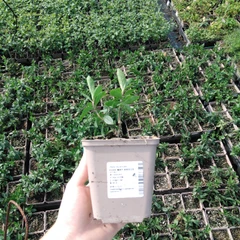
Seedling


Attracts pollinators 🐝
Difficulty
Diseases
Edible
Flower color
Flower color: Shade
Foliage color
Fragrant (aromatic) 👃
Frost resistance
Hardiness zone
Height
Moisture
Pests
Position
Soil
Spacing
Spacing: Plants per m²
Species
Suitable for cutting
Suitable for drying
Recommended products

Aquilegia vulgaris
Columbine Kristall

Achillea millefolium
Yarrow Lachsschönheit

Aquilegia vulgaris
Columbine Blue Barlow

Aquilegia vulgaris
Columbine Heidi

Achillea millefolium
Yarrow Terracotta

Lychnis flos-cuculi
Ragged Robin

Geum rivale
Water Avens

Achillea millefolium
Yarrow Lilac Beauty

Sedum telephium
Sedum Star Dust

Achillea ptarmica
Yarrow The Pearl

Papaver orientale
Oriental Poppy Royal Wedding

Aquilegia vulgaris
Columbine Black Barlow

Phlox paniculata
Phlox Sweet Summer Sensation

Lychnis coronaria
Campion

Salvia nemorosa
Woodland Sage Schneehügel

Leucanthemum
Daisy Christine Hagemann

Anemone tomentosa
Anemone Robustissima

Lychnis coronaria
Campion Alba

Dicentra spectabilis
Bleeding Heart

Phlox paniculata
Phlox Sternhimmel

Geum chiloense
Avens Totally Tangerine

Sedum telephium
Sedum Herbstfreude

Physostegia virginiana
Obedient plant Alba

Verbena hastata
Blue Vervain Pink Spires

Delphinium hybrida
Larkspur Benary’s Pacific Blue Bird

Gypsophila paniculata
Baby's breath Flamingo

Gypsophila paniculata
Baby's Breath Snowflake

Digitalis purpurea
Foxglove Dalmatian Rose

Anemone hybrida
Japanese anemone Lorelei

Kalimeris incisa
Japanese Aster Charlotte
Cultivation
For successfully integrating the Phlox divaricata phlox into your garden, choosing the right spot that will simulate a forest undergrowth is crucial. Avoid direct midday scorching sun and choose a location in partial shade or light shade, where the plant will be protected from the drying sun. The soil should be loose, humous, and loamy, ideally enriched with decomposed leaves or compost, which will help retain the necessary moisture at the roots. Plant the seedlings so that the root ball is level with the surrounding terrain, and maintain spacings of around 30 cm. This will ensure the plants have enough space for air circulation, although they will grow into charming carpets over time. It is a long-lived plant that will last many years in one place without the need for frequent transplanting.
Watering is most important in the first half of the year. In the period before flowering and during it (April to May), it is necessary to keep the soil evenly moist so that the flowers can fully develop and the plant does not dry out. Fertilizing is not strictly necessary if you have good quality soil, but a light dose of organic fertilizer at the beginning of spring will support vitality and flower set. After flowering, the plant withdraws into a more dormant mode and tolerates slightly drier conditions in the summer, which is very convenient for the gardener. If the clump seems unsightly or too leggy to you after flowering, perform a cutback, which will rejuvenate the plant and prepare it for the next season in full strength.
While diseases avoid this type of phlox and it is completely disease-free, slugs can be a big enemy, capable of decimating young shoots. Regular inspection of the site, especially after rain, is therefore appropriate. The plant is fully frost-resistant down to -34 °C, so special winter protection is not necessary; fallen leaves from trees will, on the contrary, serve as a natural cover and a source of humus. If you are considering growing it in a pot, it is a great choice for shady balconies or terraces. In this case, however, you must be very careful with watering, because the substrate in a container dries out faster than in open ground. The flowers of May Breeze are suitable for cutting into smaller spring bouquets, where their delicate scent and star-like shape will stand out, and additionally, they attract bees and other useful pollinators.
The information given is based on our experience, please use it as a guide only. Times may vary depending on the season, climate, location, sowing and transplanting dates and possibly also the conditions in the greenhouse/greenhouse. We always recommend testing how the plant performs in your conditions. Please do not take this as a guarantee.
How often do I need to water the plant?
What type of soil does Phlox May Breeze require?
How far apart should I plant the seedlings?
Do I need to prune the plant after it finishes flowering?
Frequently asked questions
Planting site
Where is the best place to plant this Phlox?
Can I grow Phlox 'May Breeze' in a pot?
Basic information
When will I see blooms and what color are they?
How tall will the plant grow?
Is this plant suitable for beginner gardeners?
What is the difference between this phlox and classic tall phlox?
Characteristics
Will this phlox survive the winter outdoors?
Is this phlox toxic to children or pets?
Do the flowers have a fragrance and are they suitable for cutting?
Is this plant beneficial for nature?
Diseases & pests
Is this phlox prone to any diseases or pests?
Propagation
How can I propagate this plant?
Photos in time
See how the seedling looks over the course of a year.


More products in category Phlox

Phlox paniculata
Phlox Sweet Summer Ocean

Phlox paniculata
Phlox Sweet Summer Dream

Phlox paniculata
Phlox Fujiyama

Phlox paniculata
Phlox Franz Schubert

Phlox paniculata
Phlox Nora Leight
Phlox paniculata
Phlox Sternhimmel
Phlox paniculata
Phlox Sweet Summer Sensation

Phlox amplifolia
Phlox White Clouds

Phlox amplifolia
Phlox Winnetou

Phlox paniculata
Phlox Sweet Summer Fragrance

Phlox paniculata
Phlox Sweet Summer Melody

Phlox paniculata
Phlox Sweet Summer Fantasy

Phlox paniculata
Phlox Duchess of York

Phlox paniculata
Phlox Sweet Summer Wine

Phlox paniculata
Phlox Sweet Summer Compact Purple Bicolor

Phlox paniculata
Phlox Sweet Summer Compact Rose Dark Eye

Phlox douglasii
Phlox Lilac Cloud

Phlox paniculata
Phlox Sweet Summer Compact White

Phlox amplifolia
Phlox Minnehaha

Phlox amplifolia
Phlox Waupee
More products in category Perennials

Alchemilla mollis
Lady's mantle Irish Silk

Achillea millefolium
Yarrow Summer Pastels

Verbena bonariensis
Verbena

Salvia nemorosa
Woodland Sage Caradonna

Perovskia atriplicifolia
Russian Sage

Gaura lindheimeri
Gaura Siskiyou Pink

Echinacea purpurea
Coneflower Rubinstern

Echinacea pallida
Echinacea pallida

Eryngium planum
Sea Holly

Echinacea purpurea
Coneflower Magnus

Salvia nemorosa
Woodland Sage Ostfriesland

Calamintha nepeta
Calamint Blue Cloud

Rudbeckia fulgida
Rudbeckia Goldsturm

Calamintha nepeta ssp. nepeta
Calamint

Gaura lindheimeri
Gaura Summer Breeze

Salvia nemorosa
Woodland Sage Amethyst

Leucanthemum vulgare
Daisy Maikönigin
Achillea millefolium
Yarrow Terracotta

Perovskia atriplicifolia
Russian sage Little Spire
Salvia nemorosa


