
Foeniculum vulgare
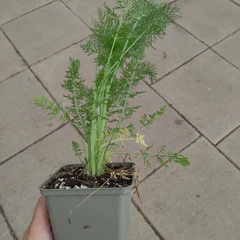
Fennel Green
Seedling


Attracts pollinators 🐝
Difficulty
Diseases
Edible
Flower color
Flower color: Shade
Foliage color
Fragrant (aromatic) 👃
Frost resistance
Hardiness zone
Height
Moisture
Pests
Position
Soil
Spacing
Spacing: Plants per m²
Recommended products

Achillea millefolium
Yarrow Summer Pastels

Achillea millefolium
Yarrow Terracotta

Thymus vulgaris
Thyme Compactus

Salvia pratensis
Meadow Sage Rose Rhapsody

Petroselinum hortense
Garden Parsley

Alchemilla mollis
Lady's mantle Irish Silk

Geum chiloense
Avens Totally Tangerine

Centaurea montana
Mountain Cornflower

Knautia macedonica
Knautia Red Knight

Leucanthemum
Daisy Polaris

Delphinium hybrida
Larkspur Benary’s Pacific Galahad

Aquilegia vulgaris
Columbine Kristall

Nepeta racemosa
Catmint Walker’s Low

Dicentra spectabilis Alba
Bleeding Heart Alba

Alcea rosea plena
Hollyhock Chaters Rosa

Mentha spicata
Moroccan mint

Sedum spectabile
Sedum Matrona

Achillea millefolium
Yarrow Lilac Beauty

Sanguisorba officinalis
Burnet Lum

Thymus citriodorus
Thyme Doone Valley

Artemisia ludoviciana
Artemisia Silver Queen

Papaver orientale
Oriental Poppy Royal Wedding

Geum rivale
Water Avens

Verbascum chaixii Album
Mullein Wedding Candles

Verbascum chaixii
Mullein Sixteen Candles

Helianthus microcephalus
Sunflower Lemon Queen

Artemisia abrotanum var. maritima
Artemisia Coca Cola

Limonium latifolium
Sea lavender

Dicentra spectabilis
Bleeding Heart

Helleborus orientalis
Hellebore Double Ellen Yellow Spotted
Cultivation
Common fennel loves warmth and prefers humus-rich and nutrient-rich soils and sunny positions. Full and hot sun is ideal for it. The soil should primarily be loamy and well-draining so that the plant's roots do not rot in winter. Since you will receive a beautiful and strong grown seedling from us, you can plant it directly into the flower bed. The optimal spacing is sixty centimeters, which corresponds to roughly two to three plants per square meter. This generous space will guarantee plenty of light and excellent air circulation, and will promote the healthy growth of this impressive perennial reaching a height of 120 to 150 centimeters. When planting, remember that fennel forms a deep taproot and tolerates later transplanting poorly, so choose a permanent place for it.
Watering should be rather moderate; once rooted, fennel handles drought much better than heavy and permanently waterlogged soil. During the first weeks after planting, however, ensure a regular supply of water. For fertilizing, it is plenty sufficient to add high-quality compost during the planting itself; the plant does not require any further chemical feeding during the season. You often ask about growing in a pot or on a terrace. Fennel can be successfully grown in a spacious container, it's just necessary to ensure a really thick drainage layer at the bottom. Also, anticipate that in a confined space the substrate will dry out faster, so it will require slightly more frequent watering than in an open garden. For winter, then wrap the pot in jute against the freezing of the root ball.
During the summer, it requires no complicated maintenance, and a huge advantage is that it absolutely does not suffer from any diseases and pests avoid it with a wide berth. Growing it is thus completely stress-free even for beginners. It doesn't even need any support. In July, beautiful umbels unfold, which attract pollinators and can be used for drying. Frost hardiness is excellent, it handles temperatures down to -28 °C, so it does not need a winter cover. Leave the old stems with dried inflorescences in the flower bed; they will create an amazing winter effect. Cut them just above the ground only in early spring. Although it is classified among short-lived perennials, in a suitable place it reliably self-seeds and will last you for long years in the garden.
The information given is based on our experience, please use it as a guide only. Times may vary depending on the season, climate, location, sowing and transplanting dates and possibly also the conditions in the greenhouse/greenhouse. We always recommend testing how the plant performs in your conditions. Please do not take this as a guarantee.
How often and in what way should I water the plant?
Is it necessary to provide support for the plant when it grows up to 150 cm tall?
How far apart should I plant the seedlings?
Do I need to protect the fennel from severe frost during the winter?
Frequently asked questions
Harvest
What parts of the fennel can I use and harvest?
Are fennel flowers suitable for cutting, and can they be dried for winter?
Planting site
What kind of soil is best for fennel?
Where is the best place in the garden to plant a fennel seedling?
Characteristics
Is the plant toxic or dangerous to children and pets?
Does fennel attract beneficial insects to the garden?
When exactly does fennel bloom and what do the flowers look like?
Is this fennel edible, and can I harvest traditional white bulbs from it?
Basic information
Can I manage growing fennel, even if I'm just starting out with herbs and perennials?
Troubleshooting
What does it mean and what should I do if the leaves on my fennel start turning noticeably yellow?
Diseases & pests
Is fennel prone to any specific diseases or pest attacks?
Propagation
Is fennel a long-lived perennial, or will I have to replace it in the garden after a few years?
Photos in time
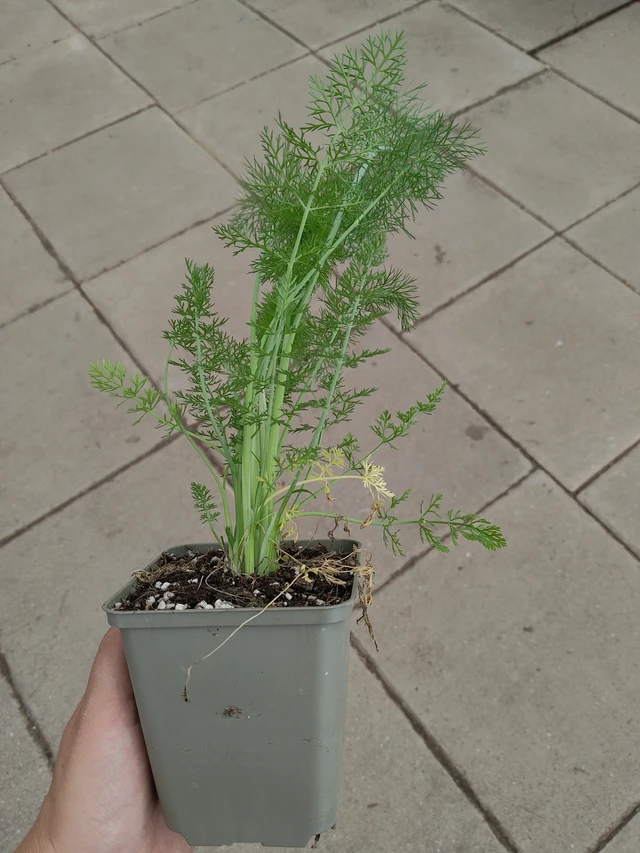
See how the seedling looks over the course of a year.


More products in category Fennel

Foeniculum vulgare
Fennel Bronze
More products in category Herbs
Mentha spicata
Moroccan mint
Thymus vulgaris
Thyme Compactus

Thymus citriodorus
Thyme Lemon

Satureja montana
Winter Savory

Thymus serpyllum
Thyme Albus

Mentha piperita citrata
Chocolate mint

Thymus serphyllus
Thyme Coccineus
Artemisia abrotanum var. maritima
Artemisia Coca Cola

Lippia citriodora
Lemon verbena

Helichrysum angustifolia
Curry plant Tall Curry

Valeriana officinalis
Valerian

Origanum vulgare
Oregano Compactum

Levisticum officinale
Lovage
Thymus citriodorus
Thyme Doone Valley

Coriandrum sativum
Coriander

Mentha spicata
Spanish Mint

Origanum vulgare
Oregano Supreme
Petroselinum hortense
Garden Parsley

Origanum rotundifolia
Ornamental oregano Kent Beauty

Anethum graveolens


