
Thymus vulgaris
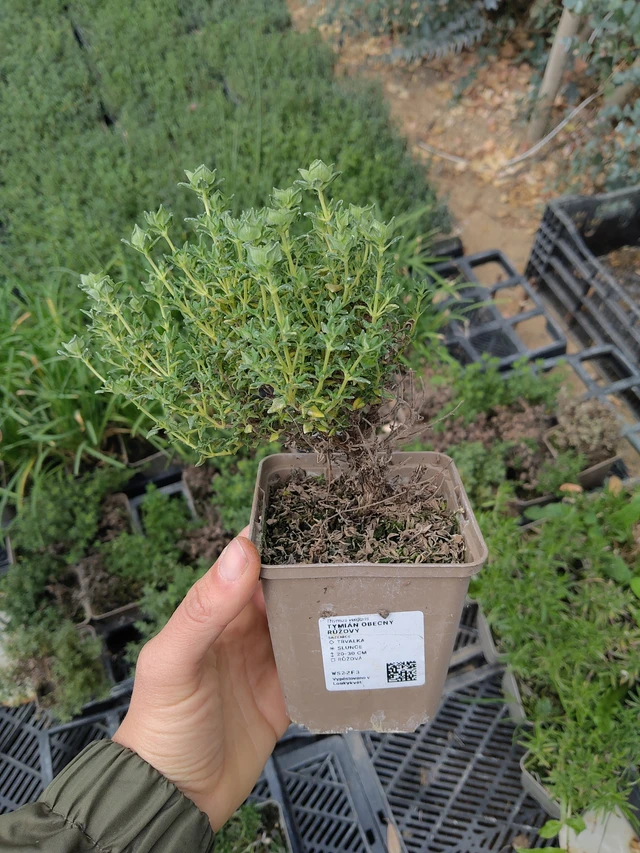
Pink common thyme
Seedling


Attracts pollinators 🐝
Difficulty
Diseases
Edible
Flower color
Flower color: Shade
Foliage color
Fragrant (aromatic) 👃
Frost resistance
Hardiness zone
Height
Moisture
Pests
Position
Soil
Spacing
Spacing: Plants per m²
Recommended products

Thymus citriodorus
Thyme Doone Valley

Mentha requienii
Corsican mint

Echinacea purpurea
Coneflower Rubinstern

Sanguisorba officinalis
Burnet Lum

Papaver orientale
Oriental Poppy Royal Wedding

Pulmonaria dacica
Lungwort Azurea

Mentha piperita
Mint Eau de Cologne

Helleborus orientalis
Hellebore Double Ellen White Spotted

Rudbeckia fulgida var. deamii
Rudbeckia Deamii

Pennisetum alopecuroides
Fountain grass Hameln

Lavandula angustifolia
Lavender Hidcote

Geranium sanguineum
Bloody Cranesbill Apfelblüte

Panicum virgatum
Switchgrass Heavy Metal

Echinacea purpurea
Coneflower White Swan

Salvia nemorosa
Woodland Sage Adrian

Anemone tomentosa
Anemone Robustissima

Phlox paniculata
Phlox Fujiyama

Limonium latifolium
Sea lavender

Sporobolus heterolepis
Dropseed

Leucanthemum vulgare
Daisy Maikönigin

Aquilegia vulgaris
Columbine Nora Barlow

Nepeta racemosa
Catmint Walker’s Low

Origanum rotundifolia
Ornamental oregano Kent Beauty

Echinacea purpurea
Coneflower Mellow Yellows

Artemisia abrotanum var. maritima
Artemisia Coca Cola

Agastache rugosa f. albiflora
Agastache Alabaster

Salvia nemorosa
Woodland sage Schwellenburg

Kalimeris incisa
Japanese Aster Madiva

Achillea ptarmica
Yarrow The Pearl

Bouteloua gracilis
Mosquito Grass
Cultivation
Since you will receive an already grown seedling from us, you can plant it straight into its permanent location. Thyme loves sun and hot locations, so choose the sunniest spot in the garden for it. The soil should be poor, dry, and very well-draining; sandy or rocky is ideal. Avoid heavy and wet soil. When planting, maintain a spacing of twenty-five centimeters, which corresponds to roughly sixteen plants per square meter. This spacing will ensure sufficient air circulation around the small bushes and promote their healthy growth.
This perennial requires only minimal watering. Once rooted, it handles drought excellently and you really only need to water it during periods of prolonged heatwaves. Completely skip fertilizing, because the herb creates the most aromatic substances and maintains its compact shape in poor soil. An excess of nutrients would instead lead to leggy growth and loss of flavor. Furthermore, thyme is incredibly resilient, so you will be pleased to know that it does not suffer from any diseases and reliably resists pests.
Pruning is key to maintaining a nice appearance. As soon as the plant finishes blooming in July, trim its shoots by about a third. This will encourage the subshrub to thicken again and prevent the unwanted woodiness of the lower parts. Thyme is excellently suited for growing in containers and window boxes on balconies as well. If you are planting it in a pot, don't forget to pour a thick drainage layer at the bottom and mix the soil significantly with sand so that water can drain quickly.
Before the arrival of winter, there is no need to fear low temperatures; the plant will easily withstand frosts down to minus twenty-three degrees Celsius. However, the real danger for it is excessive winter moisture. Therefore, in the garden, ensure that melting snow water does not sit around the roots. If you are growing thyme in a container, elevate it so that excess water can drain, or move it for the winter to a place protected from heavy rain and snow.
The information given is based on our experience, please use it as a guide only. Times may vary depending on the season, climate, location, sowing and transplanting dates and possibly also the conditions in the greenhouse/greenhouse. We always recommend testing how the plant performs in your conditions. Please do not take this as a guarantee.
Frequently
asked
questions
Growing
Do I need to provide any winter protection for the thyme?
How much space should I leave between seedlings when planting?
How and when should I prune thyme to keep it nice and bushy?
How often should I water the thyme?
Can I grow thyme in a window box on my balcony?
Is it necessary to fertilize thyme, and what kind of soil does it require?
Planting site
Where is the best place to plant a thyme seedling?
Troubleshooting
My thyme dried out or turned black over the winter, what caused this?
Characteristics
When does thyme bloom and does it attract bees and butterflies?
Is thyme toxic to cats, dogs, or small children?
Basic information
How large a seedling will I receive, and how big will the thyme eventually grow?
Harvest
What is the best way and time to harvest thyme for kitchen use?
Diseases & pests
Is thyme prone to any pests or diseases?
Propagation
How can I propagate my thyme for the future?
Photos
in time
See how the seedling looks over the course of a year.


More products in category Thyme

Thymus vulgaris
Thyme Compactus

Thymus vulgaris White
Thyme White

Thymus vulgaris
Thyme German Winter

Thymus vulgaris
Common Thyme

Thymus mastichina
Thyme Pompom
More products in category Herbs
Thymus vulgaris
Thyme Compactus

Mentha spicata
Moroccan mint

Thymus serpyllum
Thyme Albus

Origanum laevigatum
Oregano Herrenhausen

Thymus citriodorus
Thyme Lemon

Satureja montana
Winter Savory

Mentha piperita citrata
Chocolate mint

Thymus serphyllus
Thyme Coccineus
Artemisia abrotanum var. maritima
Artemisia Coca Cola

Lippia citriodora
Lemon verbena

Helichrysum angustifolia
Curry plant Tall Curry

Valeriana officinalis
Valerian

Origanum vulgare
Oregano Compactum

Levisticum officinale
Lovage
Thymus citriodorus
Thyme Doone Valley

Coriandrum sativum
Coriander

Mentha spicata
Spanish Mint

Petroselinum hortense
Garden Parsley
Origanum rotundifolia
Ornamental oregano Kent Beauty

Anethum graveolens


