

Thymus vulgaris
Common Thyme
Seedling
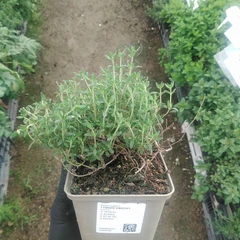
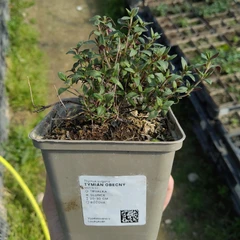
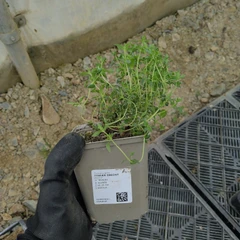
Attracts pollinators 🐝
Difficulty
Diseases
Edible
Flower color
Flower color: Shade
Foliage color
Fragrant (aromatic) 👃
Frost resistance
Hardiness zone
Height
Moisture
Pests
Position
Soil
Spacing
Spacing: Plants per m²
Recommended products

Mentha spicata
Moroccan mint

Mentha spicata
Lemon mint

Origanum vulgare
Oregano Compactum

Geum chiloense
Avens Tempest Scarlet

Thymus citriodorus
Thyme Doone Valley

Papaver orientale
Oriental Poppy Royal Wedding

Thymus vulgaris
Thyme Compactus

Lavandula angustifolia
Lavender Hidcote

Geum chiloense
Avens Totally Tangerine

Salvia pratensis
Meadow Sage Rose Rhapsody

Dicentra spectabilis
Bleeding Heart

Helianthus microcephalus
Sunflower Lemon Queen

Sedum spectabile
Sedum Matrona

Achillea millefolium
Yarrow Terracotta

Dicentra spectabilis Alba
Bleeding Heart Alba

Aquilegia vulgaris
Columbine White Barlow

Centaurea montana
Mountain Cornflower

Achillea millefolium
Yarrow Cerise Queen

Echinacea purpurea
Coneflower White Swan

Catananche caerulea
Shoofly plant Blue

Alchemilla mollis
Lady's mantle Irish Silk

Phlox paniculata
Phlox Franz Schubert

Phlox paniculata
Phlox Sweet Summer Melody

Anemone hybrida
Japanese anemone Lorelei

Gypsophila paniculata
Baby's Breath Snowflake

Thymus citriodorus
Thyme Silver King

Aquilegia vulgaris
Columbine Kristall

Veronicastrum virginicum
Culver's Root Album

Phlox paniculata
Phlox Sternhimmel

Echinacea purpurea
Coneflower Rubinstern
Cultivation
This edible perennial loves full sun and literally revels in hot and dry places. The soil should be poorer, highly well-drained, and rather sandy. If you are going to plant it in a flowerbed, place the individual plants roughly 25 centimeters apart. The correct spacing is important so that moisture does not linger between the compact green shrubs and air can flow freely. Thyme tolerates waterlogging very poorly, so if your garden soil is rather clayey and heavy, create a raised bed or generously incorporate coarse sand into the soil. It requires watering only immediately after planting until it is fully rooted; subsequently, it can already find water on its own.
Caring for thyme is so easy that it makes it an ideal choice even for complete beginners. You can rely on the fact that it is a plant completely free of diseases and pests, so your fragrant harvest will always be one hundred percent clean. During June and July, the plant gets covered in a multitude of pink flowers, which will reliably attract bees and other beneficial pollinators. To prevent the stems from becoming woody from the bottom and to maintain a beautiful shape with a height of 20 to 30 cm, regular pruning is essential. The best time for trimming comes just after blooming, when you can shorten the shoots without worry. This will encourage the formation of new aromatic leaves, which can be continuously cut and used in cooking until late autumn. You practically don't need to fertilize this herb; an excess of nutrients rather harms it.
Thyme is also excellently suited for growing in containers on balconies, terraces, or sunny window sills. For planting in a pot, choose a substrate for herbs lightened with sand and do not forget to pour a layer of pebbles at the bottom for perfect drainage of excess water. With the arrival of winter, you don't have to worry about the plant freezing. It is fully frost-resistant and can easily withstand frosts down to -23.3 °C. However, its greatest weakness is excessive winter wetness. You can slightly cover plants in the flowerbed for the winter with evergreen branches, which let air through but catch excessive snow. For containers, it is safest to move them to a protected place by the outer wall of the house where rain does not fall and where the substrate will remain rather drier over the winter.
The information given is based on our experience, please use it as a guide only. Times may vary depending on the season, climate, location, sowing and transplanting dates and possibly also the conditions in the greenhouse/greenhouse. We always recommend testing how the plant performs in your conditions. Please do not take this as a guarantee.
Frequently
asked
questions
Growing
How often should I water thyme?
What spacing should I use when planting the thyme seedlings?
Will thyme survive our winter outdoors, or do I need to protect it?
Does thyme need to be pruned regularly?
Does thyme need to be fertilized?
Diseases & pests
Is thyme prone to any diseases or pests?
Basic information
How big and tall will this shrub grow eventually?
What can I use thyme leaves for in the kitchen?
Planting site
Where is the best place to plant the thyme seedling in the garden?
Can I grow thyme in a pot on the balcony?
Harvest
When and how is the best time to harvest thyme leaves?
Characteristics
Is thyme safe for pets and children?
When does thyme bloom and what do its flowers look like?
Does thyme attract pollinators to the garden?
Troubleshooting
Why is my thyme turning black or drying out from the bottom?
Propagation
How can I propagate an established thyme plant?
Photos
in time
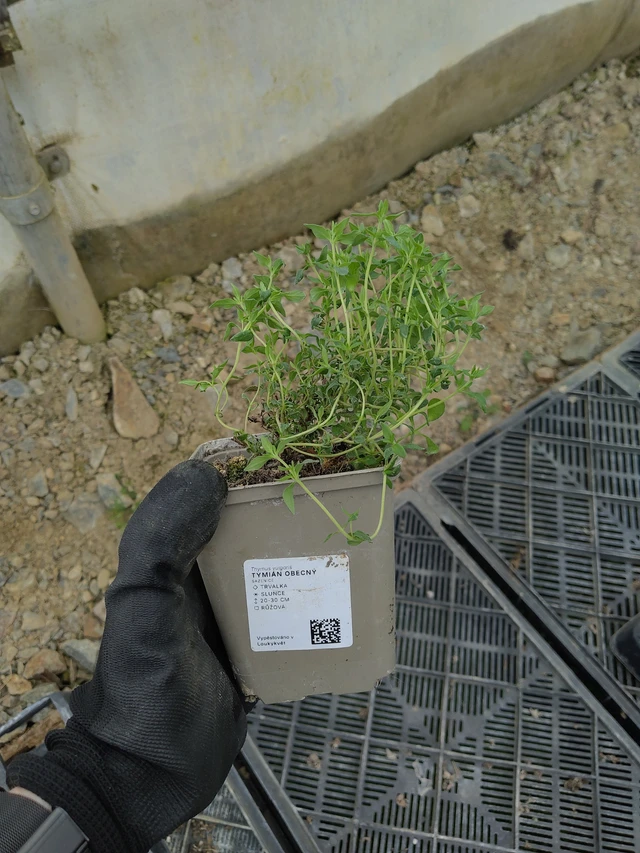
See how the seedling looks over the course of a year.


More products in category Thyme
Thymus vulgaris
Thyme Compactus

Thymus vulgaris White
Thyme White

Thymus vulgaris
Thyme German Winter

Thymus mastichina
Thyme Pompom

Thymus vulgaris
Pink common thyme
More products in category Herbs
Thymus vulgaris
Thyme Compactus
Mentha spicata
Moroccan mint

Thymus serpyllum
Thyme Albus

Thymus citriodorus
Thyme Lemon

Satureja montana
Winter Savory

Mentha piperita citrata
Chocolate mint

Thymus serphyllus
Thyme Coccineus

Artemisia abrotanum var. maritima
Artemisia Coca Cola

Lippia citriodora
Lemon verbena

Helichrysum angustifolia
Curry plant Tall Curry

Valeriana officinalis
Valerian
Origanum vulgare
Oregano Compactum

Levisticum officinale
Lovage
Thymus citriodorus
Thyme Doone Valley

Coriandrum sativum
Coriander

Mentha spicata
Spanish Mint

Petroselinum hortense
Garden Parsley

Origanum rotundifolia
Ornamental oregano Kent Beauty

Anethum graveolens
Dill

Thymus praecox


