
Thymus mastichina
Thyme Pompom
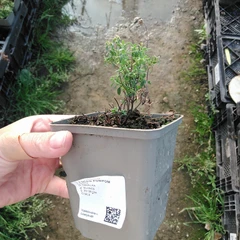
Seedling


Attracts pollinators 🐝
Difficulty
Diseases
Edible
Flower color
Flower color: Shade
Foliage color
Fragrant (aromatic) 👃
Frost resistance
Hardiness zone
Height
Moisture
Pests
Position
Soil
Spacing
Spacing: Plants per m²
Recommended products

Thymus vulgaris
Thyme Compactus

Mentha spicata
Moroccan mint

Thymus citriodorus
Thyme Doone Valley

Mentha piperita
Mint Eau de Cologne

Salvia pratensis
Meadow Sage Rose Rhapsody

Mentha spicata
Lemon mint

Achillea millefolium
Yarrow Terracotta

Dicentra spectabilis
Bleeding Heart

Clematis heracleifolia
Clematis Mrs R. Brydon

Verbena bonariensis
Verbena

Dicentra spectabilis Alba
Bleeding Heart Alba

Achillea millefolium
Yarrow Summer Pastels

Calamintha nepeta ssp. nepeta
Calamint

Geum rivale
Geum Mango Lassi

Geum chiloense
Avens Tempest Scarlet

Gypsophila paniculata
Baby's breath Flamingo

Petroselinum hortense
Garden Parsley

Achillea millefolium
Yarrow Cerise Queen

Papaver orientale
Oriental Poppy Royal Wedding

Panicum virgatum
Switchgrass Rehbraun

Solidaster hybride
Solidaster Lemore

Sidalcea
Checkerbloom Wine Red

Gypsophila paniculata
Baby's Breath Snowflake

Knautia macedonica
Knautia Red Knight

Delphinium hybrida
Larkspur Benary’s Pacific Summer Skies

Delphinium hybrida
Larkspur Benary’s Pacific Galahad

Helleborus orientalis
Hellebore Double Ellen Yellow Spotted

Hyssopus officinalis
Hyssop Albus

Achillea millefolium
Yarrow Lilac Beauty

Helianthus microcephalus
Sunflower Lemon Queen
Cultivation
Choose the hottest and driest spot possible in full sun for this interesting herb, where its specific fragrance with notes of marjoram and eucalyptus will be able to fully develop. The key to long-term success is the right soil structure – thyme literally requires poor, sandy, and very well-draining soil. Heavy and waterlogged soil would inevitably cause rapid root rot. Plant the seedlings at a distance of approximately 25 centimeters from each other, which corresponds to about 16 plants per square meter. This spacing will certainly ensure sufficient air circulation around the plants, reliably preventing the leaves from steaming in the dense thirty-centimeter clump. After transplanting to the flowerbed, thyme requires moderate watering only until it is fully rooted. Once established in its new location, it becomes a highly drought-tolerant plant that can handle even longer periods without rain. You don't have to worry about fertilizing at all. Given its natural origins in the harsh conditions of southern Europe, fertilizing actually harms the plant. In poor soil, it will maintain a compact shape and a much more intense aroma. During the season, you will also be pleased by the fact that this species suffers from absolutely no diseases and naturally repels common garden pests. The only regular visitors will thus be bees and other beneficial pollinators, reliably attracted in May and June by the tiny white pompom-like flowers. To help the plant maintain a nice and dense shape, we recommend a light pruning after blooming. Simply trim the faded stems to encourage the formation of new shoots and prevent the central part of the clump from becoming woody. Furthermore, you can dry the cut flowers and use them to scent your home. Approaching winter requires some preparation, as this species only tolerates temperatures dropping down to -12 °C. In colder areas or during stronger frosts, it is essential to cover the plant, preferably with light pine branches. Protection against winter dampness, which is far more dangerous to thyme than the frost itself, is also crucial. Thyme Pompom is very well suited for growing in containers and planters on balconies or sunny terraces. If you opt for this popular and highly decorative variant, it is important to follow a few basic and easy rules to achieve the best possible growing results. Drainage layer: Always place coarse gravel or expanded clay at the bottom of each pot for immediate drainage of excess rainwater and irrigation water. Substrate: Always thoroughly lighten regular garden soil with a large amount of clean sand before planting. Watering: Water the plant thoughtfully and always only when the substrate in the container is demonstrably and completely dry. Overwintering: Carefully wrap the container in bubble wrap before frosts arrive and cleverly place it under a roof, out of reach of falling snow and winter rains.
The information given is based on our experience, please use it as a guide only. Times may vary depending on the season, climate, location, sowing and transplanting dates and possibly also the conditions in the greenhouse/greenhouse. We always recommend testing how the plant performs in your conditions. Please do not take this as a guarantee.
Can a beginner manage to grow this?
How about watering and fertilizing?
How and when is the best time to prune the plant?
How far apart should I plant the seedlings?
Frequently asked questions
Planting site
Where should I plant the thyme seedling?
Characteristics
Does this plant attract bees and butterflies?
What does Pompom thyme smell like?
Propagation
How can I propagate my thyme?
Diseases & pests
What diseases or pests should I watch out for with thyme?
Basic information
What is Tymián Pompom and what does it look like?
Can this thyme be grown in a pot on a balcony?
Troubleshooting
How does thyme overwinter and is there a risk of it freezing?
Harvest
When should I harvest the plant and how should I use it?
Photos in time
See how the seedling looks over the course of a year.


More products in category Thyme
Thymus vulgaris
Thyme Compactus

Thymus vulgaris White
Thyme White

Thymus vulgaris
Thyme German Winter

Thymus vulgaris
Common Thyme

Thymus vulgaris
Pink common thyme
More products in category Herbs
Mentha spicata
Moroccan mint
Thymus vulgaris
Thyme Compactus

Thymus citriodorus
Thyme Lemon

Satureja montana
Winter Savory

Thymus serpyllum
Thyme Albus

Artemisia abrotanum var. maritima
Artemisia Coca Cola

Mentha piperita citrata
Chocolate mint

Thymus serphyllus
Thyme Coccineus

Lippia citriodora
Lemon verbena

Helichrysum angustifolia
Curry plant Tall Curry

Valeriana officinalis
Valerian

Origanum vulgare
Oregano Compactum

Levisticum officinale
Lovage
Thymus citriodorus
Thyme Doone Valley
Mentha spicata
Lemon mint

Coriandrum sativum
Coriander

Mentha spicata
Spanish Mint
Petroselinum hortense
Garden Parsley

Origanum rotundifolia
Ornamental oregano Kent Beauty

Anethum graveolens


