

Allium tuberosum
Garlic chives
Seedling


Attracts pollinators 🐝
Difficulty
Diseases
Edible
Flower color
Flower color: Shade
Foliage color
Fragrant (aromatic) 👃
Frost resistance
Hardiness zone
Height
Moisture
Pests
Position
Soil
Spacing
Spacing: Plants per m²
Recommended products

Thymus vulgaris
Thyme Compactus

Mentha spicata
Moroccan mint

Verbena bonariensis
Verbena

Calamintha nepeta ssp. nepeta
Calamint

Lavandula angustifolia
Lavender Rosea

Clematis heracleifolia
Clematis Mrs R. Brydon

Papaver orientale
Oriental Poppy Royal Wedding

Mentha spicata
Lemon mint

Knautia macedonica
Knautia Red Knight

Achillea millefolium
Yarrow Terracotta

Gaura lindheimeri
Gaura

Verbascum nigrum var. album
Black Mullein

Centaurea montana
Mountain Cornflower

Thymus citriodorus
Thyme Silver King

Dicentra spectabilis
Bleeding Heart

Thymus citriodorus
Thyme Doone Valley

Salvia nemorosa
Salvia Mainacht

Aquilegia vulgaris
Columbine Kristall

Limonium latifolium
Sea lavender

Achillea millefolium
Yarrow Cerise Queen

Nepeta racemosa
Catmint Walker’s Low

Origanum vulgare
Oregano Compactum

Anemone hybrida
Japanese Anemone Whirlwind

Geum chiloense
Avens Totally Tangerine

Briza media
Quaking grass Tinkerbell

Anemone hybrida
Japanese anemone Lorelei

Filipendula hybridum
Meadowsweet Kahome

Lavandula intermedia
Lavender Edelweiss

Dicentra spectabilis Alba
Bleeding Heart Alba

Sporobolus heterolepis
Dropseed
Cultivation
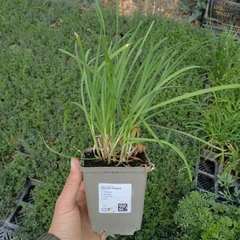
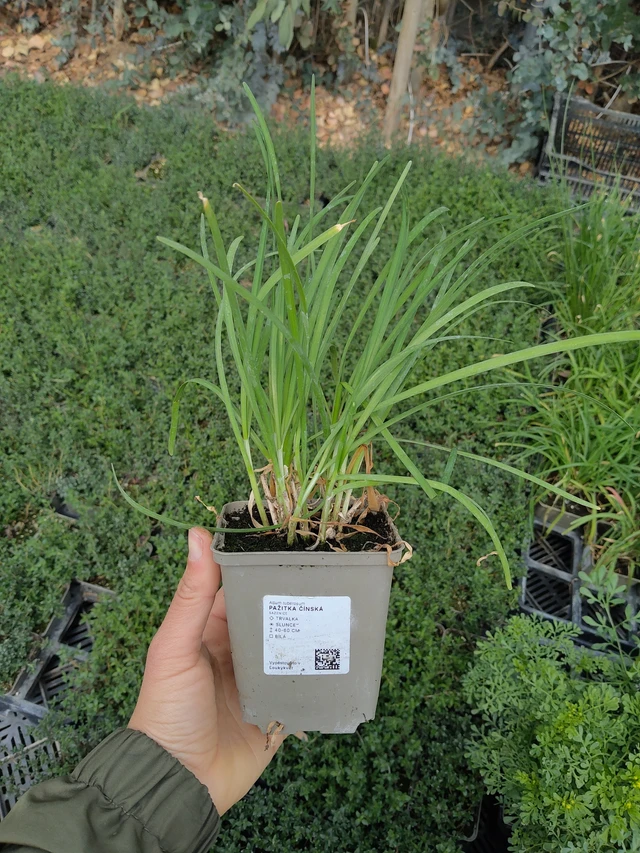
You can plant your new, fully rooted seedling of Chinese chives outdoors in the garden practically at any time during the main growing season. For its successful cultivation, choose a sunny or only partially shaded location where it will have enough light for rich flowering. Chives will grow best in sufficiently nutritious, but not freshly fertilized, friable loamy-sandy soil that is well-draining. Be sure to avoid planting in heavy, clayey, and permanently waterlogged soils. The plant forms neat green clumps reaching a height of around half a meter, which fit perfectly into herb spirals, mixed perennial beds, but will also serve excellently as a very practical edging for garden paths.
To make sure your herb does its best and brings you a rich harvest, we bring a few practical tips for its trouble-free maintenance. Place the seedlings at a distance of about 25 cm from each other. This recommended spacing will ensure enough room for the natural spread of the roots and prevent the unpleasant steaming of the leaves. Maintain only moderate moisture; watering should be regular, but the soil must dry out slightly between each watering. Fertilizing during the season is not necessary. This amazing perennial is tailor-made for beginners because it is completely immune to common diseases and unpleasant pests avoid it. The seedling additionally thrives absolutely perfectly in a spacious pot on a balcony, just do not forget a high-quality drainage layer at the bottom of the container, so the sensitive roots never stand in water.
During late summer, usually from August to the end of October, chives bloom with beautiful and strongly aromatic white flowers. To keep the plant maximally vital and ensure a constant supply of crisp leaves for your kitchen, we recommend cutting them regularly roughly five centimeters above the soil surface. This will encourage constant renewal and rejuvenation of the entire clump. With winter approaching, the plant naturally draws all nutrients into the root system and its above-ground part dries up. Due to its absolutely excellent frost hardiness down to -23 °C, you can leave it to overwinter directly in the bed without the slightest worry, without any special winter protection. We then recommend carefully removing the dried old leaves only in early spring, just before brand new, fresh green shoots begin to appear.
The information given is based on our experience, please use it as a guide only. Times may vary depending on the season, climate, location, sowing and transplanting dates and possibly also the conditions in the greenhouse/greenhouse. We always recommend testing how the plant performs in your conditions. Please do not take this as a guarantee.
Do I need to fertilize the plant during the season?
What is the best way and time to plant the seedling out in the garden?
Can the plant handle winter outdoors, or do I need to protect it?
How often should I water the seedling?
How far apart should I plant the seedlings?
Frequently asked questions
Planting site
Can Chinese chives be planted in mixed beds? Which plants do they get along with?
Where is the best place to plant garlic chives?
Can I grow this seedling in a pot on my balcony?
Harvest
How do I prune the leaves correctly without harming the plant?
Which parts of the plant are edible and how can I use them in the kitchen?
Diseases & pests
What diseases or pests most commonly affect garlic chives?
Characteristics
Is this plant suitable for cut flower arrangements?
When does the plant bloom and what do the flowers look like?
Are Chinese chives safe for pets?
Basic information
What is garlic chives and how does it differ from regular chives?
Propagation
How can I propagate chives in the future?
Troubleshooting
Why are the tips of the leaves on my chives turning yellow or drying out?
Photos in time
See how the seedling looks over the course of a year.


More products in category Chives

Allium schoenoprasum
Chives
More products in category Herbs
Mentha spicata
Moroccan mint
Thymus vulgaris
Thyme Compactus

Thymus citriodorus
Thyme Lemon

Satureja montana
Winter Savory

Thymus serpyllum
Thyme Albus

Artemisia abrotanum var. maritima
Artemisia Coca Cola

Mentha piperita citrata
Chocolate mint

Thymus serphyllus
Thyme Coccineus

Lippia citriodora
Lemon verbena

Helichrysum angustifolia
Curry plant Tall Curry

Valeriana officinalis
Valerian
Origanum vulgare
Oregano Compactum

Levisticum officinale
Lovage
Thymus citriodorus
Thyme Doone Valley
Mentha spicata
Lemon mint

Coriandrum sativum
Coriander

Mentha spicata
Spanish Mint

Petroselinum hortense
Garden Parsley

Origanum rotundifolia
Ornamental oregano Kent Beauty

Anethum graveolens


