


Origanum vulgare
Oregano Hot And Spicy
Seedling
Attracts pollinators 🐝
Difficulty
Diseases
Edible
Flower color
Flower color: Shade
Foliage color
Fragrant (aromatic) 👃
Frost resistance
Hardiness zone
Height
Moisture
Pests
Position
Soil
Spacing
Spacing: Plants per m²
Recommended products

Thymus vulgaris
Thyme Compactus

Thymus citriodorus
Thyme Doone Valley

Alchemilla mollis
Lady's mantle Irish Silk

Achillea millefolium
Yarrow Terracotta

Thymus citriodorus
Thyme Silver King

Mentha spicata
Lemon mint

Dicentra spectabilis
Bleeding Heart

Limonium latifolium
Sea lavender

Achillea filipendulina
Yarrow Parkers Varietät

Lavandula angustifolia
Lavender Rosea

Mentha piperita
Mint Eau de Cologne

Mentha spicata
Moroccan mint

Gypsophila paniculata
Baby's Breath Snowflake

Achillea millefolium
Yarrow Summer Pastels

Origanum vulgare
Oregano Compactum

Nepeta faassenii
Catmint Six Hills Giant

Nepeta racemosa
Catmint Walker’s Low

Centaurea montana
Mountain Cornflower

Achillea millefolium
Yarrow Lilac Beauty

Phlomis russeliana
Phlomis Russeliana

Salvia nemorosa
Woodland Sage Schneehügel

Papaver orientale
Oriental Poppy Royal Wedding

Liatris spicata
Liatris Floristan White

Centaurea cyanus
Cornflower Tall Double Blue Boy

Pycnanthemum muticum
American mountain mint Muticum

Calamintha nepeta ssp. nepeta
Calamint

Salvia pratensis
Meadow Sage Rose Rhapsody

Achillea millefolium
Yarrow Cerise Queen

Pennisetum alopecuroides
Fountain grass Hameln

Rudbeckia fulgida
Rudbeckia Goldsturm
Cultivation
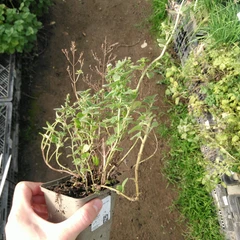
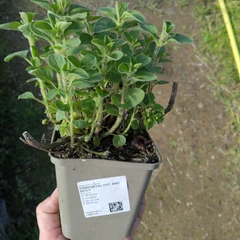
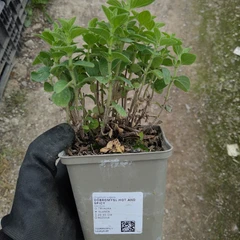
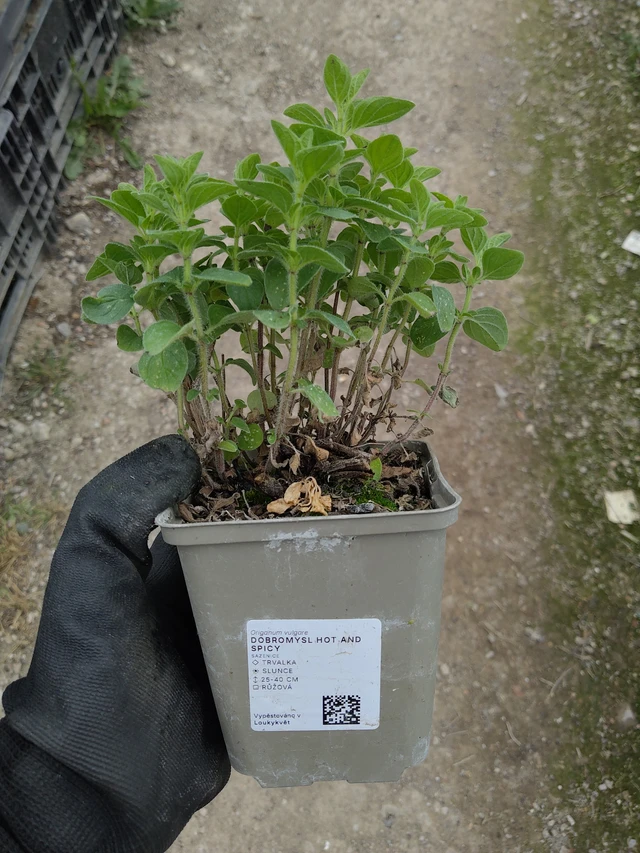
The supplied mature seedling of oregano 'Hot And Spicy' is ready for immediate planting right into your flower bed or herb garden. Because this aromatic perennial originally comes from the sun-drenched Mediterranean, it loves sunny and hot locations. For successful growing, a well-drained, drier, and rather sandy soil, in which excess water will not sit, is absolutely crucial. Heavy or permanently waterlogged soil does not suit the roots. When planting in the garden, keep a spacing of approximately 30 centimeters apart, which corresponds to about eleven plants per square meter. Such spacing will ensure excellent air circulation around the leaves, provide the root system with plenty of room to develop, and the plants will soon merge into a beautifully green stand.
Once the seedling is well established in its new location, it will become a very low-maintenance and highly drought-tolerant plant. It requires only occasional watering, and only when the surrounding soil noticeably dries out. You do not need to worry about fertilizing, because poorer soil actually contributes significantly to the production of essential oils and intensifies its famous spicy flavor. Customers often ask if it is possible to grow this herb outside of a classic flower bed. The answer is yes, oregano is very suited for growing in containers or spacious planters on balconies and terraces. When planting in a pot, do not forget adequate drainage holes and pour a layer of gravel or expanded clay at the bottom as drainage so the water can flow away freely.
During the summer months, more precisely from July to September, the oregano will reward you with a flood of tiny pink and white flowers. Not only are these visually very attractive and suitable for cutting into a vase, but they also function as a reliable lure for pollinators, so your garden will come alive with bees and butterflies. Routine maintenance during the season mainly consists of removing faded shoots and regularly cutting the tops for culinary or floristic purposes, which naturally rejuvenates the plant and maintains its compact shape with a height of around thirty centimeters. Furthermore, the variety does not suffer from any diseases or pests, so chemical protection is completely unnecessary. Winter poses no problem for this perennial; it has excellent frost resistance down to -23 °C and needs no special winterizing or covering.
The information given is based on our experience, please use it as a guide only. Times may vary depending on the season, climate, location, sowing and transplanting dates and possibly also the conditions in the greenhouse/greenhouse. We always recommend testing how the plant performs in your conditions. Please do not take this as a guarantee.
Does oregano survive the winter outdoors? Do I need to protect it in any way?
How do I plant the delivered seedling correctly and how far apart?
How often should I water the oregano and does it need fertilizer?
Can I grow the 'Hot and Spicy' variety in a pot on my balcony?
Frequently asked questions
Planting site
What are the best site and soil conditions for growing this oregano?
Basic information
What is the height of this plant, and when can I look forward to blooms?
Can a complete beginner handle growing this herb?
Characteristics
Does flowering oregano attract beneficial insects to the garden?
What can I use the 'Hot and Spicy' variety for in cooking?
Is this variety safe for humans and pets?
What makes the 'Hot and Spicy' variety special compared to regular oregano?
Propagation
How can I propagate the plant in the future once the clump has grown enough?
Diseases & pests
Are there any diseases or pests I should watch out for with oregano?
Harvest
Can the flowering stems be cut for a vase decoration?
Can this plant be dried for winter, and will it lose its spiciness if I do?
When and how is the best way to harvest fresh leaves?
Troubleshooting
What should I do if the plant's leaves start yellowing or darkening from the bottom?
Photos in time
See how the seedling looks over the course of a year.


More products in category Oregano
Origanum vulgare
Oregano Compactum

Origanum laevigatum
Oregano Herrenhausen

Origanum vulgare
Oregano Supreme

Origanum vulgare
Oregano Aureum Variegata

Origanum vulgare
Oregano
More products in category Herbs
Mentha spicata
Moroccan mint
Thymus vulgaris
Thyme Compactus

Lippia citriodora
Lemon verbena

Thymus citriodorus
Thyme Lemon

Satureja montana
Winter Savory

Thymus serpyllum
Thyme Albus

Helichrysum angustifolia
Curry plant Tall Curry

Artemisia abrotanum var. maritima
Artemisia Coca Cola

Mentha piperita citrata
Chocolate mint

Thymus serphyllus
Thyme Coccineus

Valeriana officinalis
Valerian
Origanum vulgare
Oregano Compactum

Levisticum officinale
Lovage
Thymus citriodorus
Thyme Doone Valley

Rosmarinus officinalis
Rosemary Barbecue

Salvia officinalis
Sage Grower's Friend

Coriandrum sativum
Coriander

Mentha spicata
Spanish Mint

Salvia officinalis
Sage Maxima

Petroselinum hortense


