
Ocimum basilicum
Basil Sweet
Seedling
Attracts pollinators 🐝
Difficulty
Diseases
Edible
Flower color
Flower color: Shade
Foliage color
Fragrant (aromatic) 👃
Frost resistance
Hardiness zone
Height
Moisture
Pests
Position
Soil
Spacing
Spacing: Plants per m²
Recommended products

Mentha spicata
Moroccan mint

Mentha spicata
Lemon mint

Aquilegia vulgaris
Columbine Kristall

Penstemon digitalis
Penstemon Husker Red

Dicentra spectabilis
Bleeding Heart

Thymus vulgaris
Thyme Compactus

Anemone hybrida
Japanese Anemone Andrea Atkinson

Achillea millefolium
Yarrow Lachsschönheit

Centaurea montana
Mountain Cornflower

Filipendula vulgaris
Meadowsweet

Thymus citriodorus
Thyme Silver King

Dicentra spectabilis Alba
Bleeding Heart Alba

Aquilegia vulgaris
Columbine White Barlow

Aquilegia vulgaris
Columbine Black Barlow

Thymus citriodorus
Thyme Doone Valley

Sanguisorba officinalis
Burnet Lum

Hydrangea paniculata
Panicle Hydrangea Pink Diamond

Alcea rosea plena
Hollyhock Chaters Rosa

Ruta graveolens
Common Rue

Geum chiloense
Avens Tempest Scarlet

Leucanthemum
Daisy Christine Hagemann

Digitalis purpurea
Foxglove Dalmatian Rose

Achillea millefolium
Yarrow Lilac Beauty

Anemone hybrida
Japanese Anemone Serenade

Phlox paniculata
Phlox Sweet Summer Sensation

Phlomis russeliana
Phlomis Russeliana

Aquilegia vulgaris
Columbine Heidi

Achillea millefolium
Yarrow Terracotta

Delphinium hybrida
Larkspur Benary’s Pacific Black Knight

Salvia pratensis
Meadow Sage Rose Rhapsody
Cultivation
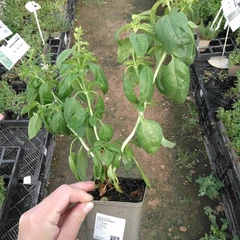
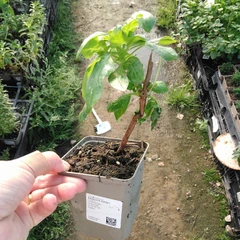
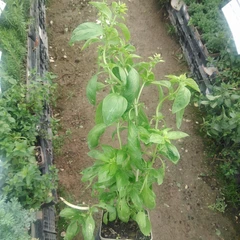
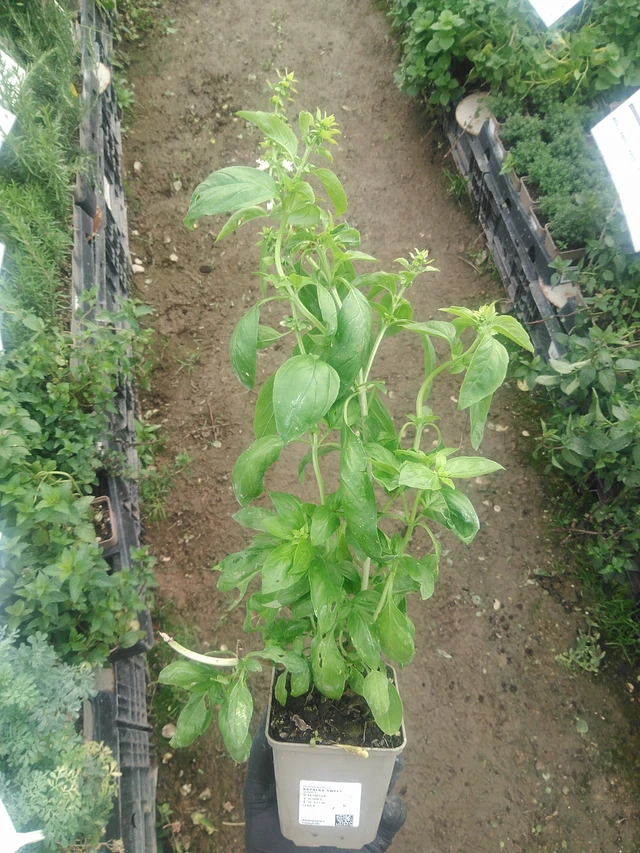
Basil is heat-loving; we plant it in the garden from mid-May when there is no longer a risk of late spring frosts. As a typical annual with zero frost resistance, it cannot tolerate cold weather. Basil prefers a sunny and sheltered location with nutritious, well-drained soil. Ideal is loamy and humus-rich earth that can maintain moderate moisture but at the same time does not hold excess water. Overly wet and clayey soils are not suitable because the roots easily rot in them. A bushy plant 30 to 40 centimeters tall will quickly grow from the received seedling, so keep a spacing of about 30 centimeters when planting in a bed. This gap ensures good air circulation, which is key as prevention against fungal diseases.
During the season, basil requires regular but moderate watering. Always direct the water to the roots; wet leaves create an ideal environment for the development of powdery mildew or gray mold. For a rich harvest of aromatic leaves, follow these basic steps:
- Regular pinching: Removing the upper shoots will support branching, and the bush will be beautifully dense.
- Pest control: Young plants often attract slugs, and aphids or whiteflies can appear on the leaves, which must be removed in time.
- Reasonable fertilization: Mild fertilization with organic fertilizers intended for herbs is sufficient.
Basil 'Sweet' is also excellently suited for growing in containers and planters on balconies or terraces. When planting in a pot, don't forget to place a drainage layer at the bottom, for example, expanded clay, so that excess water can easily drain away. In the limited space of a container, the substrate will dry out faster, so check the watering more frequently than in a regular garden bed. If you let basil bloom with tiny white flowers in late summer, it will become an amazing attractant for bees, but its vegetation cycle will be accelerated by this. With the arrival of the first autumn frosts, the plant dies and does not overwinter.
The information given is based on our experience, please use it as a guide only. Times may vary depending on the season, climate, location, sowing and transplanting dates and possibly also the conditions in the greenhouse/greenhouse. We always recommend testing how the plant performs in your conditions. Please do not take this as a guarantee.
Frequently
asked
questions
Diseases & pests
Which pests most commonly attack basil and how can I protect it from them?
What should I do if the basil leaves start turning gray or if a white coating appears on them?
Growing
How often and how should I water this plant?
When can I plant basil seedlings out in the garden bed?
What spacing should I maintain when planting a larger number of seedlings?
Characteristics
Is this particular variety of basil suitable for eating, and how should it be used?
Does flowering basil attract bees and other pollinators to the garden?
Is basil poisonous or dangerous in any way to small children and pets?
Propagation
Is this basil easy to propagate once I've bought a grown seedling?
Basic information
Is growing this fragrant herb suitable for absolute beginners?
Do I need to specially protect or winterize the basil seedling during winter?
Planting site
What location is best for Sweet basil?
Can this seedling be successfully grown in a pot on a balcony?
Harvest
How should I harvest the leaves so the plant lasts as long as possible?
Troubleshooting
Why are my leaves suddenly turning yellow and then falling off?
Photos
in time
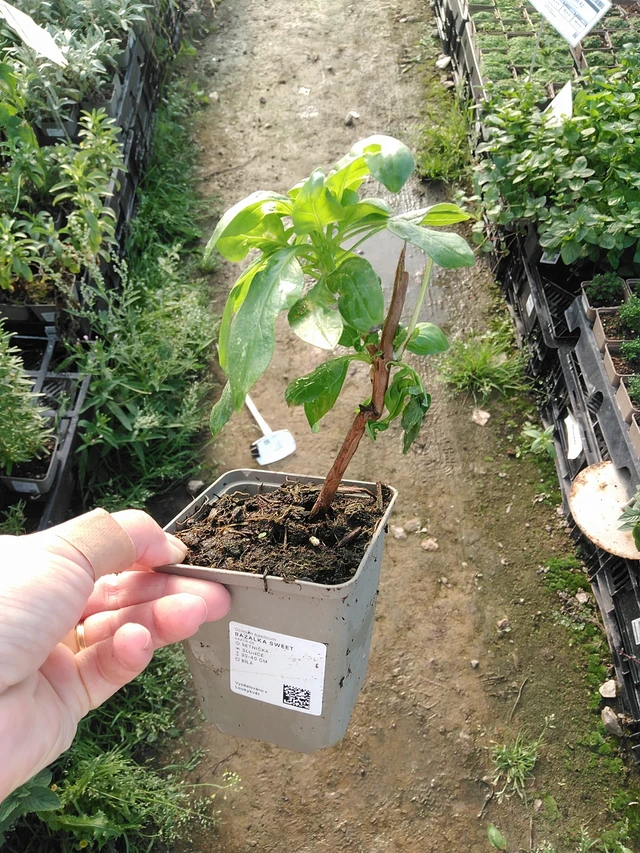
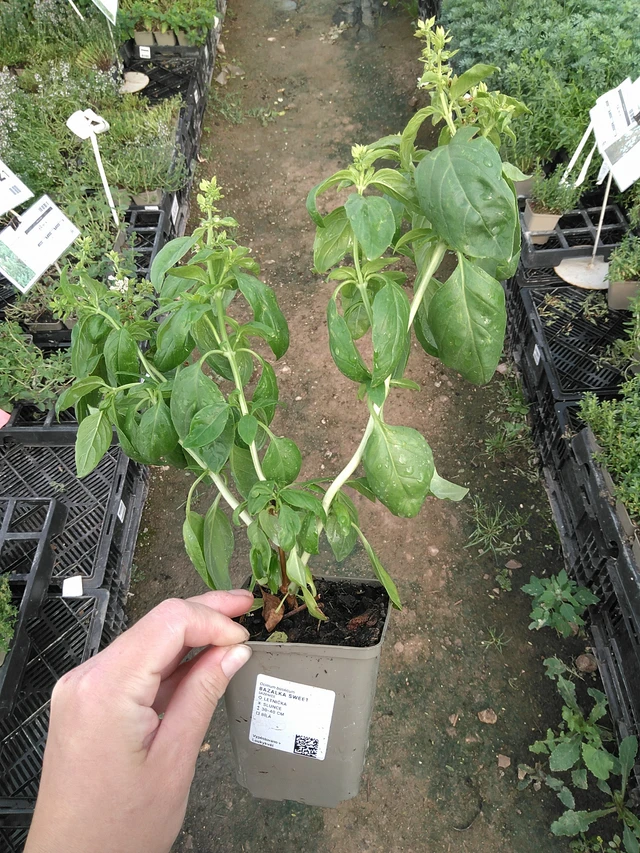
See how the seedling looks over the course of a year.
More products in category Basil

Ocimum basilicum
Basil African Blue

Ocimum basilicum
Basil Magic Azure

Ocimum basilicum
Basil Magic Mountain

Ocimum basilicum
Basil Cinamonette

Ocimum basilicum
Basil Mrs Burns

Ocimum basilicum
Basil Green Sensation

Ocimum basilicum
Basil Dark Opal

Ocimum basilicum
Basil Coldasil

Ocimum basilicum
Basil Pesto Perpetuo

Ocimum basilicum herbalea
Basil Ajaka
More products in category Herbs
Mentha spicata
Moroccan mint
Thymus vulgaris
Thyme Compactus

Thymus serpyllum
Thyme Albus

Origanum laevigatum
Oregano Herrenhausen

Thymus citriodorus
Thyme Lemon

Satureja montana
Winter Savory

Mentha piperita citrata
Chocolate mint

Thymus serphyllus
Thyme Coccineus

Artemisia abrotanum var. maritima
Artemisia Coca Cola

Lippia citriodora
Lemon verbena

Helichrysum angustifolia
Curry plant Tall Curry

Valeriana officinalis
Valerian

Origanum vulgare
Oregano Compactum

Levisticum officinale
Lovage
Thymus citriodorus
Thyme Doone Valley

Coriandrum sativum
Coriander

Mentha spicata
Spanish Mint

Salvia officinalis
Sage Maxima

Petroselinum hortense
Garden Parsley

Origanum rotundifolia


