
Mentha piperita
Mint After Eight
Seedling

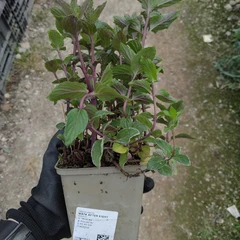
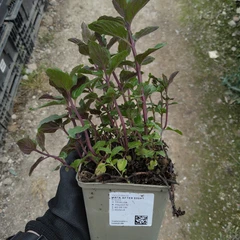
Attracts pollinators 🐝
Difficulty
Diseases
Edible
Flower color
Flower color: Shade
Foliage color
Fragrant (aromatic) 👃
Frost resistance
Hardiness zone
Height
Moisture
Pests
Position
Soil
Spacing
Spacing: Plants per m²
Recommended products

Mentha spicata
Moroccan mint

Mentha piperita
Mint Eau de Cologne

Mentha spicata
Lemon mint

Alchemilla mollis
Lady's mantle Irish Silk

Geum chiloense
Avens Totally Tangerine

Verbena bonariensis
Verbena

Achillea millefolium
Yarrow Terracotta

Achillea millefolium
Yarrow Summer Pastels

Geum rivale
Geum Mango Lassi

Anemone hybrida
Japanese Anemone Whirlwind

Thymus citriodorus
Thyme Doone Valley

Leucanthemum vulgare
Daisy Maikönigin

Thymus vulgaris
Thyme Compactus

Sedum spectabile
Sedum Matrona

Aquilegia vulgaris
Columbine Heidi

Knautia macedonica
Knautia Red Knight

Achillea millefolium
Yarrow Lilac Beauty

Sedum telephium
Sedum Herbstfreude

Lavandula intermedia
Lavender Edelweiss

Nepeta racemosa
Catmint Walker’s Low

Dicentra spectabilis
Bleeding Heart

Aquilegia vulgaris
Columbine Black Barlow

Gypsophila paniculata
Baby's breath Flamingo

Calamintha nepeta ssp. nepeta
Calamint

Salvia nemorosa
Woodland sage Schwellenburg

Leucanthemum
Daisy Christine Hagemann

Salvia nemorosa
Salvia Mainacht

Rosmarinus officinalis
Rosemary Blue Rain

Aquilegia vulgaris
Columbine Kristall

Tanacetum parthenium
Feverfew Campagne
Cultivation
The After Eight mint seedling will arrive to you fully rooted and ready for immediate planting, which even a complete beginner can handle without problems. For successful cultivation, choose a partially shaded or sunny location with plenty of natural light. The soil should primarily be loamy and humus-rich to naturally retain the moisture this aromatic herb absolutely needs for its growth. Plant with a spacing of approximately forty centimeters apart. This spacing ensures sufficient air circulation around the plants, which helps keep the foliage in perfect condition, although this cultivar practically does not suffer from any diseases. Mint is an unusually vigorous perennial that likes to spread quickly into the surroundings using underground rhizomes. If you are planting it in open ground, we strongly recommend using reliable root barriers. For example, an old plastic pot with a cut-out bottom buried in the ground will serve perfectly so that the herb does not spread uncontrollably in the flower bed.
During the active season, regular watering is absolutely the most important, because mint outright loves permanently slightly moist soil. Fertilizing is not necessary at all in good quality garden soil; for growth support, adding well-rotted compost to its roots in the spring is plenty sufficient. So that the plant branches nicely and densely and does not form bare lower stems, definitely do not be afraid to prune it regularly during the summer. Continuous cutting back stimulates the constant formation of new, dark green leaves with that unmistakable chocolate-mint aroma. Plus, you get great fresh material for the kitchen or firm and fragrant greenery for creating live bouquets. From July to September, the plant is adorned with attractive pink and purple inflorescences that reliably attract pollinators. The only minor pitfall during cultivation can be the occasional appearance of the mint leaf beetle. However, you can easily get rid of this pest by simply picking it off the stems by hand.
Customers very often ask us if it is possible to successfully grow this fantastic herb in containers or window boxes as well. The answer is one hundred percent yes. It is actually an absolutely ideal solution if you want to have its growth fully under control and wish to have it constantly at hand right on the terrace or balcony. Choose a sufficiently large and deep pot with functional drainage holes, use a humus-rich substrate, and ensure more frequent watering, because the soil in containers dries out much faster than in the flower bed. With the arrival of winter, you don't have to worry at all about complicated overwintering with this specific cultivar. The plant boasts extreme frost hardiness down to minus twenty-eight degrees Celsius, which reliably corresponds to climate zone 5a. In autumn, the above-ground part naturally dies back, the roots overwinter without problems, and in spring you just remove the dead stems.
The information given is based on our experience, please use it as a guide only. Times may vary depending on the season, climate, location, sowing and transplanting dates and possibly also the conditions in the greenhouse/greenhouse. We always recommend testing how the plant performs in your conditions. Please do not take this as a guarantee.
I've heard that mint spreads quickly. How can I prevent that in the flower bed?
Can I grow After Eight mint in a pot on my balcony?
How should I prepare this seedling for winter? Will it survive our frosts?
How often should I water the mint?
Do I need to fertilize the mint during the summer?
Frequently asked questions
Harvest
When and how is the best way to harvest mint?
Can I dry the leaves of this mint for winter? What is the correct procedure?
Characteristics
What are the culinary uses for the After Eight cultivar?
Does this mint bloom? Is it suitable for garden insects?
Is this variety of mint suitable for cut flower arrangements?
Diseases & pests
I've discovered shiny green beetles on the leaves. What are they, and how do I get rid of them?
Planting site
Where is the best place in the garden to plant the seedling?
Troubleshooting
My mint is growing long, bare stems with very few leaves. What should I do about it?
Growing
How far apart should I plant the seedlings in the garden bed?
Propagation
I've planted the seedling and would like to propagate the mint in the future. How do I do that?
Photos in time
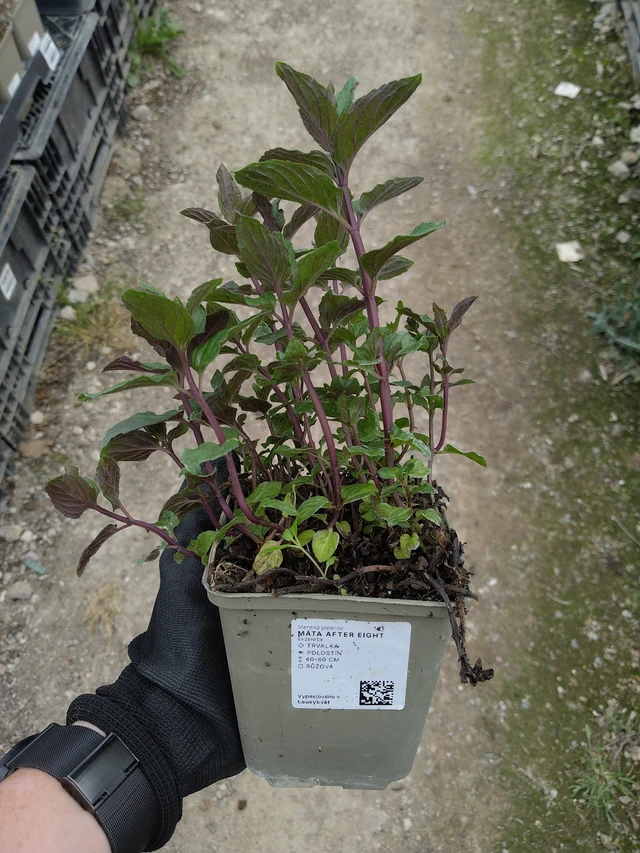
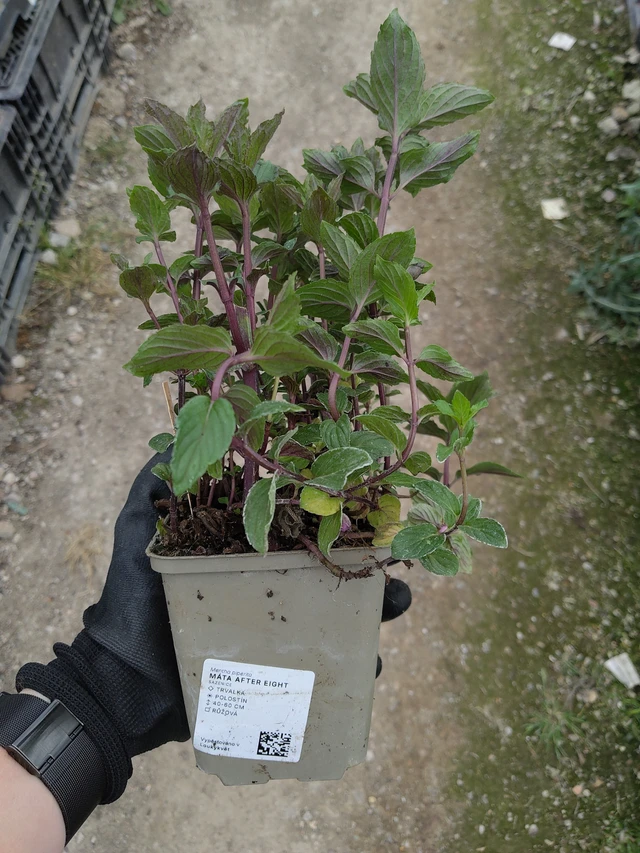
See how the seedling looks over the course of a year.


More products in category Mint
Mentha spicata
Moroccan mint

Mentha piperita citrata
Chocolate mint
Mentha spicata
Lemon mint

Mentha spicata
Spanish Mint

Mentha spicata
Mint Kentucky Colonel

Mentha requienii
Corsican mint
Mentha piperita
Mint Eau de Cologne

Mentha thai
Thai Mint

Mentha suaveolens
Apple mint

Mentha gracilis
Ginger mint
Mentha piperita citrata
Basil Mint

Mentha rotundifolia
Mint Variegata

Mentha arvensis
Strawberry Mint

Menta spp.
Currant Mint

Menta spp.
Mint Berries and Cream
More products in category Herbs
Mentha spicata
Moroccan mint
Thymus vulgaris
Thyme Compactus

Thymus citriodorus
Thyme Lemon

Satureja montana
Winter Savory

Thymus serpyllum
Thyme Albus

Artemisia abrotanum var. maritima
Artemisia Coca Cola
Mentha piperita citrata
Chocolate mint

Thymus serphyllus
Thyme Coccineus

Lippia citriodora
Lemon verbena

Helichrysum angustifolia
Curry plant Tall Curry

Valeriana officinalis
Valerian

Origanum vulgare
Oregano Compactum

Levisticum officinale
Lovage
Thymus citriodorus
Thyme Doone Valley
Mentha spicata
Lemon mint

Coriandrum sativum
Coriander
Mentha spicata
Spanish Mint

Petroselinum hortense
Garden Parsley

Origanum rotundifolia
Ornamental oregano Kent Beauty

Anethum graveolens


